
Mortgage Interest Rate Report: Current Rates Reflect Energy Prices and Fed Policy

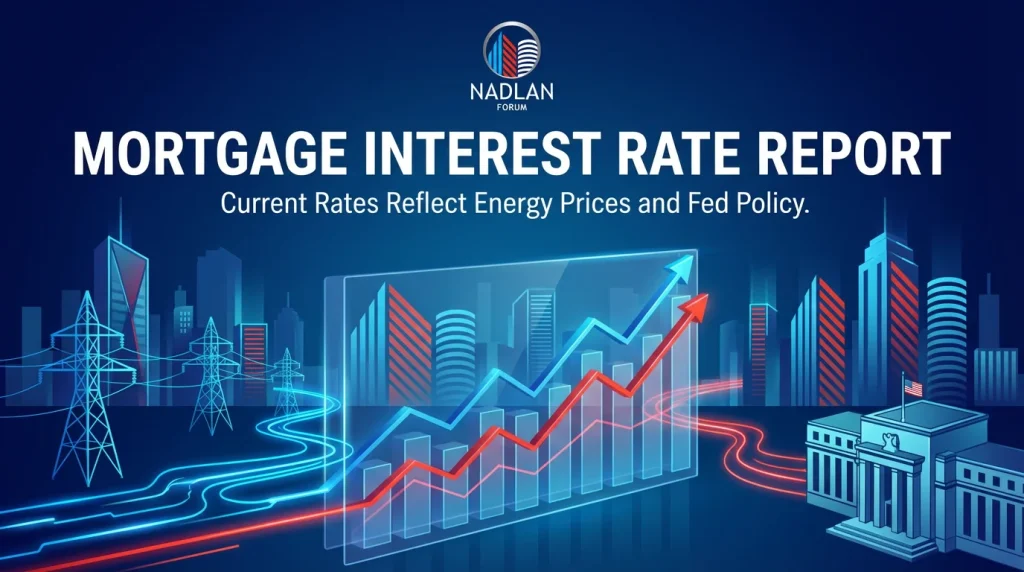
Mortgage rates have moved slightly higher in mid-March as financial markets respond to rising oil prices and expectations surrounding Federal Reserve policy decisions.
The recent increase in borrowing costs is being driven mainly by inflation concerns linked to higher energy prices, as well as uncertainty over how quickly the Federal Reserve might reduce interest rates.
According to the latest data from the Zillow lender marketplace, the average 30-year fixed mortgage rate currently stands at 6.08%, while the 15-year fixed rate is around 5.62%.
Although these levels remain lower than some peaks recorded last year, the upward movement reflects ongoing economic uncertainty affecting the housing market.
Current Mortgage Rates Today
National averages for common mortgage loan types show modest increases across several categories.
Current mortgage rates include:
- 30-year fixed: 6.08%
- 20-year fixed: 6.06%
- 15-year fixed: 5.62%
- 5/1 adjustable-rate mortgage (ARM): 6.05%
- 7/1 ARM: 6.03%
- 30-year VA loan: 5.67%
- 15-year VA loan: 5.32%
- 5/1 VA loan: 5.24%
These figures represent national averages and may vary depending on factors such as credit score, loan size, down payment, and regional housing markets.
Current Mortgage Refinance Rates
Refinancing rates are generally similar to purchase mortgage rates, though they may be slightly higher depending on lender policies.
Current refinance rates include:
- 30-year fixed refinance: 6.24%
- 20-year fixed refinance: 6.17%
- 15-year fixed refinance: 5.79%
- 5/1 ARM refinance: 6.02%
- 7/1 ARM refinance: 6.02%
- 30-year VA refinance: 5.70%
- 15-year VA refinance: 5.46%
- 5/1 VA refinance: 5.04%
Homeowners often refinance to lower their interest rate, shorten the loan term, or adjust their monthly payments.
Energy Prices Influencing Mortgage Rates
One of the biggest drivers behind mortgage rates in March 2026 is the rise in global oil prices.
Energy costs increased following geopolitical tensions in the Middle East, which have raised concerns about supply disruptions.
Higher oil prices can influence inflation because energy plays a major role in transportation, manufacturing, and supply chains.
When investors expect inflation to rise, bond yields often increase. Since mortgage rates follow long-term bond yields, borrowing costs for home loans can also move higher.
Federal Reserve Policy Also a Factor
Another key influence on mortgage rates is the outlook for Federal Reserve policy.
The central bank is scheduled to meet this week to discuss interest rate decisions and evaluate current economic conditions.
While some investors had hoped for rate cuts earlier in the year, recent inflation data suggests that the Fed may delay reductions in borrowing costs.
If policymakers maintain higher interest rates for longer, mortgage rates could remain elevated as well.
30-Year Mortgage Rate Example
The 30-year fixed mortgage remains the most common home loan because it offers relatively lower monthly payments compared with shorter loan terms.
For example, a $300,000 mortgage with a 30-year term at 6.08% would result in a monthly payment of about $1,814 for principal and interest.
Over the life of the loan, the total interest paid would reach approximately $353,080.
Because the repayment period spans three decades, borrowers pay more interest overall than with shorter loan terms.
15-Year Mortgage Rate Example
The 15-year mortgage offers a shorter repayment period and usually comes with a lower interest rate.
Using the same $300,000 loan amount at 5.62%, the monthly payment would increase to roughly $2,470.
However, the total interest paid over the life of the loan would fall to about $144,671, representing substantial savings compared with a 30-year mortgage.
Many borrowers choose 15-year loans when they want to build home equity faster and reduce long-term interest costs.
Adjustable-Rate Mortgages Explained
Adjustable-rate mortgages (ARMs) offer another option for borrowers.
With these loans, the interest rate remains fixed for an introductory period and then adjusts periodically based on market conditions.
For example, a 5/1 ARM keeps the same interest rate for the first five years, after which the rate adjusts annually.
ARMs sometimes start with lower interest rates than fixed mortgages, though recent market conditions have caused some ARM rates to approach or even exceed fixed rates.
Borrowers considering ARMs should carefully compare loan options and understand the potential for rate increases in the future.
Tips for Getting a Lower Mortgage Rate
Borrowers can take several steps to improve their chances of securing a lower mortgage interest rate.
Lenders typically offer better rates to borrowers who demonstrate strong financial stability.
Important factors that can influence mortgage rates include:
- Higher credit scores
- Larger down payments
- Lower debt-to-income ratios
- Stable income and employment history
Some buyers also choose to purchase discount points, which allow them to reduce their interest rate by paying additional fees at closing.
Another option is a temporary rate buydown, where the interest rate starts lower for the first few years before adjusting to the full rate later.
Mortgage Rate Outlook
Most forecasts suggest that mortgage rates may remain near 6% through 2026, though short-term fluctuations are likely.
Housing economists expect that future rate movements will depend on several key factors, including:
- Inflation trends
- Federal Reserve policy decisions
- Global economic developments
- Energy prices and supply conditions
If inflation slows and economic conditions stabilize, mortgage rates could gradually decline.
However, continued uncertainty in global markets means that mortgage rates in March 2026 and beyond may remain somewhat volatile.
For homebuyers and homeowners alike, staying informed about market trends can help when planning major financial decisions related to housing. For direct financing consultations or mortgage options for you visit 👉 Nadlan Capital Group.
























Responses