
The K-Shaped Economy: Why Income Inequality in America Is Growing and What It Means for 2026

Since the onset of the pandemic, the term “K-shaped economy” has become a defining description of how different segments of the U.S. population are experiencing economic recovery. Economists now warn that this growing inequality isn’t temporary it’s a permanent feature of the U.S. economy, reshaping financial habits and policy across the nation.
The K-Shaped Economy: Two Realities for Americans
The U.S. economy continues to show stark contrasts between high-income and low-income earners. High earners are enjoying the benefits of rising stock prices and soaring property values, leading to increased spending on luxury goods, vacations, and other premium experiences. Meanwhile, lower-income households are facing greater struggles to afford everyday necessities like food, gas, and housing.
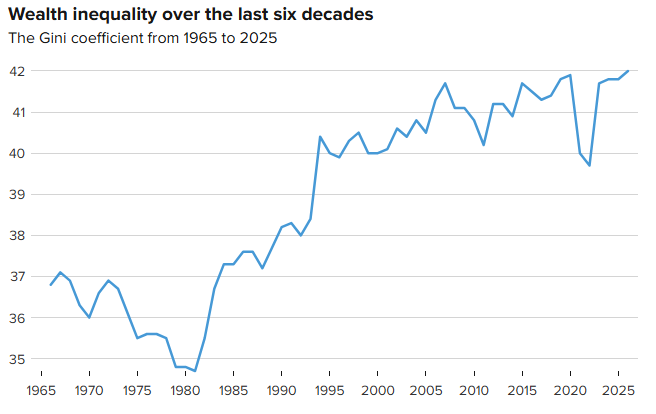
This growing disparity is highlighted in recent economic data. A report from U.S. Bank revealed that wealth inequality, measured by the Gini coefficient, is at its highest in over 60 years. In the third quarter of 2025, the wealthiest 1% of Americans held nearly 32% of the nation’s wealth, while the bottom 50% held just 2.5%.
The Growing Gap: A Permanent Issue?
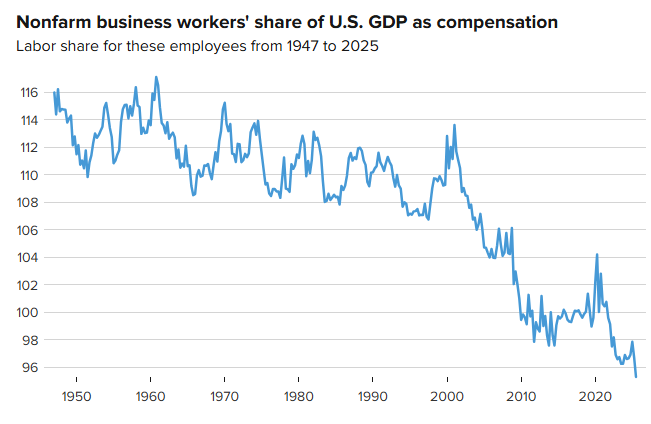
Economists like Mark Zandi, chief economist at Moody’s Analytics, stress that the rise of wealth inequality is not a short-term cycle but a structural issue embedded in the economy. A significant portion of this inequality is reflected in wages, where workers’ share of national income has been shrinking. The Bureau of Labor Statistics shows that wages as a percentage of the U.S. GDP have hit historic lows, leaving most workers with a smaller share of a booming economy.
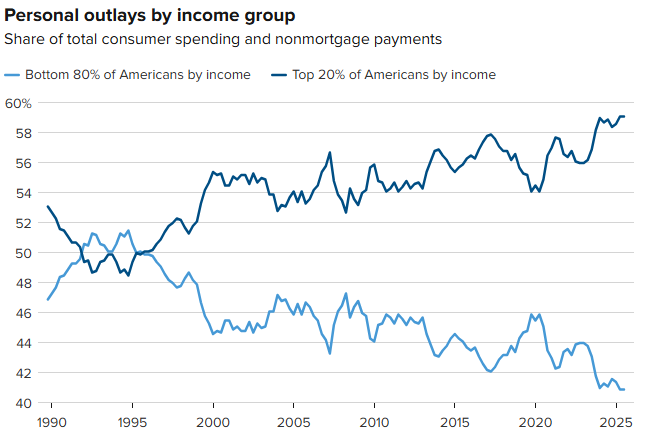
This trend explains the bifurcation of consumer spending patterns. Households earning below $75,000 are spending less on discretionary items such as travel and entertainment, while those earning $150,000 or more are spending more. According to a recent Bank of America report, higher-income households are increasingly focused on luxury experiences, while lower-income households are feeling the pressure of inflation and rising costs.
Why This Disparity Matters: The Impact on Consumer Spending
The growing wealth gap has far-reaching implications for how Americans spend their money. For example, luxury brands are thriving as high-income households have greater disposable income, leading to airlines offering more premium seating options. Meanwhile, fast-food chains are targeting low-income customers with value meal promotions, catering to consumers with tighter budgets.
Moody’s found that spending by the top 20% of earners reached multidecade highs, while the remaining 80% of households have seen their spending power stagnate, not keeping pace with inflation over the past few years. This gap is not just about income but about a disconnect between the well-being of the highest earners and the struggles faced by the rest of the population.
The Origins of the K-Shaped Economy: How Did We Get Here?
While the term “K-shaped economy” became widely discussed during the pandemic, economists argue that the roots of this economic divergence stretch back to the Reagan era, which saw a major shift in how wealth was distributed in the U.S. The rise of globalization and technology-driven job displacement started pulling the economy in two directions. The 2008 financial crisis further exacerbated the divide, particularly among those who lost wealth due to the housing crash, which created long-term economic hardships for many.
Zandi also points to declining unionization rates as a major factor. With fewer workers able to negotiate wages, the gap between high earners and everyone else widened. During the pandemic, we saw stimulus measures boost incomes for lower earners, but the economic recovery from the crisis has favored the wealthy, especially with the stock market surge that followed.
What’s Next for the K-Shaped Economy in 2026?
Looking forward, experts warn that the K-shaped recovery is far from over. Political figures like President Donald Trump have capitalized on the growing divide by focusing on affordability in their messaging. Proposals to cap credit card interest rates or ban institutional investors from buying homes are seen as attempts to address these concerns.
However, policies like these have had limited impact. Analysts like Dubravko Lakos-Bujas of JPMorgan suggest that real solutions to inequality will require tax reform and a focus on expanding social safety nets. As of now, government actions have done little to fundamentally bridge the divide.
Economists are particularly concerned about the rise of artificial intelligence and automation, which could further reduce job opportunities for lower-income workers. According to reports from Challenger, Gray & Christmas, layoffs surged by 50% in 2025, signaling that job insecurity may continue to worsen, especially in sectors where technology replaces human labor.
Is the K-Shaped Economy Sustainable?
The future of the K-shaped economy remains uncertain. Some experts argue that it’s unsustainable for a small group of high earners to account for such a large proportion of consumer spending, especially as the labor market continues to show signs of strain. Federal Reserve Chair Jerome Powell warned that relying too heavily on a small section of the economy to drive growth could lead to instability.
In the meantime, key sectors like healthcare and technology continue to thrive, while many workers in other sectors are left behind. This economic imbalance underscores how the U.S. economy is increasingly reliant on a few sectors and high-income earners to support overall growth.
Conclusion: What Needs to Change?
To address the deepening inequality, experts suggest a few steps. Expanding social safety nets, reforming tax policies, and creating more economic opportunities for workers outside of the top earners could help bring more balance to the U.S. economy. However, for now, the K-shaped economy seems to be entrenched, and without significant changes, it could continue to define the future of economic growth in America.
Call to Action:
As wealth inequality continues to grow, it’s crucial for policymakers to consider long-term solutions to address these disparities. Stay updated on economic trends and what steps might be taken to address the K-shaped recovery moving into 2026. For direct financing consultations or mortgage options for you visit 👉 Nadlan Capital Group.






















Responses