
Rent vs Buy Decision 2026: Why More Homebuyers Are Also Looking at Rentals

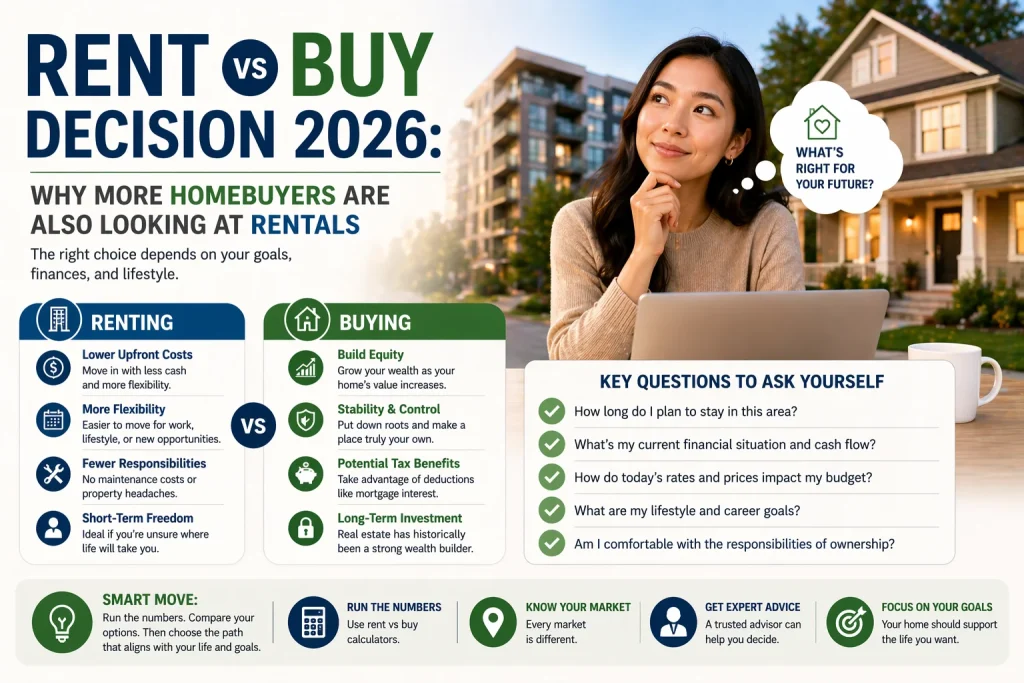
Dual Shoppers Are Changing the Housing Market
The line between renting and buying is becoming less clear in 2026. According to new data from Zillow, around 8% of users searching for homes are also exploring rental options at the same time.
These buyers often called dual shoppers are not fully committed to one path. Instead, they compare both options before making a decision. This shift reflects the growing pressure of high home prices, mortgage rates, and overall living costs.
For many households, the decision is no longer emotional. It is now driven by numbers, flexibility, and financial comfort.
Why the Rent vs Buy Choice Is More Complex Today
Traditionally, comparing renting and buying has been difficult. Standard methods often compare an average rental with an average home for sale but these properties are rarely similar in size, location, or features.
Instead, recent research focuses on real user behavior. By tracking what dual shoppers actually view, analysts get a clearer picture of how people weigh their options in real time.
The biggest factor remains simple: monthly cost.
Owning Still Costs More in Most Cases
In today’s market, buying a home is still more expensive than renting in many areas.
- On average, owning costs about $415 more per month than renting
- This estimate includes mortgage payments, taxes, insurance, and maintenance
- In high-cost markets like San Jose, the gap can exceed $3,400 per month
These numbers make it clear why many buyers hesitate. Even those who qualify for a mortgage may not feel comfortable taking on higher monthly payments.
Property Size and Value Differences
Another key difference between renting and buying is property size.
- Homes for sale are typically larger by about 284 square feet
- Rental units are often smaller but may offer better value per square foot
- Many rentals include newer finishes, updated layouts, or modern amenities
This means renters may get a more efficient living space, while buyers gain more room and long-term ownership benefits.
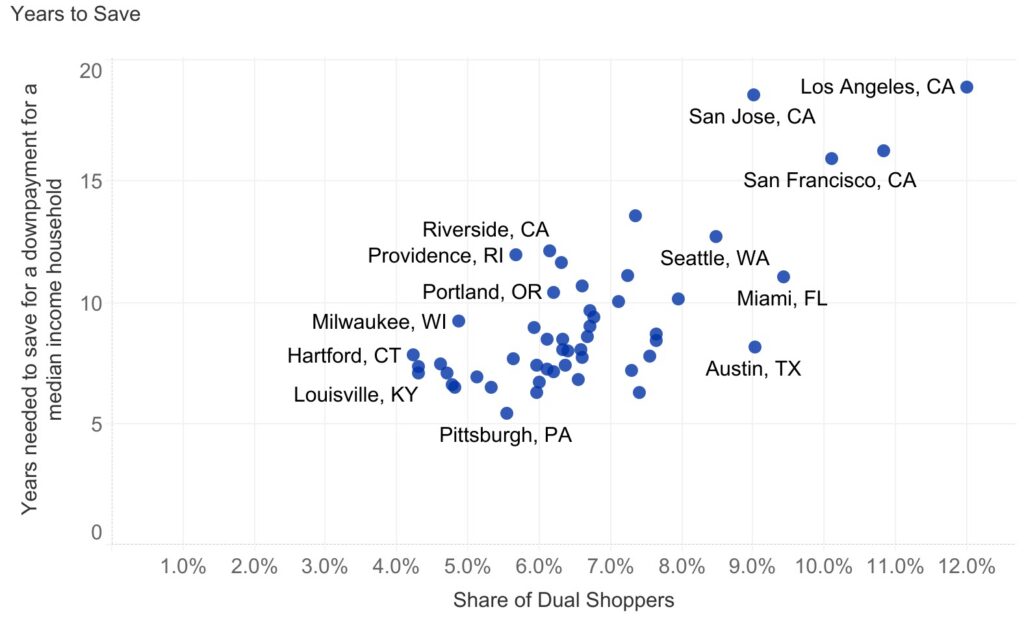
Where Dual Shopping Is Most Common
Dual shopping is more common in expensive housing markets where affordability is a major concern.
Top cities include:
- Los Angeles – about 12% of buyers also look at rentals
- San Diego – around 10.8%
- San Francisco – about 10.1%
- Miami – roughly 9.4%
- Austin – about 9%
In these markets, buying often requires a large share of household income. In some cases, homeowners would need to spend nearly two-thirds of their income on housing, while renting may take closer to one-third.
New York City: A Unique Case
New York City stands out from the rest.
Data from StreetEasy shows that nearly 30% of buyers also consider renting, far above the national average.
This is largely due to:
- A high share of renter households (around 70%)
- Extremely high home prices
- Limited affordable inventory
In such conditions, even serious buyers keep rental options open as a backup.
Where Buying Is Still More Likely
In more affordable markets, dual shopping is less common. Cities with:
- Lower home price-to-income ratios
- More available inventory
- Shorter saving periods for down payments
tend to see fewer buyers browsing rentals.
For example, Hartford has one of the lowest shares of dual shoppers at just over 4%.
This suggests that when homes are more affordable, buyers are more confident in committing to a purchase.
What This Means for Buyers in 2026
The rise of dual shoppers shows a shift in mindset. Buyers are becoming more cautious and flexible.
Instead of rushing into ownership, many are:
- Comparing long-term costs
- Waiting for better rates or prices
- Choosing to rent temporarily while saving
This approach allows households to avoid financial strain while keeping future homeownership goals intact.
How to Decide Between Renting and Buying
If you are trying to choose, consider these key points:
- Monthly budget: Can you comfortably afford ownership costs?
- Time horizon: Will you stay long enough to benefit from buying?
- Savings: Do you have enough for a down payment and emergencies?
- Flexibility: Renting offers mobility, while buying builds equity
There is no single correct answer. The right choice depends on your personal finances and goals.
The Bottom Line
The rent vs buy decision in 2026 is no longer simple. With rising costs and economic uncertainty, more people are exploring both paths before making a move.
Dual shoppers reflect a smarter, more cautious buyer—one who values flexibility, affordability, and long-term planning.
Whether renting or buying, the key is to choose what fits your financial situation today while keeping future opportunities open. For direct financing consultations or mortgage options for you visit 👉 Nadlan Capital Group.






















Responses