
U.S. Home Prices Keep Climbing Slowly as Housing Market Levels Off


U.S. home prices rose again in October, continuing the slow and steady climb that has defined the housing market through much of 2025. According to Redfin’s latest Home Price Index, prices increased 0.3% month over month on a seasonally adjusted basis. That’s a slight bump from September’s 0.2% gain and reinforces that the market is holding stable rather than accelerating.
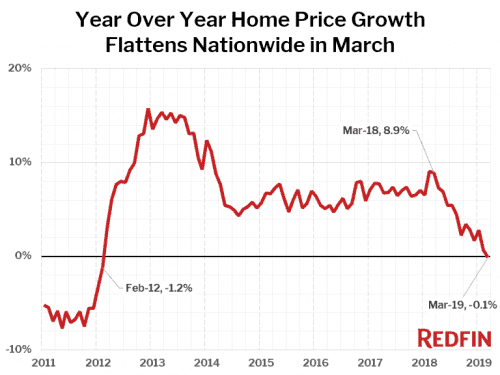
Compared with a year ago, prices were 2.9% higher in October. That is a small cooldown from September’s 3.1% annual rise and part of the broader trend of moderation since early 2025, when annual price growth regularly exceeded 5%.
Earlier this year, prices slowed as a surge in active listings gave buyers more choices and reduced upward pressure on pricing. But inventory growth has weakened in recent months, tightening supply just enough to push prices slightly higher again despite buyer demand remaining soft.
Redfin’s Head of Economic Research, Chen Zhao, described the current market as “moving sideways,” noting that neither buyers nor sellers have a strong incentive to jump in unless they need to.
Listings Pull Back, Keeping Prices Supported
The recent increase in home prices is not driven by stronger demand. Instead, it is the result of fewer homeowners choosing to list. With mortgage rates still high and many people locked into low rates from previous years, would-be sellers are staying put unless life circumstances require a move.
This has created a market where the number of available homes is no longer rising as quickly as it did earlier in the year. Even with fewer buyers in the market, the smaller pool of new listings helps hold prices steady.
Buyers who are active today often face high costs, uncertain economic conditions, and fewer appealing choices. Sellers who list now are more likely to be doing so because they must relocation, family changes, or financial necessity rather than because they want to.
More Metros Saw Price Stability in October
A key sign of stabilization is that fewer major metros saw price declines. In October, 14 of the 50 largest U.S. metros recorded a year-over-year dip in prices. That is down from:
- 20 metros in September
- 30 metros in August
This marks the third straight month of improvement.
This also continues a noticeable shift from recent years. During the low-rate housing boom of 2020 and 2021, almost no major metro saw declining prices. By late 2022, after mortgage rates surged, nearly 80% of metros were seeing declines. Conditions steadied through 2023 before weakening again in the summer of 2025, especially in July, when increased inventory pushed price declines to 37 metros.
Which Markets Saw the Biggest Changes?
Price performance varied widely by metro in October:
Largest Monthly Price Increases
- San Francisco
- Chicago
- West Palm Beach
These markets have seen stronger demand relative to available inventory, helping lift prices.
Largest Monthly Price Declines
- Fort Lauderdale
- Philadelphia
- Dallas
These metros continue to feel the effects of softer demand and more available listings.
Biggest Annual Price Gains
- Cleveland
- Chicago
- Milwaukee
These markets have maintained solid price growth through broader national cooling.
Largest Annual Price Drops
- Tampa
- Austin
- Dallas
Many Sun Belt markets that saw rapid appreciation during the pandemic are now giving back some of those gains.
A Market Settling Into Balance
While the housing market is still expensive and activity remains slow, price movements suggest a market finding its footing rather than moving sharply up or down. Inventory is still tight enough to support prices, but demand remains limited by high borrowing costs and economic uncertainty.
For now, price growth remains mild, regional patterns vary widely, and the overall trend points to a slower, steadier housing market heading into 2026. For direct financing consultations or mortgage options for you visit 👉 Nadlan Capital Group.



























Responses