
U.S. Land Prices Surge Since 2019: Market Shows Signs of Cooling in 2026

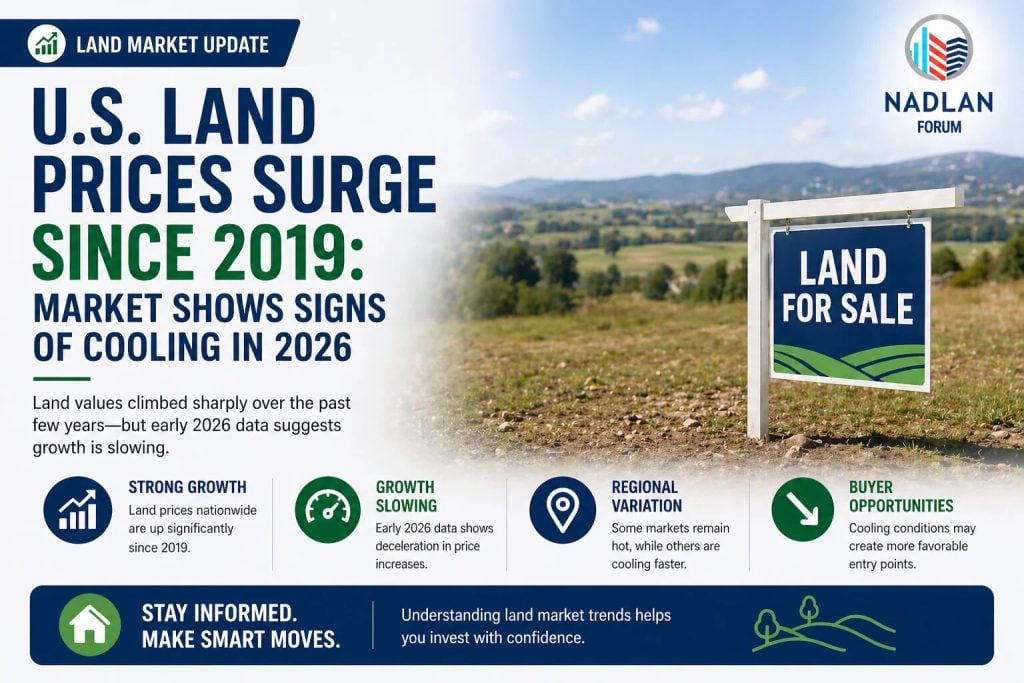
Land prices across the United States have increased sharply over the past several years, driven by strong demand during the pandemic and a limited supply of available properties. A recent analysis shows how much the market has changed and where it may be heading next.
Data from Realtor.com shows that land prices have risen about 77% from early 2019 through March 2026. At the same time, the number of available land listings dropped by 24%, creating a tighter market and pushing prices higher.
Pandemic Demand Changed the Land Market
During the pandemic, low interest rates and increased demand for space encouraged developers and investors to buy land quickly. Many saw land as an opportunity to build or hold for future value, which led to a surge in purchases.
This shift had a strong impact on pricing. Raw and undeveloped land saw faster price growth compared to land that was already prepared for construction.
In the first quarter of 2026, there were about 427,000 land listings nationwide, with a median price of roughly $62,365 per acre. However, prices vary widely depending on the condition and readiness of the land.
Three Main Types of Land Listings
Land listings are generally grouped into three categories:
Raw land
This type has no development at all. It does not include utilities, roads, or site preparation.
Partly developed land
These properties may have some basic improvements such as cleared space or partial utility access.
Build-ready land
These lots are ready for construction and often include full infrastructure, permits, or zoning approvals.
Each type offers different benefits and costs, which is reflected in pricing trends.
Raw Land Sees the Biggest Price Growth
Among all categories, raw land has seen the largest increase in value since 2019.
- Raw land prices rose about 86.5%
- Partly developed land increased by over 80%
- Build-ready lots grew by around 53%
One reason for this difference is that raw land started at a lower price, making it more attractive for investors looking for long-term gains. It also allows buyers to develop property based on their own plans.
Another factor is that build-ready land has a limit based on the final value of the home that can be built on it, while raw land can be priced more freely depending on demand.
Why Buyers Choose Raw Land
Some buyers, especially in high-end markets, prefer raw land because it offers full control over development.
In areas like Jackson Hole and the Greater Yellowstone region, land itself is often seen as the main asset. Buyers are not just purchasing property to build a home, but also investing in location, privacy, and long-term value.
Raw land allows buyers to:
- Choose the design and layout
- Select builders and materials
- Control the timeline of development
This flexibility makes it attractive for long-term projects and custom builds.
Trade-Offs of Buying Undeveloped Land
While raw land offers more freedom, it also comes with challenges.
Buyers may face:
- High costs for utilities and infrastructure
- Long approval and permitting processes
- Additional expenses while holding the land
In some areas, regulatory steps like environmental reviews can take years before construction can begin.
On the other hand, build-ready land includes these steps in the purchase price, allowing buyers to start building much sooner.
Market Begins to Cool After Strong Growth
After several years of rapid growth, the land market is starting to slow down.
From early 2025 to early 2026, land prices per acre declined slightly by about 0.5%. This change reflects lower demand and a slowdown in construction activity.
Breaking it down further:
- Raw land prices dropped about 2.4% year-over-year
- Build-ready land declined by around 1.1%
- Partly developed land increased slightly by 0.8%
This suggests that the market is adjusting after a period of rapid expansion.
Construction Slowdown Impacts Land Demand
A key reason for the recent slowdown is reduced activity in new home construction. Builders are facing higher costs and weaker demand from buyers, which is limiting how much land they need to purchase.
As a result:
- Fewer new projects are starting
- Demand for land is decreasing
- Price growth is slowing or reversing
This trend is helping bring the market closer to more normal conditions after the surge seen during the pandemic.
What This Means for Buyers and Investors
The land market is now in a transition phase.
For buyers:
- Prices are still higher than before the pandemic
- More negotiation opportunities may be available
- Raw land may offer long-term value but requires patience
For investors and developers:
- Demand is softer compared to recent years
- Market conditions are becoming more balanced
- Careful planning is more important due to rising costs
Final Outlook
U.S. land prices have increased significantly over the past few years, mainly due to strong demand and limited supply. However, recent data shows that the market is starting to cool as construction slows and economic conditions shift.
While long-term demand for land remains strong, especially in high-growth areas, short-term trends suggest a more stable and balanced market ahead.
Buyers and investors should focus on long-term value, location, and development costs when making decisions in this changing environment. For direct financing consultations or mortgage options for you visit 👉 Nadlan Capital Group.
















Responses