
U.S. Rent Trends Shift in March 2026: Prices Rise Monthly but Fall Yearly

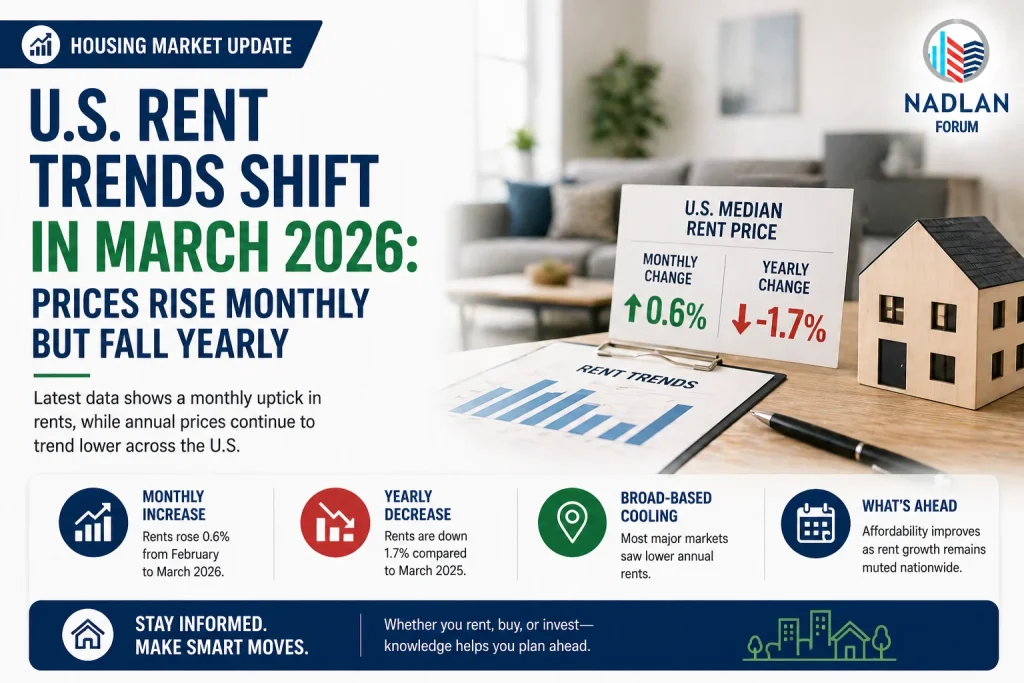
The U.S. rental market is beginning to show early signs of seasonal recovery, even as overall rent levels remain lower compared to last year. After several months of decline, rents posted a small increase again in March, suggesting the market is moving out of its slower winter period.
According to the latest national rent report, the median rent rose by 0.5% in March, marking the second straight month of modest growth. This follows a typical seasonal pattern where rental activity slows in colder months and picks up as spring and summer approach.
Seasonal Patterns Return to the Rental Market
The rental market usually follows a predictable cycle. Prices tend to drop in the fall and winter when fewer people move, and then rise again during the spring and summer months when demand increases.
March continues this trend, building on the growth seen in February. However, recent years have shown some changes in timing. Instead of peaking in early summer, rent growth has been strongest earlier in the year, with March now acting as a key turning point.
Even with this seasonal increase, overall rent growth remains slower than in the past, reflecting broader changes in supply and demand.
Annual Rent Growth Remains Negative
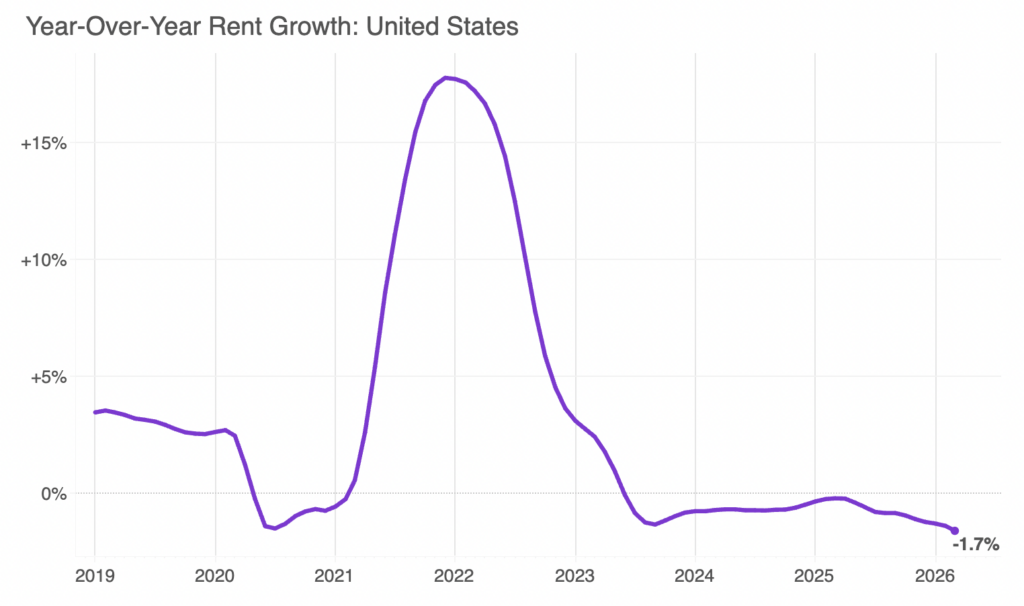
Despite the monthly increase, rents are still lower compared to last year. Year-over-year rent growth dropped to -1.7%, marking the lowest level recorded in recent data going back to 2017.
This decline shows that demand has weakened compared to previous years. Slower job growth and economic uncertainty are making renters more cautious, which is limiting how much landlords can increase prices.
The national median rent now stands at $1,363, which is about $23 less than it was one year ago. Since reaching a peak in mid-2022, rents have gradually declined by about 5.5%.
However, it is important to note that rents are still significantly higher than before the pandemic, remaining about 19% above early 2021 levels.
Supply Growth Keeps Pressure on Prices
One of the main reasons behind softer rent growth is the large number of new apartments entering the market.
In 2024, more than 600,000 new multifamily units were completed, the highest level in decades. Although construction has slowed since then, supply remains above normal levels.
This increase in available housing means:
- More choices for renters
- Greater competition among landlords
- Less ability for property owners to raise rents
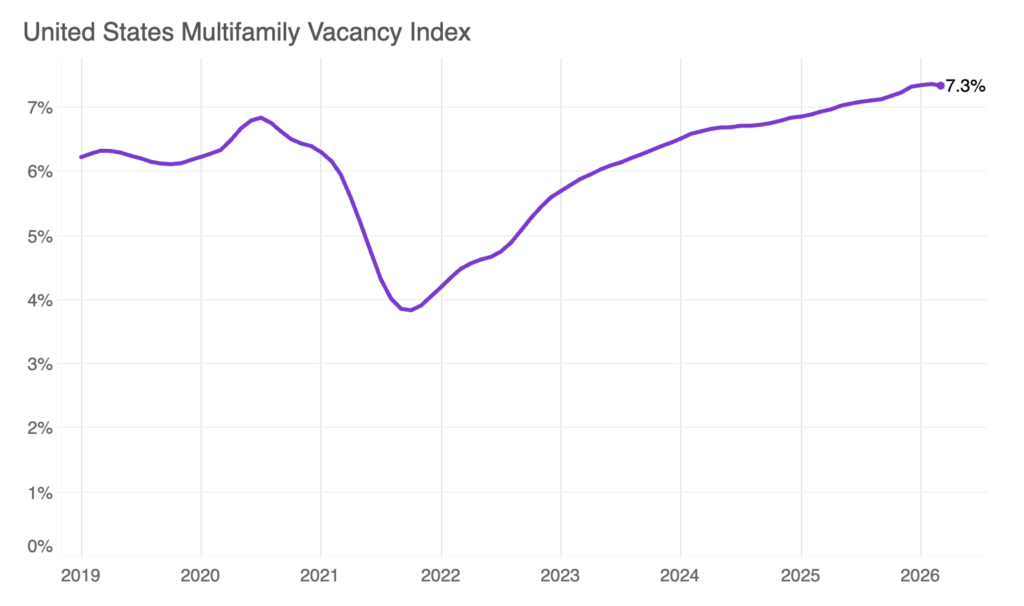
As a result, vacancy rates have risen. The national vacancy rate is now around 7.3%, the highest level recorded since tracking began in 2017.
Vacancies Rise and Units Take Longer to Rent
Another sign of a slower market is the increase in how long properties stay available.
The average time it takes to rent a unit dropped slightly to 38 days in March, down from 40 days in February. While this reflects some seasonal improvement, it is still much higher than previous years.
At the peak of the rental market in 2021, units were renting in less than half that time. Today, properties are taking much longer to fill, which is consistent with weaker demand and higher supply.
Economic Factors Impact Rental Demand
Broader economic conditions are also playing a role in the rental market.
Recent data shows:
- Job cuts are increasing in some sectors
- Inflation remains a concern
- Global events are adding uncertainty to the economy
These factors are affecting household finances and reducing demand for rental housing. When renters feel less financially secure, they are more likely to delay moving or choose more affordable options.
Regional Rent Trends Vary Across the Country
Rent changes are not the same everywhere. While most large metro areas saw monthly increases in March, many are still experiencing yearly declines.
Markets with Larger Rent Drops
Cities in the South and Mountain West are seeing the biggest declines. For example:
- Austin has seen rents fall about 6% over the past year and more than 20% from its peak
- Other cities like San Antonio, Denver, Phoenix, Tampa, and Orlando are also seeing declines
Many of these areas have had strong construction activity, which has added more supply and pushed prices down.
Markets with Rising Rents
Some cities are still seeing steady growth:
- Virginia Beach is currently leading with strong yearly rent increases
- San Francisco and San Jose are also seeing growth, supported by strong job markets
- Midwestern cities like Chicago, St. Louis, and Minneapolis continue to show stable demand due to lower living costs
What This Means for Renters and Landlords
The rental market is in a transition phase. Seasonal demand is returning, but long-term trends still show weaker growth.
For renters:
- More options are available
- Prices are more stable or slightly lower
- There may be more room to negotiate
For landlords:
- Competition is higher
- Vacancy rates are rising
- Rent increases are harder to maintain
Final Outlook
The U.S. rental market is slowly moving into its active season, with modest monthly rent increases returning. However, high supply levels and softer demand continue to keep yearly rent growth negative.
While construction activity is starting to slow, it may take time for the market to absorb the large number of new units added in recent years.
As a result, rental conditions are expected to remain relatively balanced in the near term, with gradual improvement depending on economic stability and job growth. For direct financing consultations or mortgage options for you visit 👉 Nadlan Capital Group.



















Responses