
Synthetic NOI Inflation

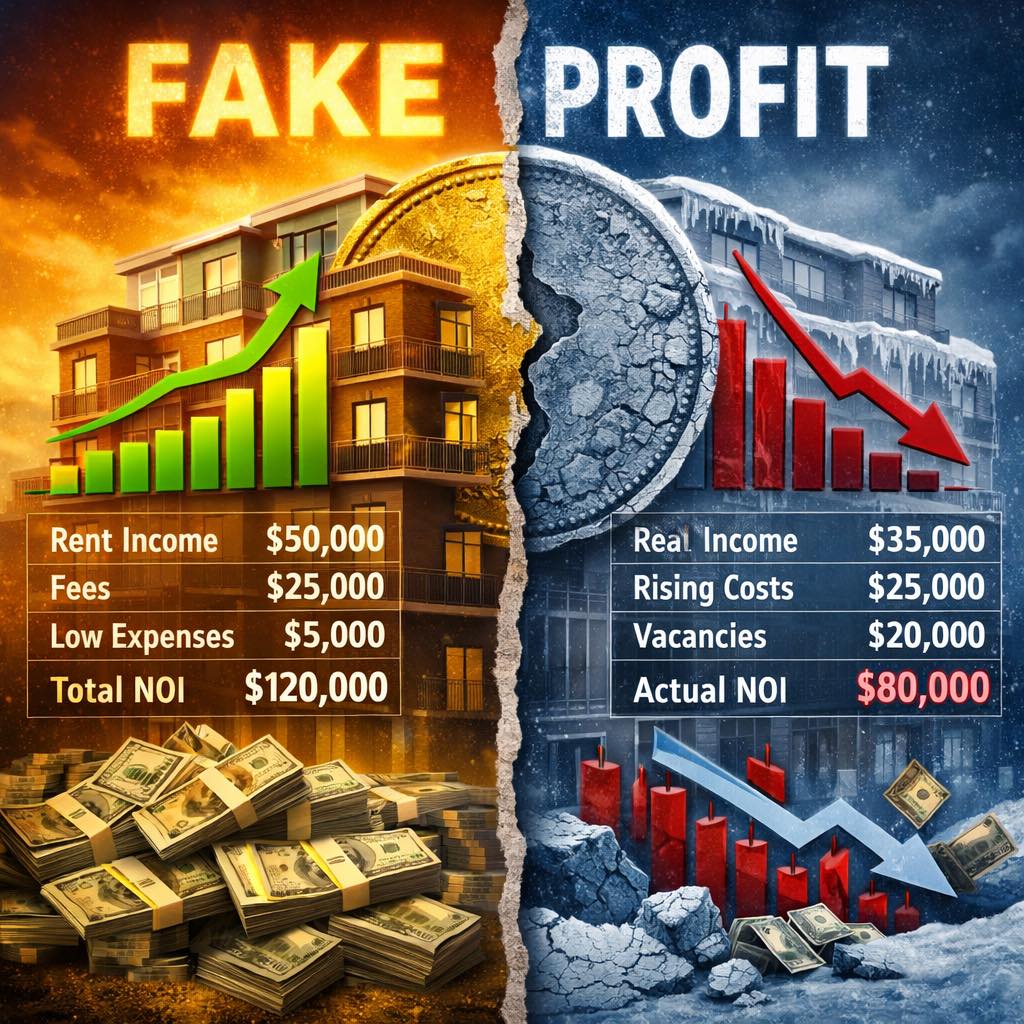
Artificial NOI Inflation: when the numbers look real—but aren’t sustainable
Some properties show strong returns on paper:
- NOI looks solid
- Cap rate looks reasonable
- The deal “works”
But in reality, that NOI isn’t real.
It’s manufactured.
How NOI gets inflated artificially
1. Non-recurring income
- One-time fees
- Temporary concessions that expire after the sale
- Unstable service income
2. Artificially reduced expenses
- Deferred maintenance
- Unrealistic insurance costs
- Self-management shown as “zero cost”
- Missing expenses not included in reports
3. Lease manipulation
- Short-term leases with inflated rents
- Rapid occupancy with weak tenants
- Hidden incentives not reflected in reports
The result
Higher NOI →
Higher valuation →
Higher sale price
Until the buyer takes over…
What happens after closing
Reality resets:
- Maintenance returns
- Insurance adjusts
- Tenants turn over
- One-time income disappears
Example
Property presented with NOI of $120,000.
One year later:
- Expenses normalize
- Tenants rotate
- Temporary income vanishes
Real NOI: $80,000
That’s not a small gap—
that’s a completely different deal.
The real issue
It’s not always that someone lied.
They showed you a moment in time,
not a stable reality.
And what isn’t stable—
can’t be priced correctly.
How to identify it
- Compare T12 vs T3
- Benchmark expenses against similar properties
- Review actual leases, not just the rent roll
- Separate one-time vs recurring income
- Check how long the “good numbers” have existed
The one sentence to remember
NOI is not just a number—it’s a story.
If you buy the number without understanding the story,
you’re buying an illusion.























Responses