
Housing Affordability Shift: More Buyers Use Down Payment Assistance

Buying a home is becoming more difficult, and more Americans are turning to financial help to make it possible. A new survey from LendingTree shows that down payment assistance is now a key part of the homebuying process, especially for younger generations.
The data highlights a clear shift: many buyers, particularly Gen Z and millennials, are depending on family or other sources of support to enter the housing market.
Rising Dependence on Down Payment Assistance
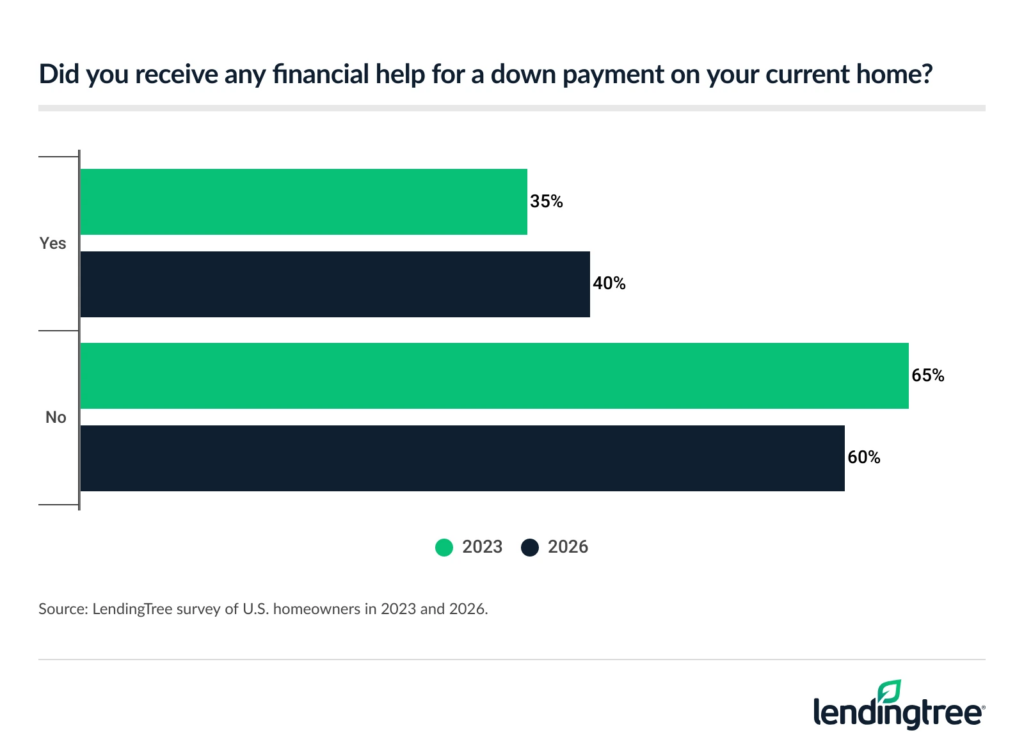
The share of homeowners who received help with their down payment is increasing.
- 35% of homeowners received assistance in 2023
- 40% receive assistance in 2026
This steady rise shows how affordability challenges are shaping buying behavior.
Among younger buyers, the numbers are even higher:
- 78% of Gen Z homeowners received help
- 56% of millennials received help
In comparison:
- 35% of Gen X homeowners used assistance
- Only 12% of baby boomers relied on help
This gap highlights how much harder it has become for younger buyers to purchase a home without support.
Income Is Not the Main Factor
Interestingly, income levels do not fully explain who receives help.
- 42% of homeowners earning $100,000 or more received assistance
- 43% of those earning under $30,000 also received help
This suggests that affordability challenges are affecting buyers across different income groups, not just lower-income households.
Most Buyers Still Can’t Reach 20% Down
Saving for a traditional 20% down payment remains difficult.
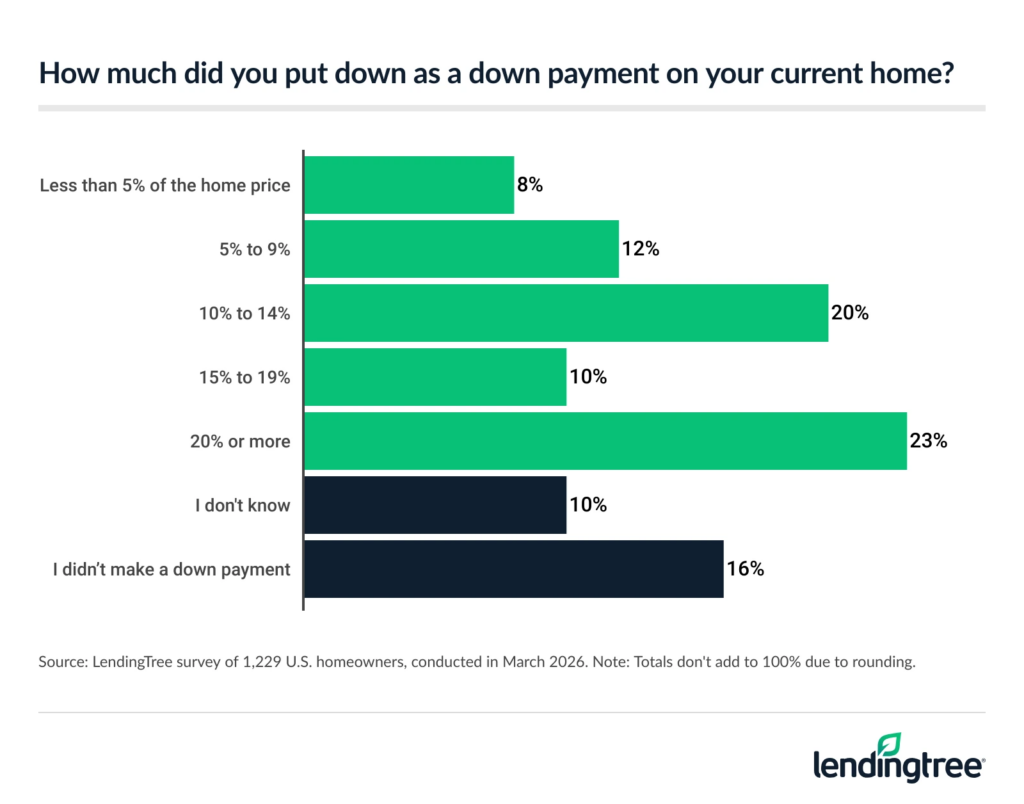
- Only 23% of buyers put down 20% or more
- 51% put down less than 20%
- 16% made no down payment at all
This matters because a 20% down payment can reduce monthly costs and eliminate private mortgage insurance (PMI).
For many buyers, even with assistance, reaching that level is still out of reach.
How Much Help Buyers Receive
For those who do get assistance, it often covers a large portion of the down payment.
- About half of recipients said assistance covered at least 40%
- 22% said it covered 60% or more
- 11% said it covered 80% or more
Younger buyers tend to rely more heavily on this support:
- 59% of Gen Z buyers said help covered at least 40%
- 55% of millennials reported similar levels
This shows how critical external support has become for entering the market.
Where the Money Is Coming From
Family remains the most common source of help.
- 16% of all homeowners received help from parents
- 27% of Gen Z and 24% of millennials relied on parents
Other sources include:
- Friends or extended family: 12%
- Inheritance or trust funds: 11%
- Seller concessions: 8%
- Down payment assistance programs: 6%
- Employer support: 5%
In most cases, the support is not a loan:
- 48% received it as a gift
- 28% as a loan
- 25% as a mix of both
Many Buyers Could Not Purchase Without Help
For a large number of buyers, financial support is not just helpful — it is necessary.
- 35% said they could not have bought their home without assistance
The support also helped buyers in several ways:
- 43% said it helped them qualify for a mortgage
- 33% said it reduced monthly payments
- 31% said it allowed a larger down payment
- 30% said it helped them afford a more expensive home
These numbers show how assistance directly impacts buying power.
Emotional Impact of Financial Help
Receiving help can also bring mixed feelings.
- 46% said they felt thankful
- 19% felt relief
- 14% felt supported
However, some buyers reported discomfort:
- 21% of Gen Z said they felt embarrassed
This reflects the emotional side of relying on external support for a major purchase.
Future Trends in Homebuying Support
Looking ahead, many Americans expect this trend to continue.
- 46% say they plan to help a child or relative buy a home
- 60% of millennials expect to provide support
- 63% of Gen Z expect to do the same
This suggests that financial assistance may remain a common part of the housing market in the years ahead.
Optimism Around Homeownership Remains
Despite the challenges, many Americans still believe homeownership is possible without family wealth.
- 68% say it is still achievable
- Higher-income households are more confident
- Around 61% of Gen Z and 65% of millennials agree
This shows that while assistance is growing, confidence in homeownership remains.
Key Takeaways
- Down payment assistance is increasing in 2026
- Younger buyers rely more on family support
- Most buyers cannot afford a 20% down payment
- Financial help often covers a large portion of costs
- Many buyers would not be able to purchase without assistance
Final Outlook
The housing market is becoming more dependent on financial support, especially for first-time buyers. Rising home prices and mortgage rates are making it harder to save for a down payment, pushing more buyers to seek help.
At the same time, optimism remains strong. Many buyers still believe homeownership is within reach, especially with access to different forms of assistance.
As affordability challenges continue, down payment support — whether from family, programs, or other sources — is likely to play an even bigger role in shaping the future of homeownership. For direct financing consultations or mortgage options for you visit 👉 Nadlan Capital Group.






















Responses