
U.S. Mortgage Rates May 15, 2026: Mixed Moves Continue Across Home Loans

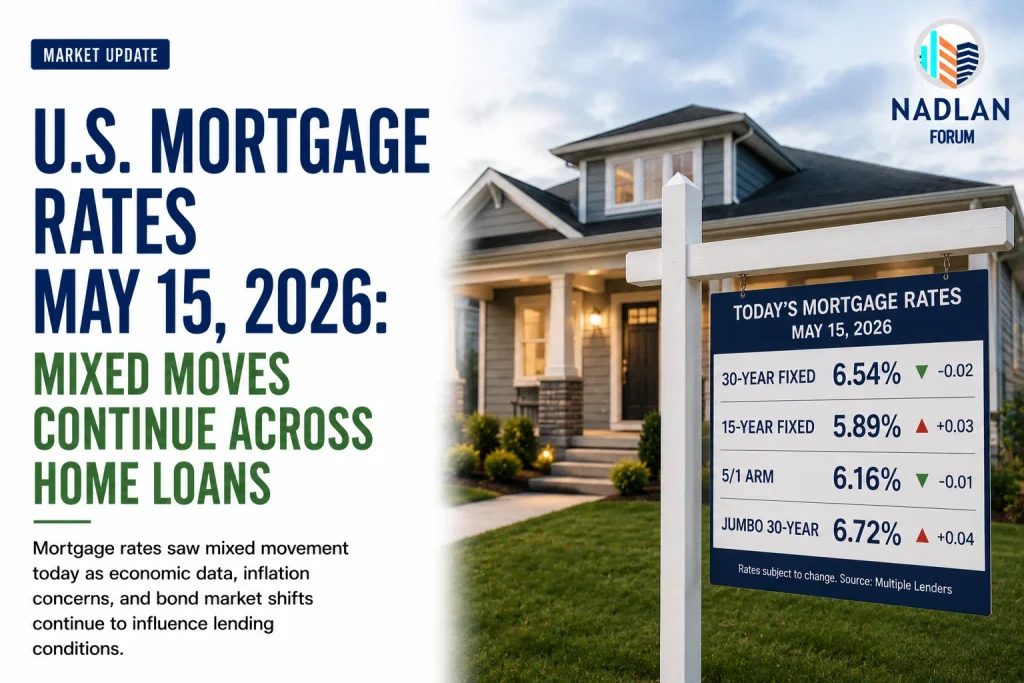
Mortgage rates continued moving in different directions at the end of the week as investors closely monitored inflation data and Federal Reserve expectations.
According to the latest Zillow lender marketplace data, the average 30-year fixed mortgage rate declined slightly on May 15, while the 15-year fixed-rate loan moved higher.
The mixed movement reflects ongoing uncertainty across financial markets as inflation remains elevated and the Federal Reserve signals it may keep interest rates higher for longer.
Current Mortgage Rates for May 15, 2026
Here are the latest national average mortgage rates:
- 30-year fixed: 6.27%
- 20-year fixed: 6.17%
- 15-year fixed: 5.72%
- 5/1 ARM: 6.49%
- 7/1 ARM: 6.14%
- 30-year VA: 5.79%
- 15-year VA: 5.51%
- 5/1 VA: 5.41%
The 30-year fixed-rate loan dropped by seven basis points from the previous day, while the 20-year loan edged slightly lower. However, the 15-year fixed mortgage increased modestly.
Refinance Rates Also Show Mixed Changes
Mortgage refinance rates remained close to purchase loan rates but continued showing mixed daily movement.
Current refinance averages include:
- 30-year fixed refinance: 6.28%
- 20-year fixed refinance: 6.26%
- 15-year fixed refinance: 5.75%
- 5/1 ARM refinance: 6.12%
- 7/1 ARM refinance: 6.55%
- 30-year VA refinance: 5.83%
- 15-year VA refinance: 5.53%
Refinance rates are often slightly higher than purchase mortgage rates, although market conditions can occasionally reverse that trend.
Inflation Continues Affecting Mortgage Markets
Mortgage rates remain heavily influenced by inflation concerns across the U.S. economy.
Recent economic reports showed both consumer and wholesale inflation accelerating faster than expected in April.
Higher inflation typically pushes bond yields upward, which often leads to higher mortgage borrowing costs.
Investors are also reacting to:
- Rising energy prices
- Ongoing geopolitical tensions
- Strong labor market data
- Federal Reserve policy expectations
All of these factors continue creating volatility in mortgage markets.
Federal Reserve Expectations Remain Important
Although the Federal Reserve does not directly set mortgage rates, its decisions strongly influence borrowing costs throughout the economy.
Earlier in 2026, many investors expected the Fed to begin cutting interest rates later this year. However, stronger inflation data has reduced those expectations significantly.
Some analysts now believe the Fed may leave rates unchanged for much longer than previously expected.
Markets are even beginning to consider the possibility of future rate hikes if inflation continues moving higher.
Why Mortgage Rates Keep Changing Daily
Mortgage rates can move every day based on changes in financial markets.
Several factors influence rate movement, including:
- Treasury yields
- Inflation reports
- Employment data
- Federal Reserve comments
- Oil prices
- Investor confidence
Even small changes in bond markets can quickly affect mortgage pricing offered by lenders.
Fixed-Rate Mortgages Remain Popular
Despite elevated rates, fixed-rate mortgages continue to be the most common option for homebuyers.
A fixed-rate mortgage keeps the same interest rate for the life of the loan, providing predictable monthly payments.
The 30-year fixed loan remains especially popular because it offers lower monthly payments compared to shorter-term loans.
However, borrowers pay significantly more interest over the life of a 30-year mortgage compared to a shorter loan term.
15-Year Mortgages Save Interest Over Time
Many homeowners still consider 15-year mortgages because they typically offer lower interest rates and faster repayment schedules.
Benefits of a 15-year mortgage include:
- Lower total interest costs
- Faster home equity growth
- Quicker loan payoff
However, monthly payments are usually much higher because the loan is repaid in half the time.
For many buyers, affordability remains the biggest challenge with shorter-term mortgages.
Adjustable-Rate Mortgages Still Carry Risk
Adjustable-rate mortgages, commonly called ARMs, continue attracting some buyers looking for flexibility.
With an ARM, the interest rate remains fixed for an introductory period before adjusting periodically based on market conditions.
Examples include:
- 5/1 ARM
- 7/1 ARM
These products may work for borrowers who plan to move or refinance before the adjustable period begins.
However, ARM borrowers face the risk of future payment increases if interest rates rise further.
Housing Affordability Remains Under Pressure
Even though mortgage rates have pulled back slightly from recent highs, affordability challenges continue across the housing market.
Higher borrowing costs are affecting:
- Monthly mortgage payments
- Homebuyer demand
- First-time buyers
- Refinancing activity
- Housing inventory movement
Many buyers remain cautious due to elevated home prices and economic uncertainty.
Mortgage Rate Forecasts for 2026
Most major housing analysts expect mortgage rates to remain above 6% throughout much of 2026.
Current forecasts suggest:
- Mortgage Bankers Association expects rates near 6.3%
- Fannie Mae projects rates slightly above 6% by year-end
- Some analysts expect only modest declines during 2027
Inflation trends and Federal Reserve decisions will likely remain the biggest drivers of future mortgage rate movement.
Buyers Continue Watching the Market Carefully
Many potential buyers are waiting for either:
- Lower mortgage rates
or - Improved home affordability
However, economists warn that mortgage rates may remain elevated longer than many consumers initially expected earlier this year.
At the same time, housing inventory has slowly improved in some parts of the country, giving buyers more choices than during previous years.
Final Thoughts
Mortgage and refinance rates continued showing mixed movement on May 15, 2026, as financial markets responded to inflation concerns and shifting Federal Reserve expectations.
While the average 30-year mortgage rate moved slightly lower, overall borrowing costs remain elevated compared to recent years.
For homebuyers and homeowners, inflation, economic growth, and future Fed policy decisions will continue playing a major role in where mortgage rates move next. For direct financing consultations or mortgage options for you visit 👉 Nadlan Capital Group.






























Responses