
U.S. Housing Shortage Holds Near 4.7 Million Homes: Apartment Construction Slows the Growth

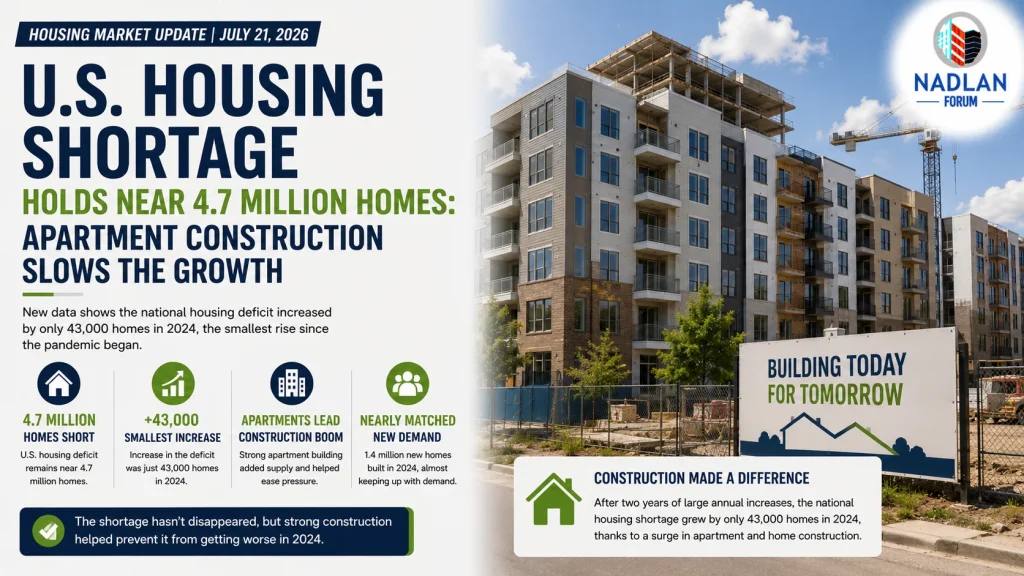
America’s housing shortage stopped getting significantly worse in 2024 as a strong period of apartment and home construction brought new supply closer to the level of demand.
The national housing deficit reached approximately 4.7 million homes, increasing by only about 43,000 units from the previous year. That was the smallest annual increase since the pandemic began and a major improvement from the much larger shortages added during the two previous years.
The deficit grew by roughly 257,000 homes in 2022 and another 159,000 in 2023. Compared with those increases, the additional 43,000 homes recorded in 2024 suggest that the shortage was nearly unchanged.
The result does not mean the country has solved its housing problem. Millions of households still cannot find or afford homes of their own. However, it shows that the construction boom that followed the pandemic came close to preventing the shortage from growing further.
Housing Construction Nearly Matched New Demand
The total number of housing units in the United States increased by about 1.4 million in 2024.
That new supply included apartments, single-family houses, townhomes, condominiums, and other residential units. It was almost enough to keep pace with the growth in the number of families needing housing.
At the same time, the number of families sharing homes with other families increased by only about 26,000, reaching approximately 8.2 million.
The number of vacant homes available for rent or purchase remained close to 3.4 million, declining by only about 18,000 units during the year.
Because both sides of the calculation changed very little, the overall housing deficit also remained close to its previous level.
This was the first time since the 2008 financial crisis that new housing supply and new household demand came close to balancing for an entire year.
How the Housing Shortage Is Calculated
The housing deficit is not simply the difference between the total number of people and the total number of homes.
It is calculated by comparing the number of families sharing housing with another family against the number of vacant homes that are available for rent or purchase.
A family is considered to be doubling up when it lives inside a home occupied by another family.
Some people share housing by choice. Adult children may live with their parents, relatives may combine households, or friends may choose to share expenses.
However, many families double up because they cannot find an affordable rental or qualify to purchase a home.
The calculation therefore provides a useful estimate of how many additional homes may be needed to give more households the option of living independently.
Apartment Construction Played a Major Role
Apartment construction was one of the main reasons the shortage stopped growing rapidly.
Developers began building large numbers of rental units after housing demand increased during the pandemic. Low vacancy rates and strong rent growth encouraged builders to start projects, particularly in fast-growing metropolitan areas.
Many of those apartment projects took several years to complete and began reaching the market during 2023 and 2024.
The increased supply helped reduce competition among renters in some cities. It also slowed rent growth and encouraged landlords to offer concessions, such as free rent, reduced deposits, or lower application fees.
New apartment construction was especially strong in parts of the South and Southwest, where land was generally more available and development rules were often less restrictive.
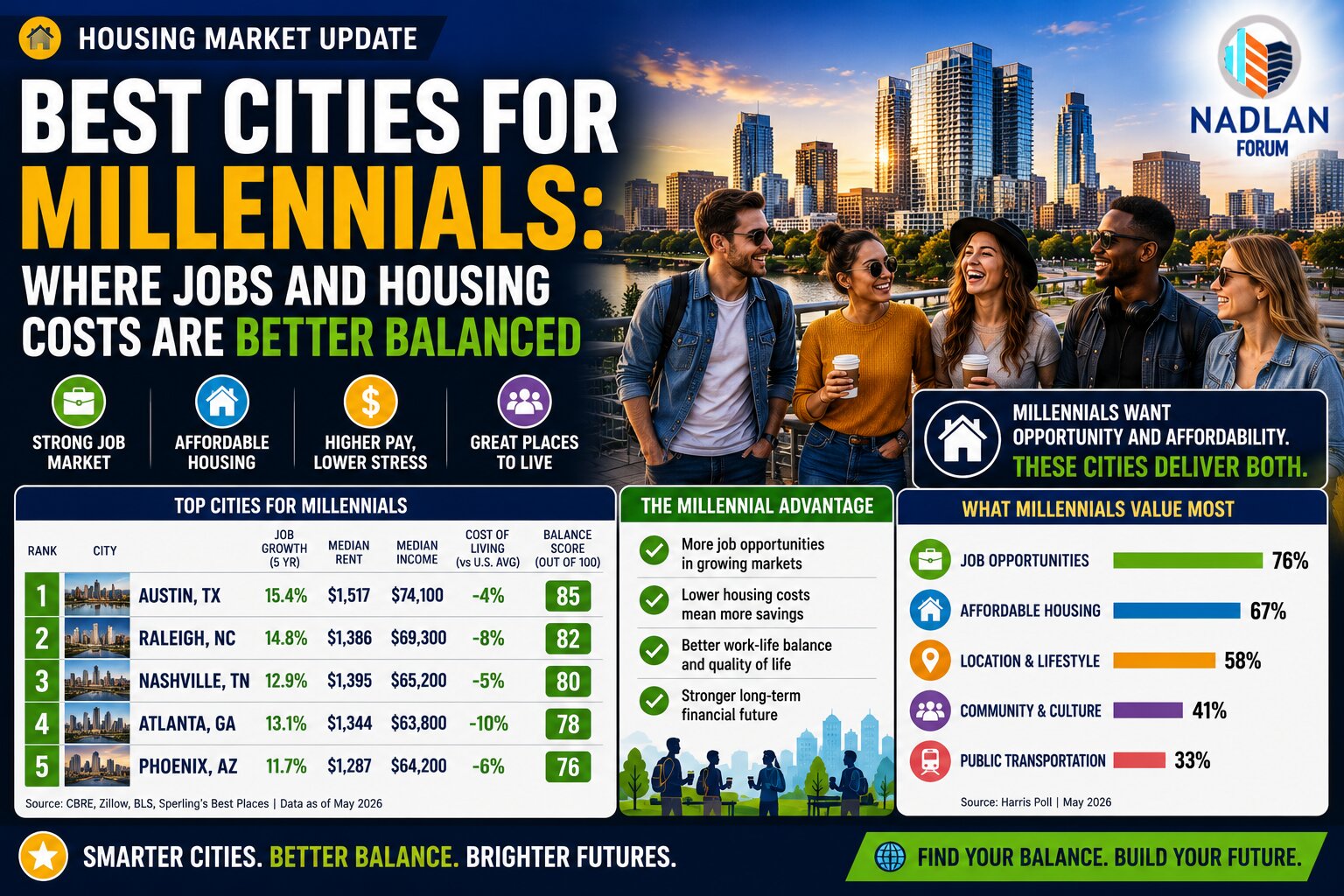
Markets such as Austin, Phoenix, Nashville, Charlotte, Dallas, and Atlanta added large numbers of rental units during the construction boom.
The Building Boom Is Beginning to Slow
Although recent construction helped stabilize the housing deficit, builders are now reducing new development.
Higher interest rates have made construction loans more expensive, while slower rent growth has reduced the expected returns from new apartment projects.
Labor, materials, insurance, land, and development fees also remain costly.
As a result, fewer developers are applying for permits or starting large multifamily projects.
The number of new apartments completed may remain high for a period because projects already under construction still need to be finished. However, the pipeline of future developments is becoming smaller.
This creates a risk that the housing shortage could begin growing again once the current supply of new apartments is absorbed.
A Stable Shortage Is Not the Same as a Solution
Keeping the housing deficit from increasing is an important improvement, but the country still lacks approximately 4.7 million homes.
Closing a shortage of that size would require many years of construction above the normal level of new household formation.
Builders would need to create enough housing to meet current demand while also producing additional homes to reduce the existing gap.
That will be difficult if construction activity returns to its usual pace.
A balanced market requires more than a single year of strong building. The United States may need a long period of steady residential construction across a wide range of housing types and price levels.
Home Affordability Has Stopped Getting Worse
The housing-supply improvement also came as affordability began showing signs of stability.
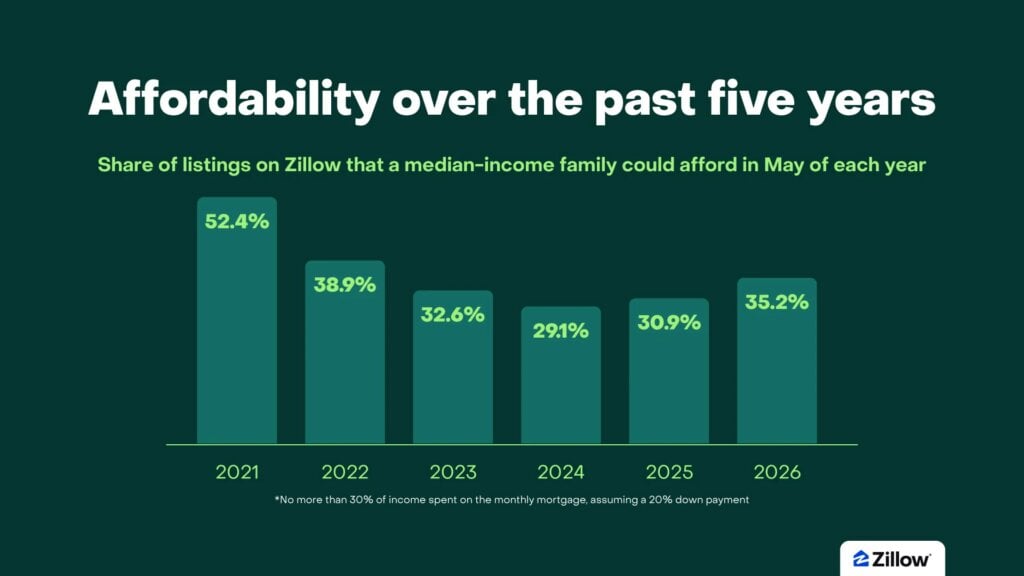
The average share of for-sale listings considered affordable to a median-income household fell from roughly 54% in 2021 to about 33% in 2023.
That share remained close to 33% during 2024 instead of falling further. More recent housing data show that affordability has improved modestly since 2025.
However, buying a home remains much harder than it was before the pandemic.
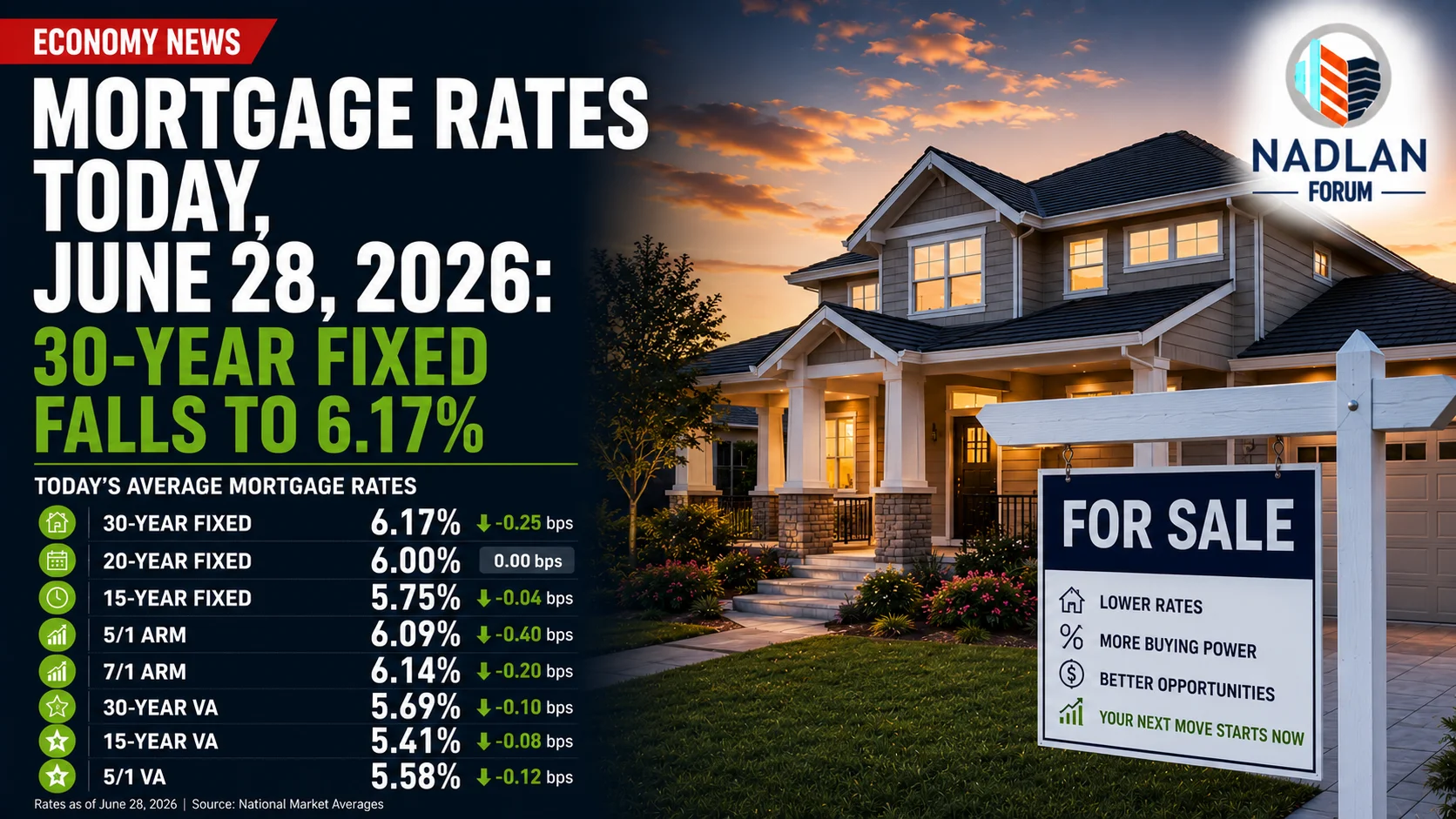
The typical U.S. home is still worth approximately 50% more than it was in 2019. Mortgage rates have also remained above 6% for much of 2026, keeping monthly payments high even in markets where home prices have stopped rising quickly.
A household’s ability to buy depends on the combined cost of the purchase price, mortgage interest, property taxes, insurance, maintenance, and association fees.
More Listings Are Becoming Affordable
Recent market changes have improved conditions slightly for buyers.
A larger number of homes are staying on the market longer, and sellers in some cities are reducing prices or offering concessions.
In May 2026, about 35% of listings were considered affordable to a household earning the local median income, compared with approximately 31% one year earlier.
That improvement is still limited compared with the period before mortgage rates and home prices increased.
The increase also varies greatly by location. Buyers in lower-cost areas may find more choices, while households in expensive coastal markets continue to face very limited affordable inventory.
High-Cost Cities Still Have the Largest Shortages
The national housing deficit remains heavily concentrated in expensive metropolitan areas where building is difficult and housing demand is strong.
Boston had the most severe shortage among major metropolitan areas in 2024 when measured by the number of families doubling up for every available home.
The city had approximately 5.3 families sharing housing for every vacant home available to rent or buy.
San Diego followed with about 4.7 doubled-up families per available home. Salt Lake City, Portland, and Los Angeles also ranked among the markets with the most severe supply gaps.
When measured by the total size of the deficit rather than the ratio, the largest shortages were found in:
- New York
- Los Angeles
- Boston
- San Francisco
- Washington, D.C.
These cities generally have high demand, expensive land, long approval processes, and zoning rules that restrict new housing in many neighborhoods.
Shortages and Affordability Are Closely Connected
Housing markets with the largest supply shortages also tend to have the fewest affordable homes.
When too many families compete for a limited number of available units, prices and rents are more likely to remain high.
In New York, Los Angeles, Boston, and San Francisco, only a small share of homes listed for sale can be considered affordable to a typical local household.
The problem is not always caused by a lack of construction demand. Developers may want to build, but local rules, neighborhood opposition, environmental reviews, infrastructure limits, and slow permitting can delay projects for years.
In some cases, the approval process itself adds significant costs that are eventually included in the price or rent of the completed home.
Sun Belt Markets Added More Housing
Housing supply has generally improved faster in parts of the Sun Belt.
Many of these markets allow new subdivisions, apartments, townhomes, and mixed-use projects to be approved and built more quickly.
Land may also be less expensive and more widely available than in established coastal cities.
As a result, builders were able to respond more directly to growing demand.
In several Sun Belt markets, the increase in inventory has slowed home-price growth and created more competition among landlords.
However, rapid construction does not guarantee permanent affordability.
Some of these areas are also facing rising insurance costs, property taxes, utility expenses, and transportation needs. If development slows while population growth continues, shortages could return.
Zoning Rules Remain a Major Barrier
Local zoning rules play an important role in determining how much housing can be built.
Many communities reserve large areas for detached single-family homes and do not allow duplexes, townhomes, small apartment buildings, or accessory dwelling units.
These limits reduce the number of homes that can be created on available land.
They can also prevent builders from offering smaller and less expensive housing options.
Supporters of zoning reform argue that cities should allow more housing types in existing residential neighborhoods.
Possible changes include:
- Allowing duplexes and triplexes in single-family areas
- Approving more townhomes
- Permitting backyard cottages and in-law units
- Reducing minimum lot sizes
- Removing unnecessary parking requirements
- Allowing homes near public transportation
- Speeding up permits on vacant or underused land
Opponents often raise concerns about traffic, schools, parking, neighborhood character, and infrastructure capacity.
The challenge is finding a balance that allows new homes while addressing legitimate community needs.
New Federal Housing Law Targets Supply Barriers
The housing-shortage report was released shortly after the 21st Century ROAD to Housing Act became law.
The legislation includes a broad group of reforms intended to increase housing production, reduce construction barriers, modernize federal programs, and improve access to affordable home financing.
The law provides support for manufactured and prefabricated housing, encourages simpler approval processes, and expands financing options for smaller mortgages.
It also includes measures designed to reduce unnecessary delays and costs in federal housing programs.
The Senate version of the legislation proposed modernizing the definition of manufactured housing to include homes built without a permanent chassis.
Manufactured Housing Could Become Less Expensive
One major part of the law removes the long-standing requirement that manufactured homes remain attached to a permanent steel chassis.
The rule was originally connected to the mobile nature of older factory-built homes. However, most modern manufactured homes remain permanently installed after they reach their final location.
Supporters argued that keeping the steel frame permanently attached increased material costs, limited design options, and made it harder for manufactured homes to be treated like traditional real estate.
Removing the requirement could reduce construction costs by an estimated $5,000 to $10,000 per home, depending on the design and location.
The change may also allow manufacturers to create a wider range of modular and prefabricated housing types.
However, the federal reform will have a limited effect in cities that continue to restrict manufactured homes through local zoning rules.
Smaller Homes Could Improve Affordability
The housing shortage cannot be solved only through large apartment buildings or traditional single-family subdivisions.
Smaller homes may provide a more affordable option for first-time buyers, seniors, single adults, and smaller households.
Manufactured homes, cottages, duplexes, townhomes, and accessory units can often be built with less land and fewer materials than large detached homes.
These housing types can also fit into existing neighborhoods and vacant lots.
Expanding them could help increase supply without requiring every community to approve high-rise apartment buildings.
However, financing for smaller homes can be difficult. Lenders may avoid small-dollar mortgages because the administrative cost is similar to that of a larger loan while the potential revenue is lower.
Federal efforts to expand access to smaller mortgages may help more buyers finance lower-cost properties.
Construction Must Continue After the Pandemic Boom
The apartment construction surge provided meaningful relief, but it may not last.
Many of the projects completed in 2024 were planned during a period of strong rent growth and low financing costs.
Today’s developers face a different market.
Interest rates remain elevated, rent growth has cooled, and building expenses are high. Those conditions make some future projects difficult to finance.
If construction falls sharply while household formation continues, competition for homes may increase again.
The direction of the national housing deficit will therefore depend on whether developers can continue building after the pandemic-era projects are completed.
What the Market Needs Next
Reducing a shortage of 4.7 million homes will require action from several levels of government and the private sector.
Federal reforms may lower some costs and improve access to financing.
State governments can set broader housing targets, encourage local zoning changes, and invest in infrastructure.
Cities can approve more homes, shorten permit timelines, and allow a wider range of housing types.
Builders will also need market conditions that make projects financially possible.
No single policy will close the deficit.
The strongest results are likely to come from combining new construction, zoning reform, manufactured housing, infrastructure investment, smaller homes, and better financing options.
U.S. Housing Outlook
The slowdown in the growth of the housing shortage is a positive sign.
Strong apartment and residential construction added about 1.4 million homes in 2024 and brought new supply close to the pace of household demand.
However, the country is still missing roughly 4.7 million homes, and the shortage remains severe in many expensive cities.
The next few years will show whether the improvement was the beginning of a longer recovery or only a temporary result of the pandemic construction boom.
Preventing the deficit from growing was an important first step. Reducing it will require the United States to continue building more homes, approve them faster, and create housing that working households can actually afford. For direct financing consultations or mortgage options for you visit 👉 Nadlan Capital Group.






















Responses