
Fed Policy Update 2026: Interest Rates Remain Unchanged as Inflation Stays Elevated

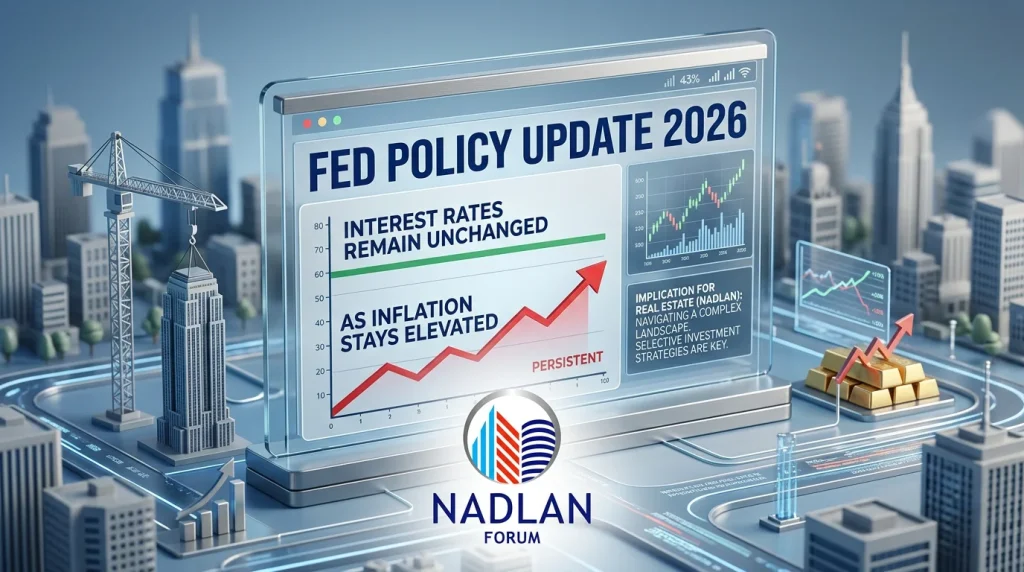
The Federal Reserve decided to leave interest rates unchanged in March 2026, as policymakers continue to assess inflation trends, labor market signals, and global economic uncertainty.
The decision was widely expected, reflecting a cautious approach as the central bank balances ongoing price pressures with signs of uneven economic growth.
The Federal Open Market Committee (FOMC) voted 11-1 to keep the federal funds rate in the range of 3.5% to 3.75%, a level that influences borrowing costs across the economy, including mortgages, credit cards, and business loans.
Why the Fed Chose to Hold Rates
The decision to pause rate changes is based on several key factors shaping the current economic environment.
Inflation remains above the Federal Reserve’s long-term target of 2%, and recent data suggests that price pressures are not easing as quickly as expected.
At the same time, the labor market is showing mixed signals, with steady employment levels but some weaker job growth trends.
Global developments are also playing a role. Rising energy prices linked to geopolitical tensions have added uncertainty to inflation forecasts.
Given these conditions, the Fed chose to wait for clearer data before making further changes to interest rates.
Economic Outlook from the Federal Reserve
In its latest projections, the Federal Reserve slightly adjusted its outlook for economic growth and inflation.
Officials now expect U.S. economic growth to reach about 2.4% in 2026, followed by 2.3% growth in 2027.
These estimates suggest moderate expansion, though not strong enough to eliminate concerns about inflation or economic stability.
The central bank also revised its inflation outlook upward.
The Personal Consumption Expenditures (PCE) index, the Fed’s preferred inflation measure, is now expected to reach 2.7% in 2026, including both headline and core inflation.
Inflation is projected to gradually move closer to the 2% target in later years.
Interest Rate Cut Expectations
Although the Fed kept rates steady, policymakers still signaled that rate cuts could happen in the future.
The latest projections indicate:
- One potential rate cut in 2026
- Another possible reduction in 2027
- A longer-term rate level near 3.1%
However, there is no clear timeline for when these cuts might occur.
Out of 19 policymakers, seven expect no rate changes this year, showing a divided outlook within the committee.
Earlier in the year, markets had expected multiple rate cuts, but those expectations have been reduced due to persistent inflation and global uncertainty.
Impact of Global Events on Policy
Global economic conditions, particularly energy markets, are influencing the Federal Reserve’s decisions.
Ongoing conflict in the Middle East has disrupted oil supply expectations and increased energy prices.
Higher energy costs can lead to broader inflation across the economy, affecting transportation, manufacturing, and consumer goods.
Because of this, the Fed has highlighted that the economic impact of global events remains uncertain and could affect future policy decisions.
Labor Market Remains Stable
Despite concerns about inflation and growth, the labor market continues to show resilience.
The Federal Reserve expects the unemployment rate to remain around 4.4% by the end of 2026.
While job growth has slowed in recent months, overall employment levels remain relatively strong.
A stable labor market provides some support for the economy, even as other indicators show mixed trends.
Political Pressure and Fed Independence
Interest rate decisions have also become part of broader political discussions.
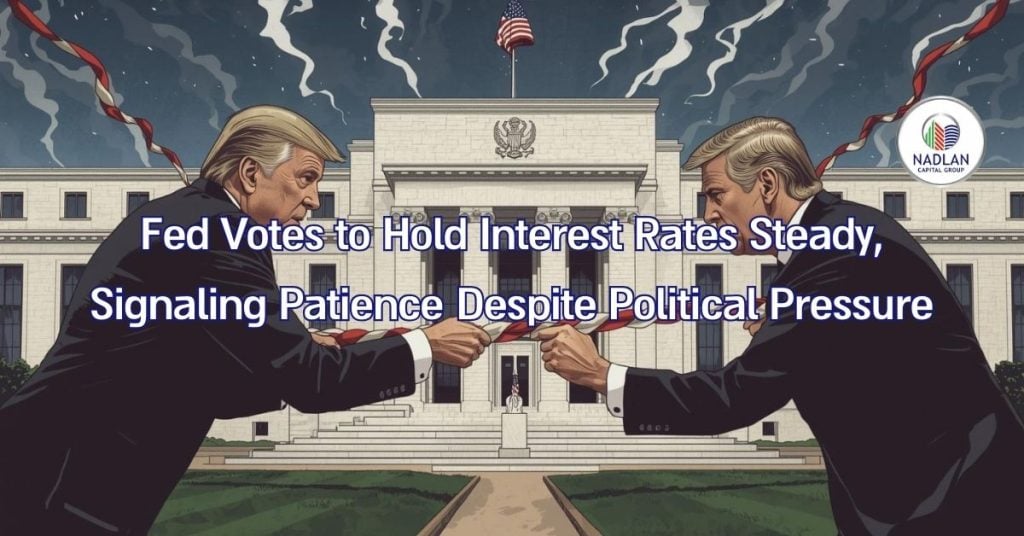
There have been calls from political leaders for the Federal Reserve to lower rates in order to support economic growth and reduce borrowing costs.
However, Fed officials have maintained that their decisions are based on economic data, not political pressure.
The central bank is designed to operate independently to ensure long-term economic stability.
Leadership and Institutional Developments
During the press conference, Federal Reserve Chair Jerome Powell addressed questions about his future role.
He indicated that he plans to remain in his position until an ongoing investigation related to the central bank is completed and a successor is confirmed.
This adds another layer of attention to the Federal Reserve’s decisions in the coming months, as leadership changes could influence future policy direction.
What This Means for Borrowers and Markets
The decision to hold rates steady has several implications for consumers and businesses.
Borrowing costs are likely to remain elevated in the near term, affecting:
- Mortgage rates
- Auto loans
- Credit card interest rates
- Business financing
For financial markets, the outlook suggests continued uncertainty, as investors adjust expectations for future rate cuts.
Federal Reserve Interest Rates 2026 Outlook
The latest Federal Reserve interest rates 2026 decision reflects a cautious and data-driven approach.
In simple terms:
- Interest rates remain unchanged for now
- Inflation is still above target
- Rate cuts may happen, but not immediately
Future decisions will depend on how inflation, economic growth, and global conditions evolve throughout the year.
Summary
The Federal Reserve has chosen to pause interest rate changes as it navigates a complex economic environment.
While the possibility of future rate cuts remains, ongoing inflation and global uncertainty are keeping policymakers cautious.
For consumers and investors, this means borrowing costs may stay higher for longer, and market conditions could remain uncertain in the months ahead. For direct financing consultations or mortgage options for you visit 👉 Nadlan Capital Group.
















Responses