
Lawmakers Push New Bill to Curb Home Insurance Crisis Amid Escalating Natural Disasters

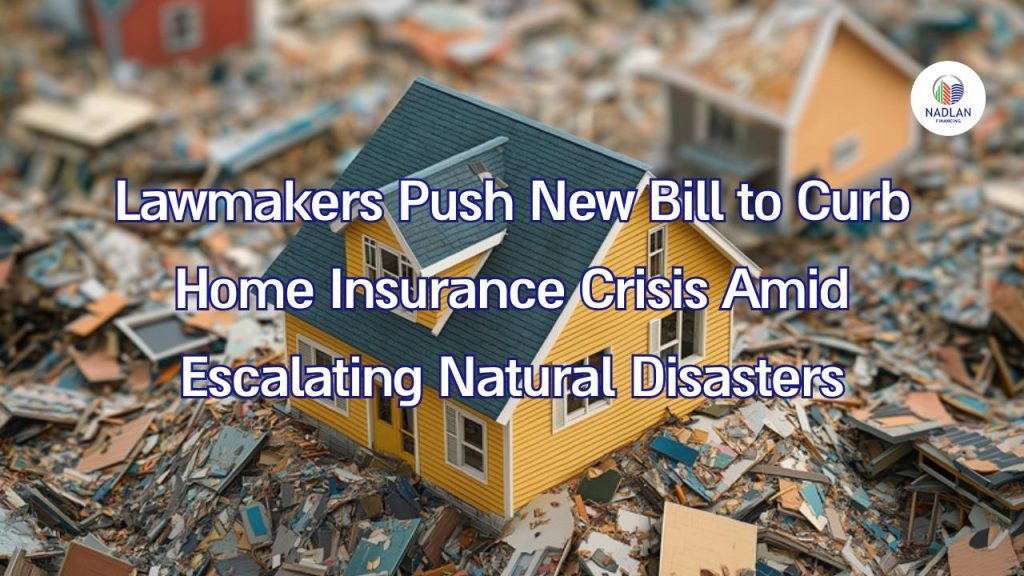
In a bold response to the growing crisis in the American homeowner’s insurance market, U.S. Sen. Adam Schiff has introduced the INSURE Act short for Incorporating National Support for Unprecedented Risks and Emergencies. The proposed legislation aims to address soaring premiums and dwindling coverage options in disaster-prone regions by establishing a federal catastrophic reinsurance program.
“Too many families are finding it impossible to afford or even access basic home insurance,” said Schiff during a press conference on Capitol Hill. “This is a nationwide emergency. The INSURE Act would provide a federal safety net that stabilizes the market and reduces costs by giving insurance companies a viable reinsurance option, particularly in high-risk zones impacted by wildfires, floods, and hurricanes.”
A Market in Distress
Driven by increasingly destructive weather events linked to climate change, the U.S. insurance industry is facing mounting losses. As a result, major private insurers are scaling back operations or exiting entire markets. California, Florida, Texas, and Louisiana have been hit especially hard. In these states, homeowners in fire or flood-prone areas are left with few if any affordable insurance options.
State Farm, for example, has stopped issuing new homeowner policies in California. Allstate also halted new policy applications in the state in late 2022, citing unsustainable risk exposure.
The INSURE Act proposes to fill that gap by creating a public reinsurance program essentially a financial backstop for private insurers administered through the U.S. Department of the Treasury. The federal program would cap the financial liability insurers face after a disaster, thereby encouraging them to remain active in higher-risk markets without passing extreme costs on to homeowners.
“This is about fairness and sustainability,” said Sen. Mazie Hirono, a co-sponsor of the bill. “No one should be denied coverage because of where they live. As disasters become more frequent, this legislation ensures Americans won’t be left unprotected.”
What the INSURE Act Would Do
If enacted, the INSURE Act would:
- Create a Federal Catastrophic Reinsurance Program within the U.S. Treasury, establishing a claims threshold above which the government would step in to assist.
- Mandate comprehensive natural disaster coverage from participating insurers, including fires, floods, hurricanes, severe storms, earthquakes, and more.
- Require insurers to invest in mitigation efforts, partnering with policyholders to reduce overall risk through upgrades like fire-resistant materials or flood-proofing.
- Enhance monitoring and oversight by expanding cooperation between the Office of Financial Research, the Federal Insurance Office, and state regulators.
The House version of the bill is being led by Reps. Sydney Kamlager-Dove, Doris Matsui, and Salud Carbajal.
“As wildfires, floods, and extreme weather become the new normal, we can’t allow Americans to be priced out of safety,” said Rep. Carbajal. “This bill ensures that homeowners regardless of ZIP code can access comprehensive, affordable coverage.”
A System Under Strain
The timing of the bill follows the devastating Eaton and Palisades wildfires that swept across California in January. The fires destroyed more than 11,000 homes, caused an estimated $52.5 billion in economic damage, and took 29 lives. The insurance fallout from those fires has highlighted longstanding weaknesses in both the private and public insurance sectors.
According to research from Harvard’s Joint Center for Housing Studies, signs of instability in California’s insurance market were evident even before the wildfires. Between 2018 and 2022, cancellation and nonrenewal rates in high-risk ZIP codes like Altadena and Pacific Palisades rose to 1.7% and 1.8%, respectively—surpassing state and national averages.
Premiums in these areas also skyrocketed. In Pacific Palisades, rates surged by 33% above inflation during that period, while Altadena saw a 26% spike.
“Families are facing impossible choices,” said Amy Bach, Executive Director of United Policyholders. “They’re either being dropped or priced out of protection. This is no longer a state-level problem it’s a national emergency, and the INSURE Act could be the lifeline the market needs.”
FEMA Shakeup Raises Concerns
Compounding the crisis is political uncertainty surrounding the future of FEMA. In a recent cabinet meeting, Department of Homeland Security Secretary Kristi Noem reportedly stated the Trump administration’s goal to “eliminate FEMA” altogether a move that has alarmed local governments, insurers, and housing advocates alike.
FEMA plays a central role in natural disaster preparedness, response, and recovery including administering the National Flood Insurance Program (NFIP), which insures millions of U.S. homes. Critics warn that weakening or dissolving FEMA could further destabilize the already fragile insurance system.
Looking Ahead
Sen. Schiff’s leadership on the INSURE Act comes as he faces unrelated political controversy, including allegations of mortgage misrepresentation from William Pulte, Director of the Federal Housing Finance Agency. Schiff has denied all claims and says they are politically motivated.
Despite the noise, the Senator remains focused on the urgency of the moment. “Insurance is becoming a luxury good, when it should be a basic protection,” he said. “We cannot wait until another city burns, floods, or gets leveled by a storm to act.”
As the climate crisis accelerates and Americans brace for an unpredictable disaster season, lawmakers say the time for structural reform is now. For direct financing consultations or mortgage options for you visit 👉 Nadlan Capital Group.




















Responses