
U.S. Consumer Sentiment Holds Steady in October Amid Job Market Concerns

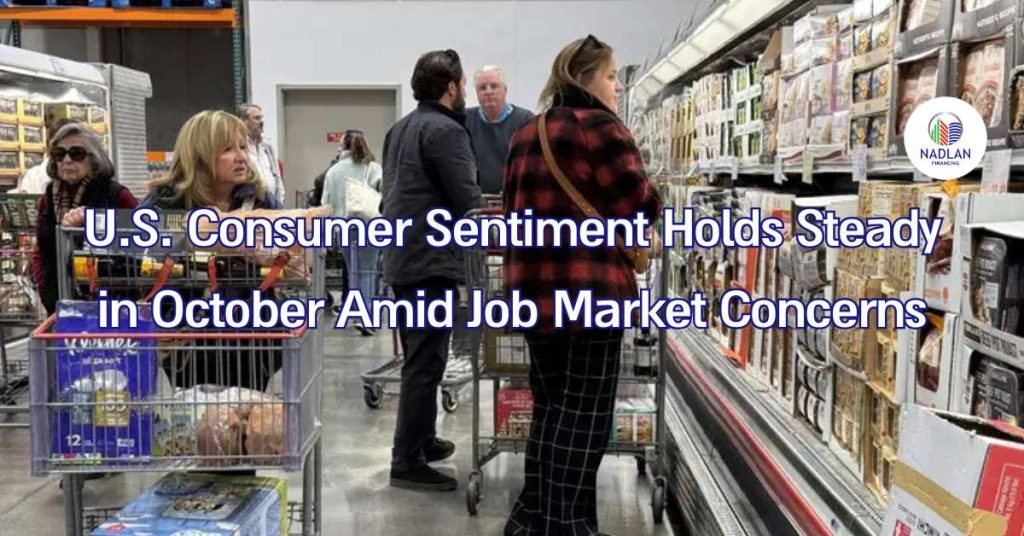
U.S. consumer sentiment remained essentially unchanged in October, though Americans continue to express concerns about the labor market and persistent inflation as the federal government shutdown looms over economic confidence.
The University of Michigan’s preliminary Survey of Consumers for October recorded a sentiment index of 55, essentially flat from September’s 55.1 reading. Economists had anticipated a modest decline to 54.2, signaling that, despite uncertainty, consumers’ overall outlook has not yet significantly worsened.
Inflation Concerns Persist
The survey revealed that “pocketbook issues”, including rising prices and job insecurity, remain the dominant concern among households. Consumer expectations for one-year inflation edged slightly lower to 4.6%, down from 4.7% in September, while five-year inflation expectations held steady at 3.7%, reflecting ongoing worries about elevated prices over the medium term.
Shoppers also indicated that their views on current buying conditions for durable goods remain pessimistic, while their outlook on personal finances continues to be cautious.
Labor Market Uncertainty
Although government data collection paused during the shutdown, previous indicators suggested that the labor market had softened heading into August, with job growth nearly stagnating over the prior three months. This continued uncertainty over employment prospects is likely a key factor keeping consumer confidence subdued.
Oliver Allen, senior U.S. economist at Pantheon Macroeconomics, noted, “The final Michigan survey for October probably will show a more significant deterioration, unless the shutdown ends very soon.”
Shutdown Effects
The survey was conducted from September 22 through October 6, meaning it partially overlaps with the start of the shutdown on September 30. Historically, government shutdowns have had a dampening effect on consumer sentiment, as households worry about government services, federal paychecks, and broader economic stability.
While respondents reported limited immediate changes in their perception of the economy, economists caution that final sentiment data may reflect the full impact of the shutdown, especially if it continues into November.
Fed Policy Outlook
Despite elevated inflation expectations, economists largely anticipate the Federal Reserve will proceed with another rate cut at its upcoming October 28-29 FOMC meeting. In September, the Fed lowered its benchmark overnight rate by 25 basis points, bringing the target range to 4.00%-4.25%, citing labor market softening and slower economic momentum.
Market watchers note that consumers’ inflation concerns and labor market anxiety will play a key role in shaping the Fed’s approach, as policymakers aim to balance price stability with sustaining growth.
Michael Arone, CIO at State Street Investment Management, emphasized that, while sentiment surveys suggest caution, consumers continue to spend, demonstrating resilience in discretionary spending even amid heightened uncertainty.
Looking Ahead
As the shutdown continues, analysts expect consumer sentiment to face further headwinds. With inflation expectations remaining above the Fed’s comfort zone and employment growth showing fragility, households may adopt a more cautious approach to big-ticket purchases and borrowing.
At the same time, economists point out that any near-term decline in sentiment could be offset if the government reopens and labor market indicators stabilize, which would reinforce confidence and spending.
In sum, while sentiment remains stable for now, underlying concerns about inflation and job security are likely to keep U.S. households vigilant, influencing both consumption patterns and broader economic trends as the year progresses. For direct financing consultations or mortgage options for you visit 👉 Nadlan Capital Group.
















Responses