
Government Shutdown May Accelerate Fed Interest Rate Cuts

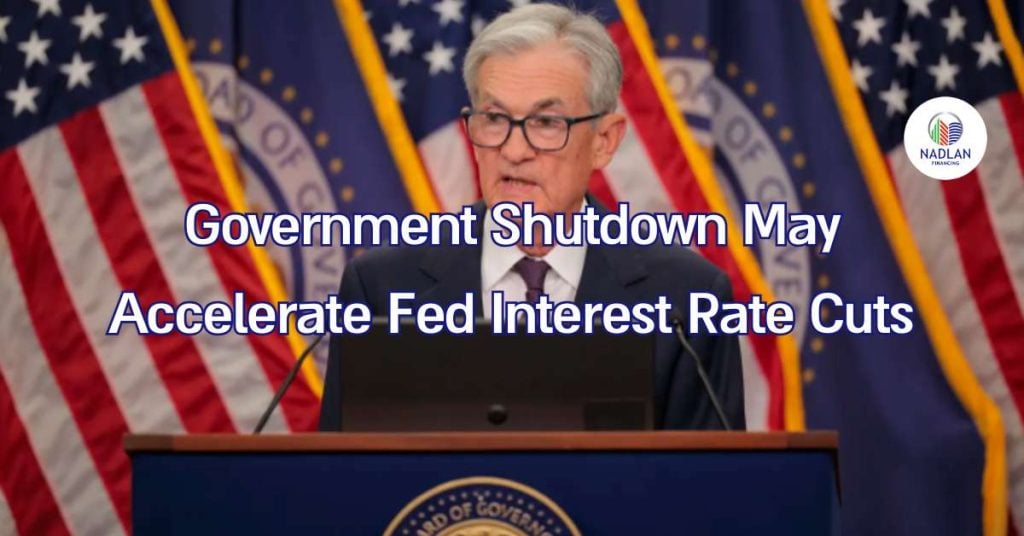
The ongoing budget impasse in Washington may have effectively solidified market expectations that the Federal Reserve will move forward with additional interest rate cuts this year. With the U.S. government partially shut down, uncertainty over economic data and labor market conditions is tilting the scales toward easing.
Markets now price in a 100% probability of an October rate cut and an 88% chance of a second reduction in December, up sharply from levels before the shutdown began at midnight last Thursday.
“The U.S. government shutdown and related delays in economic reporting further increase the likelihood of an October Fed rate cut,” said Krishna Guha, head of global policy and central bank strategy at Evercore ISI. “Even with cautious language from the Fed, the shutdown reinforces the need to mitigate potential economic risks.”
The Fed’s Position Amid Uncertainty
Federal Reserve Chair Jerome Powell and his colleagues are likely to favor caution during this period, particularly if the shutdown continues past a few days. Historically, the Fed has opted for preemptive easing when critical economic data is unavailable, aiming to reduce downside risks to growth and employment.
“The potential damage from a prolonged shutdown, combined with lingering labor market softness, outweighs concerns about temporary inflationary pressures,” Guha added.
At the September FOMC meeting, a narrow majority of officials indicated a preference for two rate cuts by year-end, rather than a single adjustment. While some expressed concern that tariffs could push inflation higher, most agreed that such effects are likely short-term and would not derail the gradual easing path aimed at returning inflation to the Fed’s 2% target.
Market Implications
The CME Group’s FedWatch tracker reflects growing certainty: traders are fully pricing in an October cut and nearly nine in ten anticipate another reduction in December.
Bank of America economists noted that while past shutdowns have typically ended before the Fed’s scheduled meetings, an extended impasse could create two key pressures:
- Data Gaps: If the September jobs report is delayed or unavailable, Fed officials may push for a “risk management” cut to ensure economic stability.
- Labor Market Protection: Officials may ease policy to counteract the negative effects of furloughed workers losing income. Each day of shutdown is projected by the Congressional Budget Office to furlough approximately 750,000 federal employees, at a daily compensation cost of $400 million.
Historically, furloughed workers have received backpay once the government reopens, but President Trump has indicated potential long-term reductions in federal payrolls, which could further weaken the labor market. Recent ADP data already shows private payrolls declining by 32,000 in September, highlighting vulnerabilities even before the shutdown impacts are fully realized.
Broader Economic Concerns
Beyond the immediate workforce implications, the shutdown will delay other critical government reports that influence monetary policy, including GDP revisions, consumer spending updates, and inflation metrics. The absence of timely data limits the Fed’s ability to fully assess the economy, making a cautious, preemptive rate cut more likely.
Analysts also point to the cumulative effect on business confidence, consumer spending, and housing markets. Mortgage rates and home affordability could benefit if the Fed reduces rates, potentially spurring purchases in a market still feeling the pressure of elevated borrowing costs.
“While the shutdown itself does not automatically dictate Fed policy, the combination of delayed data, labor market strain, and economic uncertainty practically ensures additional easing,” Guha said. “Central bankers prefer to act proactively rather than reactively in such circumstances.”
Looking Ahead
The situation remains fluid. Should the government reopen before the Fed meets on October 28-29, officials may have updated economic data in hand, potentially moderating the pace of rate cuts. However, if the shutdown extends, the case for immediate policy easing becomes even stronger.
Investors and market watchers will be closely monitoring developments in Washington over the next few days, as even short-term disruptions can influence expectations for housing, employment, and consumer spending, key components in the Fed’s decision-making calculus.
“Extended uncertainty from the government shutdown adds another layer of risk to the economy,” said Stephen Juneau, economist at Bank of America. “In such an environment, the Fed is likely to favor rate cuts as a precautionary measure to sustain economic momentum.”
As policymakers navigate these challenges, financial markets are bracing for the dual effects of a partially frozen government and a Fed poised to act, signaling a potentially significant shift in monetary policy before year-end. For direct financing consultations or mortgage options for you visit 👉 Nadlan Capital Group.
















Responses