
Rising Insurance and Property Taxes Make Homeownership Harder in High-Risk Areas


Homeownership is becoming more difficult across the U.S., but in some regions, rising insurance premiums and property taxes are quietly pushing ownership even further out of reach. These growing costs are hitting hardest in areas exposed to natural hazards, and experts say the pressure is only expected to increase in 2026 and beyond.
According to new data cited by Realtor.com, growing housing density in high-risk locations is adding a hidden financial burden for homeowners one that many buyers do not fully account for until after they purchase.
Insurance and Taxes Are Rising Fast
Real estate data firm Cotality reports that over the past six years:
- Property taxes have risen 27%
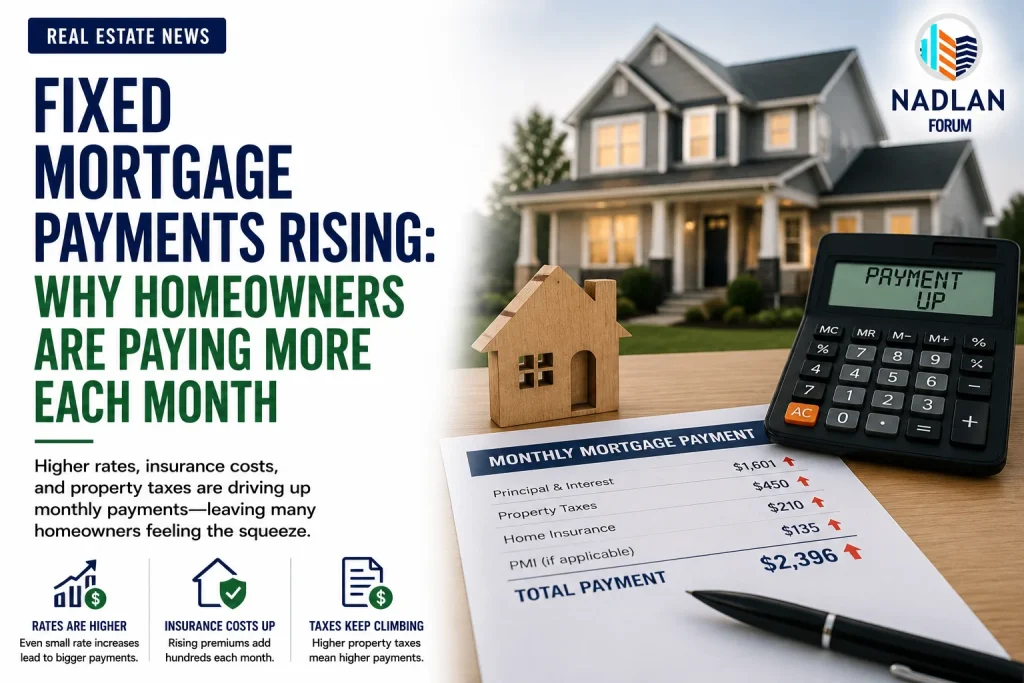
- Homeowners insurance now makes up a record 9% of monthly housing costs
These expenses are rising faster than wages in many areas, making it harder for households to manage total ownership costs even if mortgage payments stay stable.
Cotality projects that average insurance premiums will rise another 8% in both 2026 and 2027, adding more strain to household budgets.
More Homes Are Located in High-Risk Zones
Speaking at ResiDay, an annual real estate conference, John Rogers, Cotality’s Chief Data and Analytics Officer, said that about 12% of all U.S. housing is located in areas at high risk from hazards such as:
- Wildfires
- Severe winter storms
- Hail
- Flooding
- Hurricanes
That share represents roughly $4.3 trillion in potential reconstruction costs if those homes were destroyed, including labor, materials, and equipment.
Reconstruction Costs Expected to Climb
Cotality estimates that by 2050, the share of housing exposed to high risk could rise to 20%, equal to about $7.2 trillion in reconstruction costs.
As rebuilding costs grow, insurance companies adjust pricing to manage that risk—often passing higher premiums on to homeowners.
“Insurers use climate and weather risk as a key factor when setting rates,” said Mark Friedlander, Senior Director of Media Relations at the Insurance Information Institute.
Homeowners in higher-risk areas generally pay much more for coverage than those in safer regions.
Affordability Was Already Tight
According to Joel Berner, Senior Economist at Realtor.com, many of the metro areas most affected by rising insurance costs were already struggling with affordability.
“When you layer high insurance premiums on top of already expensive housing markets, homeownership can become unreachable for many residents,” Berner said.
Higher taxes and insurance often push total monthly costs well beyond what buyers initially expect—especially first-time buyers.
People Are Still Moving to Risky Areas
Despite rising costs, demand remains strong in some high-risk regions.
Anand Srinivasan, Head of Research and Development at Cotality, noted that population growth continues in areas exposed to extreme weather.
“People are still moving to flood- and fire-prone regions, including Florida and Hurricane Alley,” he said.
Job opportunities, lifestyle preferences, and climate migration all play a role.
Which Areas Face the Most Housing Risk
A recent ATTOM Housing Risk Report analyzed county-level markets based on affordability, equity levels, foreclosures, and unemployment.
The report found that many of the highest-risk counties were located in the South and coastal states. Among the 50 highest-risk markets:
- Louisiana: 4 counties
- Florida: 7 counties
- New Jersey: 5 counties
- California: 14 counties
To be labeled “very high risk,” a property must score above 70 on a perils risk scale that includes:
- Inland flooding
- Hurricane winds and storm surge
- Wildfires
- Earthquakes
- Severe storms
Multiple Hazards Add to the Cost
Srinivasan pointed out that many of the riskiest cities face more than one hazard throughout the year.
“Some cities deal with flooding, then hurricanes, then wildfire risk,” he said.
“In places like Miami, the cycle just keeps repeating.”
Each additional risk increases insurance pricing and adds pressure to already tight housing markets.
What This Means for Buyers and Homeowners
Rising insurance premiums and property taxes are becoming a bigger part of the affordability challenge especially in high-risk regions. Even buyers who can qualify for a mortgage may struggle with long-term ownership costs.
As risks grow and costs rise, experts say buyers will need to factor in total housing expenses, not just home prices and interest rates, when deciding where and whether to buy. For direct financing consultations or mortgage options for you visit 👉 Nadlan Capital Group.



















Responses