
Fixed Mortgage Payments Rising: Why Homeowners Are Paying More Each Month

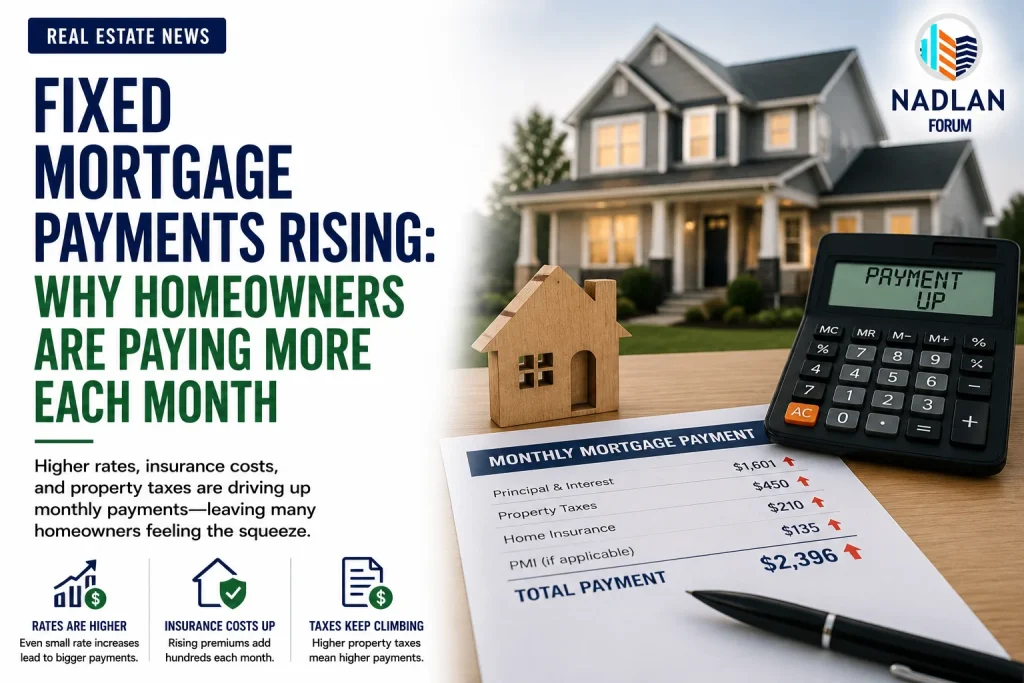
Many homeowners believe that choosing a fixed-rate mortgage guarantees the same monthly housing payment for the life of the loan. While the interest rate itself remains fixed, the total monthly payment often changes over time.
Across the United States, millions of homeowners are now facing higher monthly mortgage bills because of rising property taxes, homeowners insurance premiums, and escrow shortages.
According to recent housing and insurance data, escrow-related housing costs have increased sharply over the past several years, putting additional pressure on household budgets even for borrowers with low locked-in mortgage rates.
What a Fixed Mortgage Really Covers
A fixed-rate mortgage only locks in the interest rate tied to the loan principal.
However, most monthly mortgage payments include several other expenses beyond principal and interest, including:
- Property taxes
- Homeowners insurance
- Mortgage insurance (if required)
- Flood insurance in some areas
These additional costs are often managed through an escrow account maintained by the mortgage servicer.
Because taxes and insurance continue changing over time, the total mortgage payment can still increase even though the loan’s interest rate stays the same.
What Is an Escrow Account?
An escrow account is a separate account used by lenders to collect and pay certain housing-related expenses on behalf of homeowners.
Each month, borrowers contribute money into the escrow account along with their regular mortgage payment. The lender then uses those funds to pay annual property taxes and insurance bills when they come due.
Roughly 80% of mortgage borrowers in the United States currently have escrow accounts tied to their loans.
While escrow systems help homeowners avoid large annual tax or insurance bills, they also create payment fluctuations when housing-related costs rise.
Escrow Costs Have Increased Sharply Since 2019
Housing-related expenses inside escrow accounts have risen dramatically over the past several years.
According to property analytics data, escrow costs have jumped approximately 45% nationwide since 2019.
Some states have experienced even larger increases:
- Florida: around 70% increase
- Colorado: roughly 77% increase
These increases are significantly higher than overall inflation during the same period.
As a result, many mortgage servicers are now reporting widespread escrow shortages for homeowners across the country.
Why Escrow Shortages Happen
Mortgage companies perform annual escrow reviews to estimate future costs for taxes and insurance.
If the lender discovers that actual expenses were higher than expected during the previous year, the account may show a shortage.
To correct the deficit, lenders typically either:
- Spread the shortage across the next 12 months
- Allow homeowners to pay the balance upfront in one lump sum
For many homeowners, the additional monthly payment can be significant.
Current estimates suggest the average escrow shortage in 2026 could reach approximately $2,157, which would add nearly $180 per month to a homeowner’s mortgage payment if spread over one year.
Homeowners Insurance Is Becoming More Expensive
One of the biggest drivers behind rising escrow costs is homeowners insurance.
Insurance premiums have surged nationwide due to:
- Severe weather events
- Wildfires
- Hurricanes
- Rising construction costs
- Increased rebuilding expenses
- Higher insurer risk exposure
Industry estimates show average annual homeowners insurance costs could exceed $3,000 nationally by the end of 2026.
That represents an increase of roughly 46% since 2021.
States facing natural disaster risks have seen some of the largest insurance increases in the country.
Property Taxes Are Also Rising
Property taxes are another major reason mortgage payments continue increasing.
As home values climbed sharply over the past several years, local governments reassessed many properties at higher market values.
Nationally, average yearly property tax costs have increased by more than 27% since 2019.
In many housing markets, homeowners are now paying substantially more in taxes than they were just a few years ago.
Because property taxes are included in escrow calculations, rising tax bills directly increase monthly mortgage payments.
Some Areas Face Bigger Increases Than Others
The impact varies heavily depending on location.
Homeowners in regions with:
- Rapid home price appreciation
- High insurance risk
- Wildfire exposure
- Hurricane activity
- Flood concerns
are often seeing the steepest increases in housing-related costs.
Florida, California, Colorado, Louisiana, and parts of Texas have experienced especially sharp insurance premium increases in recent years.
In some cases, insurance expenses are now rising faster than property taxes.
Many Homeowners Are Caught Off Guard
A growing number of borrowers are surprised when their mortgage statements suddenly increase despite having fixed-rate loans.
Many homeowners focus primarily on the interest rate when buying a house and assume their housing payment will remain mostly unchanged over time.
However, taxes and insurance are not fixed expenses.
As those costs rise, lenders must adjust escrow contributions to ensure future bills can still be paid.
For households already managing higher grocery, gas, and utility costs, these payment increases can create additional financial strain.
Homeowners May Have Options to Reduce Costs
While rising escrow payments cannot always be avoided, homeowners may still have ways to lower some housing expenses.
Possible strategies include:
Shop for Lower Insurance Rates
Comparing insurance providers may help reduce premiums.
Homeowners can also review:
- Deductible amounts
- Coverage limits
- Available discounts
- Bundling opportunities
Even modest savings on insurance can help reduce escrow pressure.
Appeal Property Tax Assessments
In some cases, homeowners may challenge local property assessments if they believe their property valuation is too high.
Successful appeals can reduce annual property tax bills.
However, experts recommend filing appeals only when strong supporting evidence exists.
Look for Tax Exemptions
Some local governments offer property tax reductions for:
- Seniors
- Veterans
- Disabled homeowners
- Primary residences
Checking available exemptions may help lower future escrow costs.
Paying Escrow Shortages Upfront vs. Monthly
When an escrow shortage occurs, lenders often provide two repayment choices.
Homeowners may either:
- Pay the shortage in one lump sum
- Spread the repayment over the next year
Paying upfront may reduce future monthly payment increases if homeowners have enough emergency savings available.
However, many households choose monthly repayment to avoid large immediate expenses.
The right option depends on personal finances, savings levels, and monthly budget flexibility.
Rising Housing Costs Continue Pressuring Affordability
The situation highlights a larger issue facing the U.S. housing market.
Even homeowners who locked in historically low mortgage rates during 2020 and 2021 are now experiencing rising ownership costs through taxes, insurance, maintenance, and utilities.
Housing affordability challenges are no longer limited to new buyers.
Existing homeowners are also feeling pressure from the growing cost of maintaining a property.
Fixed Mortgage Rates Still Offer Stability
Despite these increases, fixed-rate mortgages still provide important protection against rising interest rates.
Borrowers with adjustable-rate mortgages face the additional risk of loan interest rates changing over time.
With fixed-rate loans, the principal and interest portion remains stable throughout the mortgage term.
Still, the broader cost of homeownership continues evolving as taxes and insurance costs increase nationwide.
Housing Costs May Continue Rising in Some Markets
Experts expect insurance and property tax pressures to remain elevated in many areas over the next several years.
Natural disasters, rebuilding costs, inflation, and local government spending needs are likely to continue influencing housing expenses.
As a result, homeowners may need to budget for future escrow increases even if their mortgage interest rate never changes.
Understanding how escrow works has become increasingly important for anyone planning to buy or own a home in today’s housing market. For direct financing consultations or mortgage options for you visit 👉 Nadlan Capital Group.
























Responses