
U.S. Asking Rents Keep Falling as Affordability Slowly Improves for Low-Wage Renters


Asking rents across major U.S. cities continued to decline in November, offering modest relief to renters after years of steep increases. New data shows that rent affordability is improving slightly especially for minimum-wage workers but costs remain high in most large metro areas.
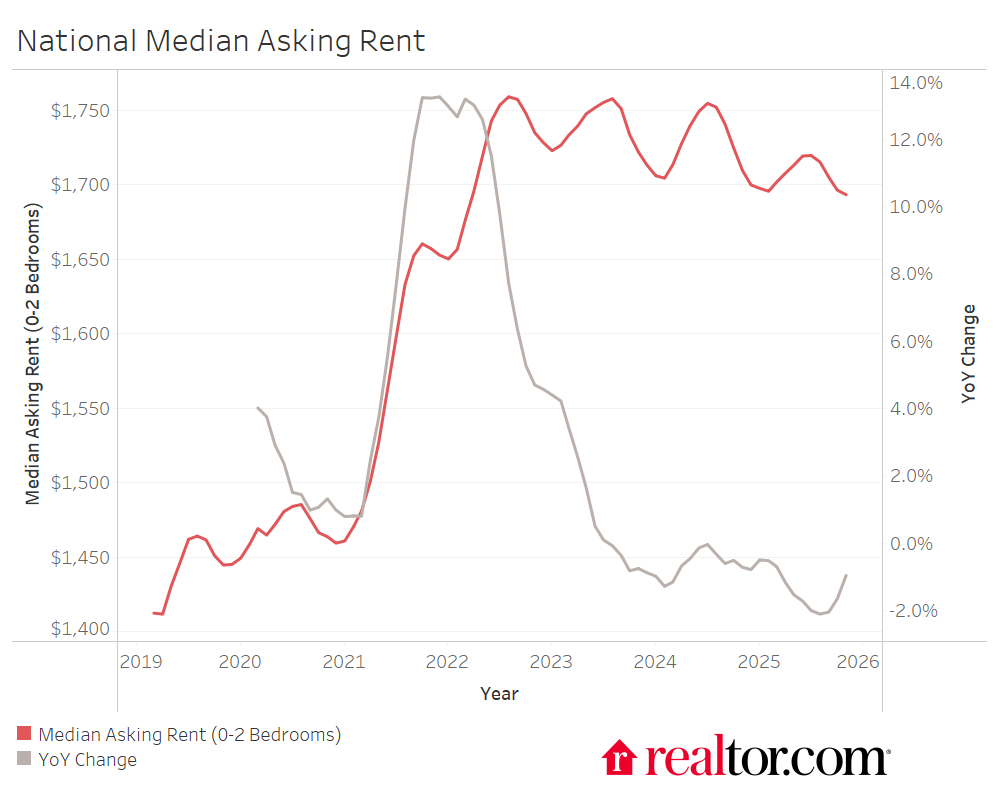
For the 28th straight month, the median asking rent for units with zero to two bedrooms fell compared with the same time last year. The national median rent now stands at $1,693, down $6 from October and $17 lower than a year ago, according to recent housing data.
November also marks the third year in a row where rents were lower than the prior year for the same month. Seasonal trends are also helping, as rents typically cool during winter after peaking in early summer.
Rents Are Lower—but Still Far Above Pre-Pandemic Levels
While rents are easing, they remain much higher than before the pandemic.
- November 2022 rent peak: $1,735
- November 2025 median rent: 2.4% lower
- Since November 2019, rents are still 17.2% higher
This means renters are seeing some relief, but household budgets are still under pressure especially for lower-income households.
Rent Changes by Unit Size
All major unit types continue to show year-over-year declines:
- Studios: $1,418 (down 0.4%)
- One-bedroom units: $1,572 (down 1.0%)
- Two-bedroom units: $1,874 (down 1.1%)
Studio rents are stabilizing faster than larger units. Because studios are often used by single renters or those moving out of shared living situations, demand can shift more quickly. This may signal that some renters are gaining confidence to live alone again.
Larger units are also trending toward flat growth, though more slowly.
Can Minimum-Wage Earners Afford Rent? Mostly No
Even with falling rents, affordability remains a major challenge for workers earning minimum wage.
The federal minimum wage has stayed at $7.25 per hour since 2009, and many states still follow that rate. Analysts looked at how many hours two minimum-wage earners would need to work each week to afford the median rent in their metro area, assuming rent equals 30% of income.
Based on November 2025 rents and current wage levels, only five of the 50 largest metro areas allow two minimum-wage workers to afford the median rental without working overtime.
These metros benefit from higher local minimum wages and below-average rents.
Where Affordability Is Improving in 2026
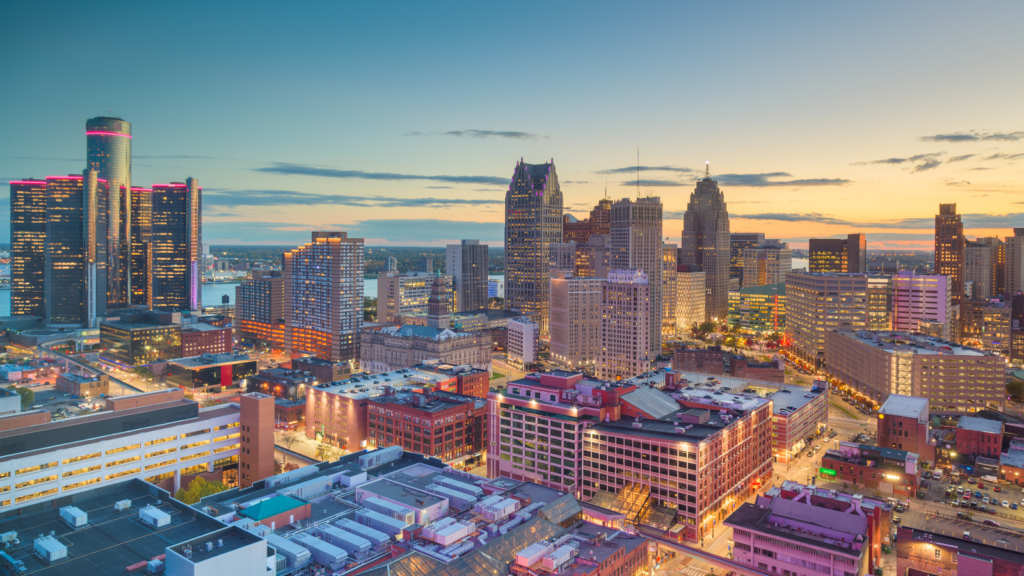
Upcoming minimum-wage increases in states like Michigan and Florida will improve affordability next year.
Cities such as Detroit, Jacksonville, Orlando, Tampa, and Miami will see renters needing fewer hours of work each week to cover rent. In some cases, required hours drop by six to twelve hours per worker per week, which is a meaningful improvement.
Several other states are also planning minimum-wage increases in 2026, which should provide incremental relief.
Where Rent Remains Out of Reach
Despite progress, 43 of the top 50 metro areas remain unaffordable for minimum-wage households.
In places like Philadelphia, Atlanta, Nashville, Charlotte, Raleigh, and Dallas, two minimum-wage earners often need to work 80 to 95 hours per week each to afford the typical rental.
Even in areas with higher wages, such as San Jose, rents are so high that affordability remains strained. While some workers earn more than the legal minimum, the median rent still demands long work hours for lower-wage households.

Why the Numbers Don’t Tell the Whole Story
It’s important to note that not all workers earn the legal minimum wage. In many cities, the market wage for entry-level jobs is higher than the official minimum. That said, rent affordability remains tight for millions of households, especially those working in service and hourly jobs.
The Bottom Line
Rents are clearly moving in the right direction, falling year over year and offering some relief as inflation cools. However, affordability remains a serious challenge particularly for minimum-wage earners in large metro areas.
Wage increases planned for 2026 will help, but for most renters, housing costs are still taking up too much of their income. Until rents fall further or wages rise faster, affordability will remain a central issue in the U.S. housing market. For direct financing consultations or mortgage options for you visit 👉 Nadlan Capital Group.





















Responses