
California’s AI Boom Is Lifting Luxury Homes — But Exposing Cracks in the Broader Housing Market


California’s real estate market is once again being shaped by technology but this time, the driver is artificial intelligence. The explosive growth of AI companies has created a surge in wealth, particularly in Northern California, helping stabilize luxury home prices and even easing pressure on the state’s strained budget.
Yet this support comes with strings attached. A recent report from Realtor.com suggests that California’s housing market may now be leaning too heavily on a narrow slice of AI-driven income. If that momentum fades, the effects could ripple through home prices, construction, and buyer confidence faster than many expect.
Is California building stability — or stacking risk?
Key Highlights: The forces shaping California housing
- AI-driven wealth is supporting luxury housing demand, especially in San Francisco.
- California faces a housing shortage estimated between 840,000 and 2.5 million units.
- Luxury home prices are rising faster than the broader housing market.
- The tech sector continues to cut jobs despite record AI investment.
- State tax revenues are increasingly tied to stock-based compensation from tech firms.
- Middle-income housing demand remains under pressure from rates and affordability.
These trends point to a market that looks strong on the surface, but uneven underneath.
Luxury housing holds firm — but only at the top
San Francisco has emerged as a clear example of how concentrated tech wealth influences housing. Even as affordability challenges limit activity across much of California, luxury buyers remain active and willing to pay higher prices.
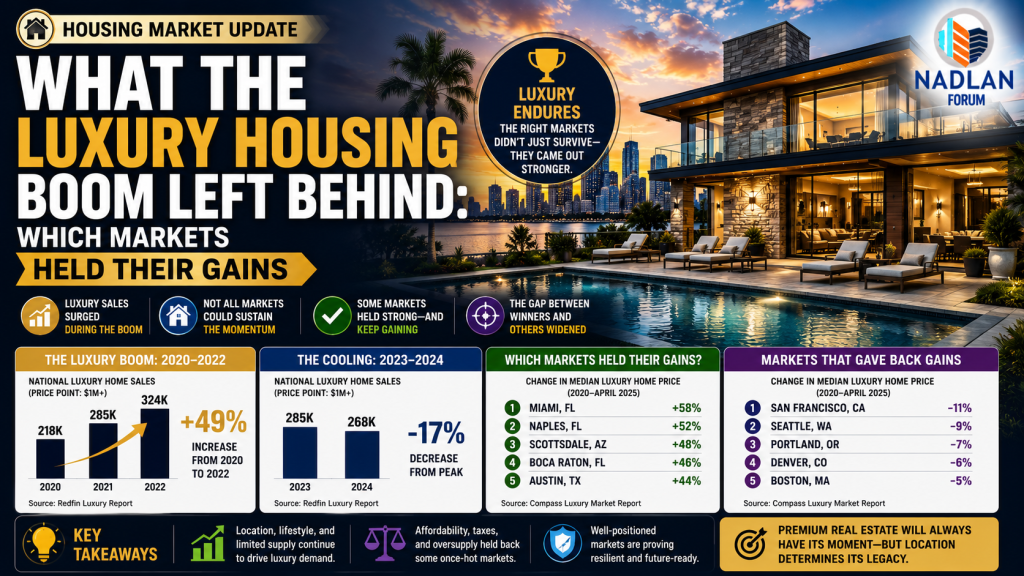
Realtor.com data shows that the average luxury home sale price in California climbed from $2.48 million in 2024 to $2.65 million in 2025, nearly a 7% increase. By comparison, luxury prices statewide rose just over 3%.
That gap matters. It signals that demand strength is not broad-based, but clustered around high earners closely tied to technology and equity markets.
Can a housing market stay healthy when only the top tier is growing?
Why AI wealth and housing are increasingly connected
The rebound in luxury housing closely follows the rise of AI-driven stocks. After a slowdown in 2022 and 2023, high-end real estate activity picked up in 2024 and 2025 almost in lockstep with the AI investment boom.
Since late 2022, AI-related companies have dominated U.S. market performance. According to analysis from J.P. Morgan Asset Management, AI-linked firms accounted for the majority of equity returns, earnings growth, and capital spending across the economy.
In early 2025, AI-related capital investment even surpassed consumer spending as the main driver of U.S. economic growth.
That wealth has flowed into real estate, but it remains highly concentrated. And concentration is where risk begins to build.
What happens to housing demand if AI stock performance cools?
Job cuts complicate the housing outlook
While AI has fueled massive capital investment, it has also reshaped the labor market. Tech companies cut more than 150,000 jobs in 2025, with automation and AI adoption playing a growing role.
This creates a tension in housing fundamentals. Stock-based wealth can support luxury buyers, but housing demand at scale depends on stable employment and income growth.
Research from John Burns Research and Consulting highlights that even modest declines in high-income employment can weaken housing demand. The San Francisco Bay Area stands out as a key example, with employment still negative year over year despite strong AI-related spending.
Can housing remain resilient if fewer buyers qualify for mortgages?
The importance of job quality, not just job numbers
Another emerging concern is the composition of job growth. Realtor.com notes that when employment gains skew toward lower-wage roles while higher-paying positions shrink, housing demand tends to soften particularly in the middle of the market.
Middle-income buyers are the most sensitive to mortgage rates, credit standards, and monthly payments. When they step back, transaction volumes fall and price momentum slows, even if luxury housing holds steady.
Luxury demand may stabilize headlines, but it cannot replace broad participation across the market.
Is California slowly narrowing its buyer base?
Housing isn’t the only sector tied to AI
California’s reliance on AI-driven wealth extends beyond real estate. The state budget itself has become increasingly dependent on the same forces supporting luxury housing.
Personal income tax is California’s largest revenue source, and a growing share comes from stock-based compensation at major tech firms. When stock options vest, they are taxed as ordinary income, creating large but volatile revenue streams.
In 2025, stock-option withholding accounted for roughly 10% of all California income tax withholding, up sharply from just a few years earlier. That means fiscal stability is now closely tied to the fortunes of a relatively small group of companies and employees.
If revenues swing, confidence across housing and development could follow.
Confidence, construction, and a deep housing shortage
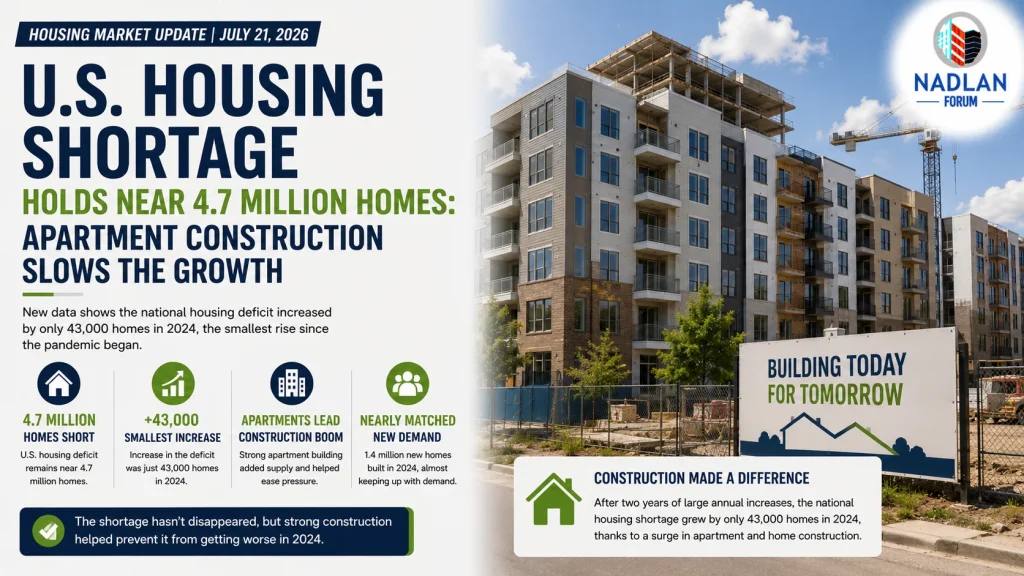
California’s housing shortage remains severe, with estimates reaching as high as 2.5 million homes. In such an environment, confidence plays a critical role in driving construction.
Developers are highly sensitive to economic signals. Budget uncertainty, job losses, or weakening buyer sentiment can delay projects especially when construction costs remain high and permitting timelines are long.
Realtor.com warns that even a pause in development could worsen affordability and prolong the state’s housing crisis. During the 2025 spring selling season, elevated economic uncertainty already appeared to dampen buyer enthusiasm.
Is California one slowdown away from another construction bottleneck?
What this means for investors/borrowers
For real estate investors, California remains a market of opportunity but with rising concentration risk. Luxury assets in tech-driven regions may continue to perform well, but they are increasingly tied to AI market cycles rather than broad economic growth.
Borrowers and homebuyers face a more challenging environment. Without stronger job growth and improved affordability, demand in the middle of the market may remain uneven. Monitoring employment trends could prove just as important as tracking interest rates.
For both groups, diversification and cautious underwriting matter more than ever in a market shaped by a single dominant industry.
Conclusion: Strength built on a narrow foundation
California’s AI boom has delivered meaningful benefits, from higher tax revenues to resilient luxury real estate. But it has also exposed how dependent the state’s housing market has become on a concentrated source of wealth.
Housing markets thrive on balance between jobs, income growth, and affordability. When that balance tilts too far toward one sector, vulnerability increases.
The coming years will test whether AI-driven prosperity can broaden, or whether its limits will surface first in housing.
What’s your take on California’s AI-powered housing market? Is it a smart foundation or a fragile one? Share your thoughts with Nadlan Capital Group and join the conversation.

























Responses