
Fed Is Likely to Hold Interest Rates Steady, Resisting Trump Pressure — Here’s What That Means for Borrowers


As 2026 gets underway, many Americans hoping for faster relief from high borrowing costs may be disappointed.
Despite escalating public pressure from President Donald Trump, the Federal Reserve is widely expected to keep interest rates unchanged at the conclusion of its first policy meeting of the year. Markets are pricing in almost no chance of an immediate rate cut, signaling that the Fed remains firmly in wait-and-see mode.
For borrowers, this decision doesn’t mean nothing will change but it does mean relief will likely arrive unevenly and more slowly than many hoped.
So what’s driving the Fed’s stance, and how does it affect mortgages, credit cards, and auto loans right now?
What the Market Is Expecting
The Fed’s upcoming decision is shaping up to be one of the least surprising but most scrutinized moments of the early year.
Here’s what we know heading into the meeting:
- The Fed is expected to hold its benchmark rate steady
- Futures markets show almost zero probability of a rate cut this week
- Inflation has cooled, but not enough to convince policymakers to move quickly
- The labor market is softening but remains resilient
- Geopolitical uncertainty continues to cloud the outlook
- Political pressure from the White House is intensifying
This combination favors caution rather than aggressive easing.
Why the Fed Is Standing Its Ground
The Federal Reserve’s benchmark rate primarily governs overnight lending between banks, but its influence ripples through the entire economy. Policymakers remain focused on preventing inflation from reaccelerating even as growth shows signs of slowing.
Market expectations, tracked by CME Group’s FedWatch tool, suggest investors see little reason for the Fed to act preemptively. Inflation data remains mixed, global risks persist, and officials appear unwilling to declare victory too soon.
That restraint frustrates political leaders but it’s consistent with the Fed’s current risk calculus.
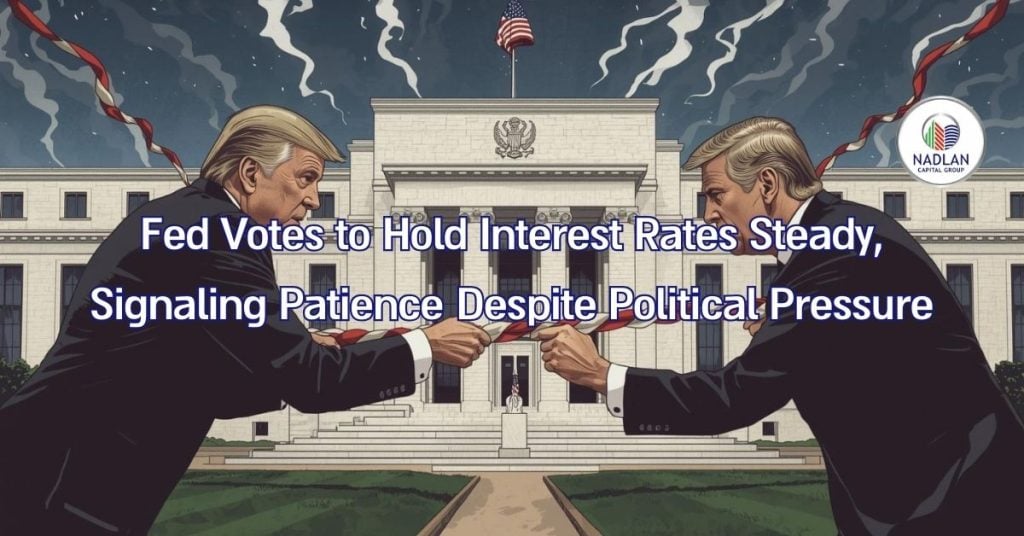
Trump vs. the Fed: A Growing Tension
President Trump has made no secret of his dissatisfaction with the Fed’s cautious approach.
Speaking last week at the World Economic Forum in Davos, Switzerland, Trump criticized Fed Chair Jerome Powell and reiterated his belief that inflation has already been “defeated.”
Trump has also said he has narrowed down potential successors to Powell “down to maybe one,” signaling he may seek a more rate-cut-friendly Fed leadership in the future.
From Trump’s perspective, high interest rates:
- Make borrowing more expensive for businesses and consumers
- Put the U.S. at a disadvantage relative to lower-rate economies
- Slow housing and investment activity
For now, however, the Fed appears unmoved.
Not All Rates Move the Same Way
One important reality for borrowers: the Fed doesn’t control all interest rates equally.
Short-term borrowing costs like credit cards and some personal loans tend to move closely with the federal funds rate. Longer-term rates including mortgages are driven more by inflation expectations, Treasury yields, and global market forces.
That distinction explains why some borrowing costs have already improved even without a new Fed cut.
What This Means for Mortgage Borrowers
Mortgage rates don’t directly follow the Fed’s benchmark, but they’ve already come down meaningfully over the past year.
As of late January, the average 30-year fixed mortgage rate sits around 6.19%, according to Mortgage News Daily. That’s well below the 7%+ levels seen a year ago, helped in part by Trump’s push to have Fannie Mae and Freddie Mac purchase $200 billion in mortgage-backed bonds.
On the initial announcement of that plan, mortgage rates briefly dipped below 6% for the first time in years.
Still, volatility remains.
As Melissa Cohn, regional vice president at William Raveis Mortgage, noted, geopolitical tensions including recent developments tied to Greenland have pushed rates back up.
Her warning is one borrowers have learned the hard way: rates tend to rise faster than they fall.
If geopolitical pressures ease, mortgage rates could drift lower again but timing remains unpredictable.
What This Means for Credit Card Users
Credit cards are where Fed decisions hit most directly.
Because most cards have variable interest rates, they closely track the prime rate, which moves in lockstep with the Fed’s benchmark. After three rate cuts in 2025, the average U.S. credit card rate fell to 23.79% in January, according to LendingTree the lowest since March 2023.
Even so, those rates remain painfully high.
As Stephen Kates, a certified financial planner at Bankrate, pointed out, current levels still do little to ease the burden for borrowers carrying balances month to month.
And that’s a widespread issue. Roughly 175 million Americans have credit cards, and about 60% carry revolving debt, according to the Federal Reserve Bank of New York.
Trump has floated a potential temporary 10% cap on credit card interest rates, but major bank executives including Jamie Dimon of JPMorgan Chase have warned such a policy could destabilize credit markets.
What This Means for Auto Loan Borrowers
Auto loan rates have edged lower, but affordability hasn’t improved much because prices keep rising.
The average amount financed for a new vehicle hit a record $43,759 at the end of 2025, according to Edmunds. Monthly payments have reached new highs, and a growing share of buyers now face payments of $1,000 or more.
As Joseph Yoon, consumer insights analyst at Edmunds, explains, rate cuts alone haven’t meaningfully improved affordability.
Higher vehicle prices and larger loan balances are offsetting any modest rate relief.
Are rates really the problem or are prices doing most of the damage?
Why the Fed’s Pause Still Matters
Even without an immediate rate cut, the Fed’s decision sends an important signal: stability is the priority.
Holding rates steady:
- Anchors inflation expectations
- Reduces market whiplash
- Allows prior rate cuts to work through the economy
For borrowers, it means planning around current conditions rather than betting on sudden relief.
What Borrowers Should Focus On Now
In a steady-rate environment, strategy matters more than speculation.
Borrowers may benefit from:
- Improving credit scores to qualify for better terms
- Reducing balances where possible
- Shopping lenders aggressively
- Focusing on total affordability, not just interest rates
Waiting for the Fed to “fix” affordability may lead to missed opportunities.
The Bigger Picture for 2026
The Fed’s likely pause reflects a broader transition underway in the economy. The era of rapid rate hikes is over, but the era of rapid cuts hasn’t arrived either.
Instead, borrowers face a period of:
- Gradual improvement
- Uneven relief across loan types
- Continued sensitivity to global events
That environment rewards preparation and realism.
Conclusion: Patience, Not Pressure, Is Driving Policy
Despite President Trump’s vocal push for lower rates, the Federal Reserve appears committed to a cautious start to 2026. For borrowers, that means no immediate windfall but also no new shock.
Mortgage rates have already improved, credit card rates are slowly easing, and auto loans remain constrained more by prices than policy.
At Nadlan Capital Group, we believe understanding how policy decisions ripple through real-world borrowing is essential. Rates matter but timing, pricing, and preparation matter just as much.
Do you think the Fed should cut rates sooner or is patience the safer path? Share your thoughts with us and stay connected with Nadlan Capital Group for clear, practical insights into the evolving borrowing landscape.






















Responses