
Trump’s Greenland ‘Deal’ Calms Markets — but Leaves Europe Asking Questions

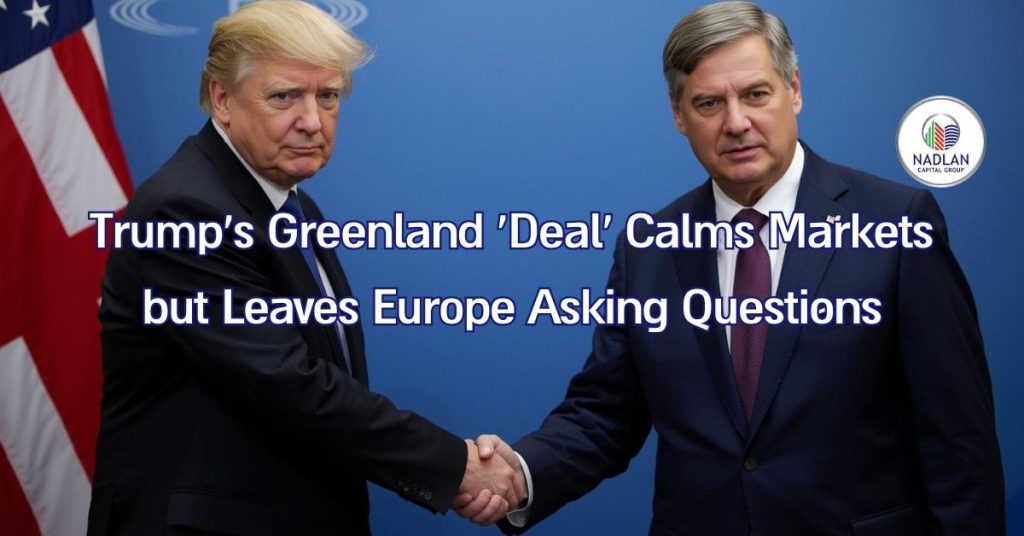
Markets breathed a sigh of relief this week after President Donald Trump appeared to step back from his threat to impose new tariffs on several European countries over their opposition to his Greenland ambitions. Still, the lack of clarity around what Trump called a “concept of a deal” has left policymakers, analysts, and investors more confused than convinced.
Speaking to CNBC on Wednesday from the World Economic Forum in Davos, Switzerland, Trump said he had reached a broad understanding with Mark Rutte, shortly after announcing on social media that he would not move forward with tariffs that were set to begin Feb. 1.
Global markets reacted positively, with stocks ticking higher on hopes that a new transatlantic trade fight had been avoided. But beyond that initial relief, questions quickly surfaced about what if anything had actually been agreed to.
A ‘Deal’ With Few Details
Trump framed the Greenland talks as a long-term arrangement that would strengthen U.S. national security and provide access to key minerals. Greenland’s Arctic location has grown more important as climate change opens new shipping routes and access to rare earth resources.
What Trump did not explain was who signed on to the idea. Neither Denmark, which oversees Greenland’s defense, nor Greenland’s own government confirmed participation in any agreement.
Rutte later told Fox News that ownership of Greenland was never discussed, saying his conversations with Trump focused instead on Arctic security and rising activity from Russia and China.
Ed Price, a senior fellow at New York University, described Trump’s Davos remarks as one-sided. “A deal requires two parties,” he said, adding that what was presented sounded more like the beginning of talks than a finished plan.
Credibility Concerns Grow
Some analysts warned that repeated policy reversals could weaken trust in U.S. leadership. Price noted that signaling flexibility on territorial disputes could set an uneasy precedent and encourage similar disputes elsewhere.
Chinese state media quickly seized on the moment, urging Europe to reduce its reliance on U.S. security guarantees and pursue greater independence.
According to Price, Trump’s shifting stance may benefit China in the long run by showing that U.S. commitments can change abruptly based on political pressure.
Bond Markets May Have Forced the Pause
Not everyone believes Europe drove Trump’s retreat. Robin Brooks of the Brookings Institution said the softer tone likely had more to do with rising global bond yields, which jumped amid fears of a renewed trade war.
Higher yields can rattle financial markets and increase borrowing costs, something the White House has been keen to avoid. Brooks added that Europe has limited leverage in talks, noting that many countries rely heavily on U.S. defense support and lack room in their budgets to respond aggressively.
Europe Plans for the Worst Anyway
Veteran investor David Roche of Quantum Strategy said European leaders should still prepare for sudden shifts.
He called the Greenland episode the clearest example yet of what traders refer to as “Trump Always Chickens Out,” or “TACO.” While that pattern has encouraged markets to fade Trump’s threats, Roche warned it also creates uncertainty.
“The bigger the threat, the more people expect him to walk it back,” Roche said. “That’s becoming a credibility problem.”
Relief Today, Uncertainty Ahead
For now, markets are calmer and tariffs are off the table. But without clear agreements or shared statements from all parties involved, Trump’s Greenland comments have raised more questions than answers.
Europe may have avoided an immediate trade shock, but many officials and investors now see months or longer of uncertainty ahead as tensions over security, trade, and trust continue to simmer. For direct financing consultations or mortgage options for you visit 👉 Nadlan Capital Group.





















Responses