
U.S. GDP Slows to 1.4% in Fourth Quarter as Inflation Holds at 3%

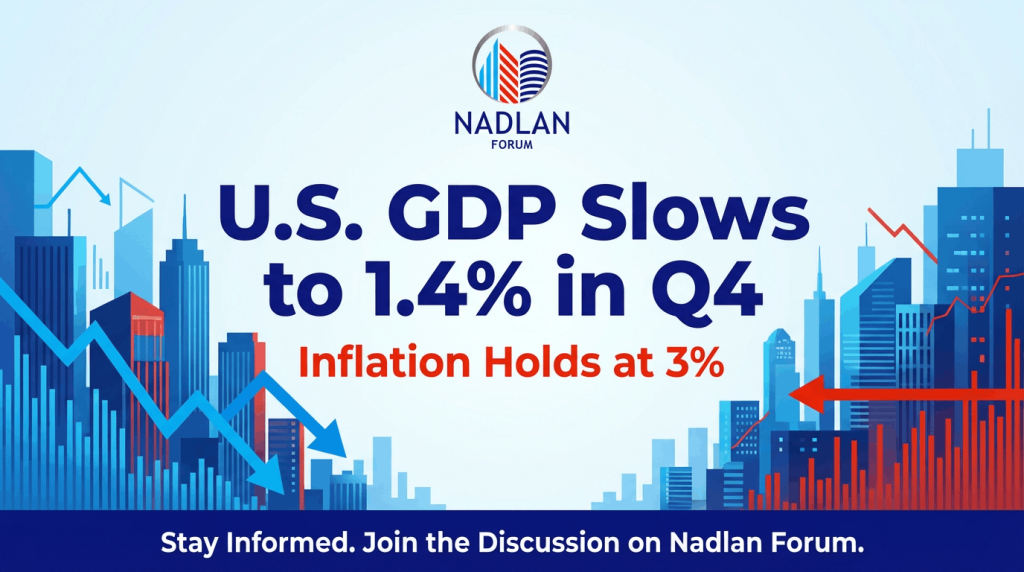
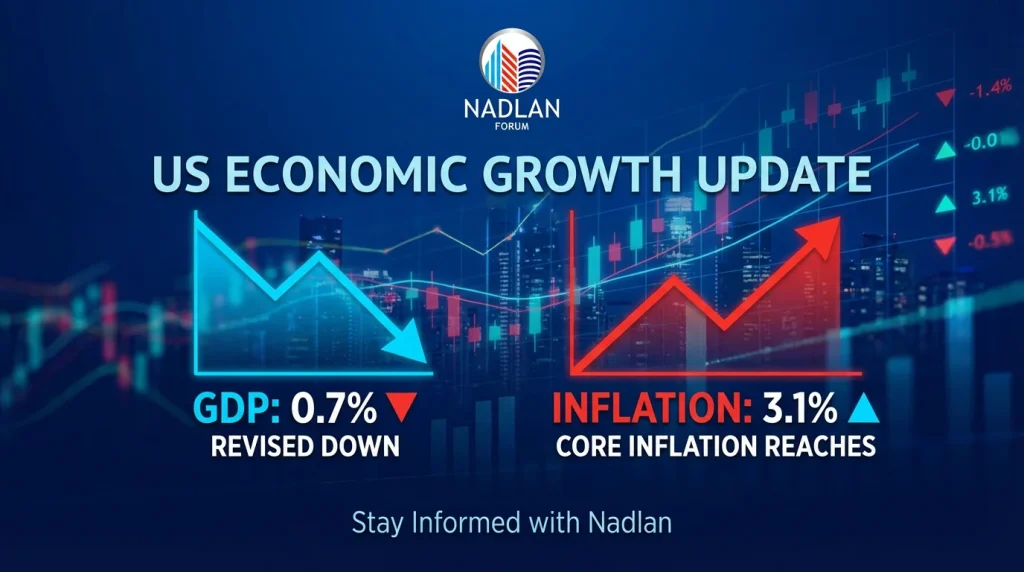
The U.S. GDP fourth quarter 2025 report showed slower-than-expected growth, while inflation remained above the Federal Reserve’s target, adding new uncertainty to the economic outlook.
According to the U.S. Department of Commerce, gross domestic product increased at an annualized rate of 1.4% in the final three months of 2025. Economists had expected growth closer to 2.5%.
For the full year, the economy expanded by 2.2%, down from 2.8% in 2024.
Government Shutdown Weighed on Growth
The fourth quarter included a lengthy federal government shutdown that ran from early October through mid-November. Commerce officials estimated that the shutdown likely reduced economic growth by about one percentage point.
Government spending and investment fell 5.1% during the quarter. Federal spending alone dropped 16.6%, partially offset by a 2.4% increase in state and local government activity.
While the shutdown played a major role, other parts of the economy also slowed.
Consumer Spending and Exports Pulled Back
Consumer spending, which drives much of the U.S. economy, grew 2.4% in the quarter. That marked a clear slowdown from the 3.5% increase recorded in the third quarter.
Exports also declined, falling 0.9% after a strong 9.6% surge in Q3.
The combined pullback in spending and trade contributed to the weaker headline GDP number.
However, not all underlying data was soft.
Signs of Underlying Demand Remain
A closely watched measure known as final sales to private domestic purchasers rose 2.4% during the quarter. While slightly below the previous quarter’s pace, the figure still suggests steady private sector demand.
Gross private domestic investment increased 3.8%, rebounding after being flat in the prior quarter. Business spending and investment remain key pillars supporting the economy.
Economists noted that without the shutdown, growth likely would have been closer to expectations.
Inflation Remains Firm at 3%
At the same time, inflation data showed limited improvement.
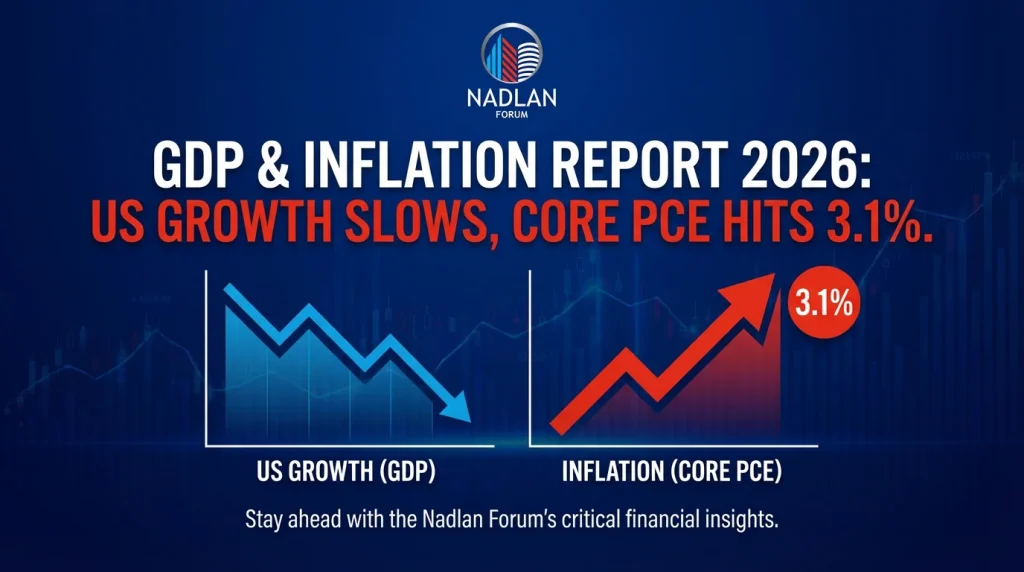
The core personal consumption expenditures (PCE) price index, the Federal Reserve’s preferred inflation gauge, rose 3% from a year earlier in December. That was slightly higher than November and remains well above the Fed’s 2% goal.
On a headline basis, the PCE index rose 2.9% annually. Both headline and core measures increased 0.4% for the month.
Goods prices climbed 0.4%, while services prices rose 0.3%. The broad nature of the increases suggests inflation pressures are not limited to one category.
What This Means for the Federal Reserve
The Federal Reserve reduced its benchmark rate by three-quarters of a percentage point in late 2025. Since then, officials have signaled a more cautious approach.
With growth slowing but inflation still above target, policymakers face a difficult balance. Lower rates could support growth, but easing too quickly risks keeping inflation elevated.
President Donald Trump criticized Fed Chair Jerome Powell following the release, calling for lower interest rates. However, Fed officials are likely to wait for clearer signs that inflation is moving closer to 2%.
Outlook for Early 2026
Some economists expect growth to rebound in the first quarter of 2026 as government operations normalize and consumer activity stabilizes.
Despite the weak fourth-quarter reading, the overall 2025 performance showed resilience. Consumption remained positive, business investment improved, and the labor market stayed stable.
The key question now is whether inflation continues to cool while growth stabilizes. If price pressures ease further, it could open the door for rate cuts later this year.
For now, the U.S. GDP fourth quarter 2025 report highlights a slower but still expanding economy facing ongoing inflation challenges as 2026 begins. For direct financing consultations or mortgage options for you visit 👉 Nadlan Capital Group.




















Responses