
Mortgage Rates Face Choppy Week, But Applications Jump to 3-Year High


Mortgage rates had a tougher stretch this week as global bond markets reacted to overseas developments and geopolitical headlines. Even so, lower rates earlier this month continue to fuel strong borrower demand, pushing mortgage applications to levels not seen in nearly three years.
Why Mortgage Rates Moved Higher
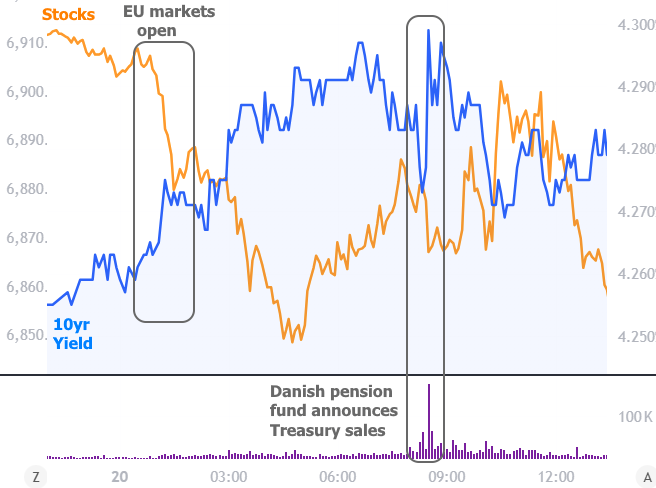
After the long holiday weekend, investors returned to markets already under pressure. Overseas bond markets led the move, with yields rising in Asia and Europe before spilling into the U.S.
One factor was renewed stress in Japan’s bond market tied to fiscal concerns. Heavy selling of Japanese government bonds pushed yields higher, and moves like that often ripple into U.S. Treasurys. When Treasury yields rise, mortgage rates usually follow.
The bigger driver, however, was political tension in Europe linked to the administration’s stance on Greenland. New tariff threats unsettled markets, and trading volume jumped after reports that a Danish pension fund reduced its Treasury holdings. While the move itself was small, it added to short-term uncertainty.
As the week went on, bond markets steadied. Economic data releases were mostly quiet and still affected by delays from the government shutdown, giving traders little reason to push yields much further.
Mortgage Rates Hold Up Better Than Treasurys
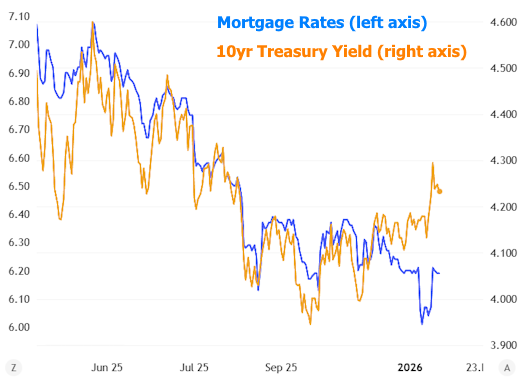
Mortgage rates reacted to early-week bond weakness, with many lenders raising rates back toward levels seen before the sharp drop following the January 9 mortgage-backed securities buying announcement.
Still, mortgage rates clearly outperformed Treasurys. Normally, rising Treasury yields would bring a similar jump in mortgage rates. This time, ongoing purchases of mortgage-backed securities helped slow the rise, keeping mortgage rates better contained.
In short, mortgage rates are no longer falling fast—but they are also not rising as quickly as broader bond markets might suggest.
Mortgage Applications Surge
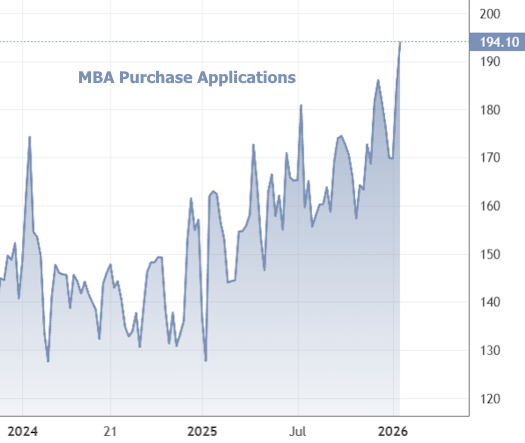
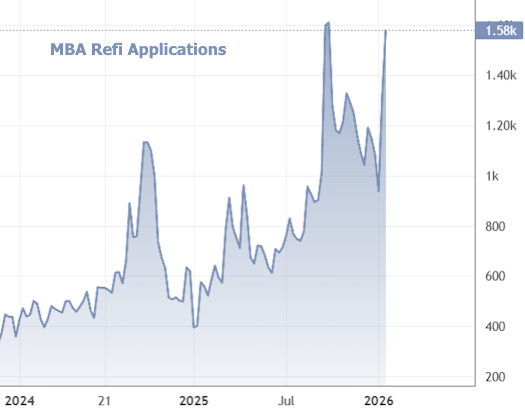
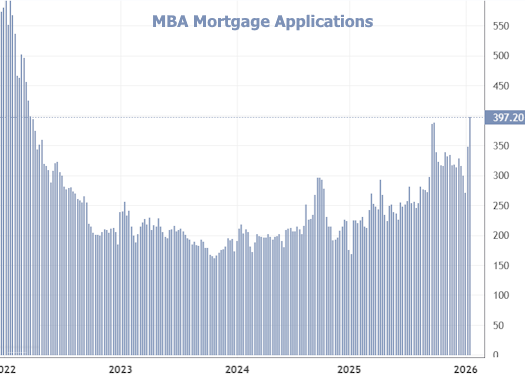
The earlier drop in rates continues to show up in borrower behavior. New data from the Mortgage Bankers Association shows total mortgage applications jumped to their highest level in almost four years.
Refinance applications led the way, which is typical when rates fall sharply. But purchase applications also increased and reached their highest level in three years, suggesting that buyers are becoming more active as borrowing costs ease.
This combination shows that even small rate improvements can unlock demand that had been sidelined during higher-rate periods.
What to Watch Next Week
Next week’s economic calendar includes several reports, but none are expected to move rates as much as the next major jobs report on February 6.
The most important event will be the upcoming Federal Reserve meeting. Markets are not expecting a rate cut, but investors will closely read the Fed’s statement and listen to Chair Jerome Powell for clues about the March meeting.
Bottom Line
Mortgage rates moved higher this week amid global market stress, but they remain far better than earlier in the year. The recent rate drop is already driving a surge in mortgage applications, showing strong demand just below the surface. If rates stabilize or drift lower again borrower activity could stay elevated well into early 2026. For direct financing consultations or mortgage options for you visit 👉 Nadlan Capital Group.




















Responses