
US Economic Growth Update: GDP Revised Down to 0.7% as Core Inflation Reaches 3.1%

New economic data suggests the U.S. economy ended 2025 with slower momentum than previously estimated. At the same time, inflation pressures remained elevated at the beginning of 2026.
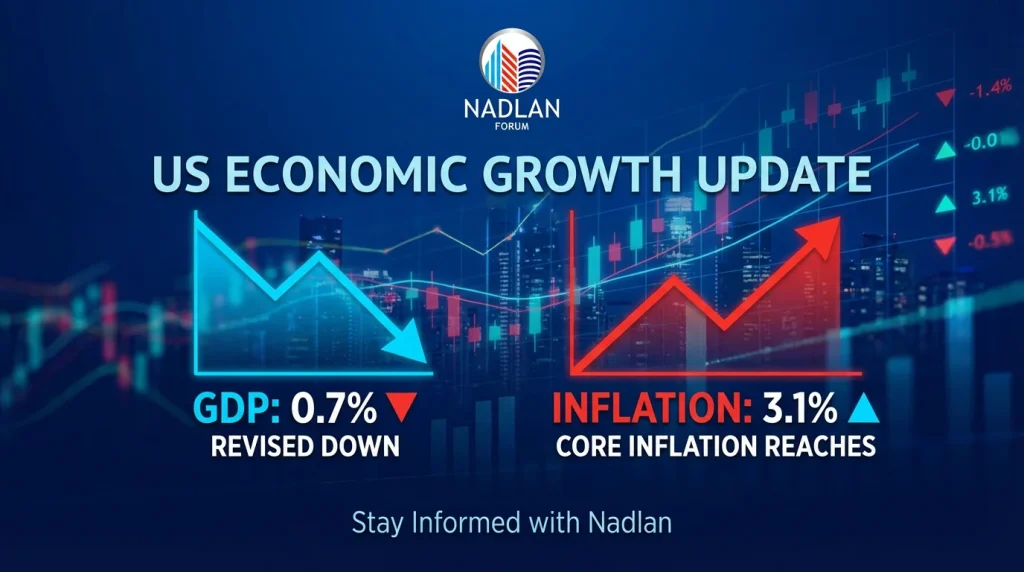
According to updated figures from the U.S. Commerce Department, gross domestic product (GDP) grew at an annualized rate of 0.7% during the fourth quarter of 2025. This represents a significant downward revision from the earlier estimate of 1.4%.
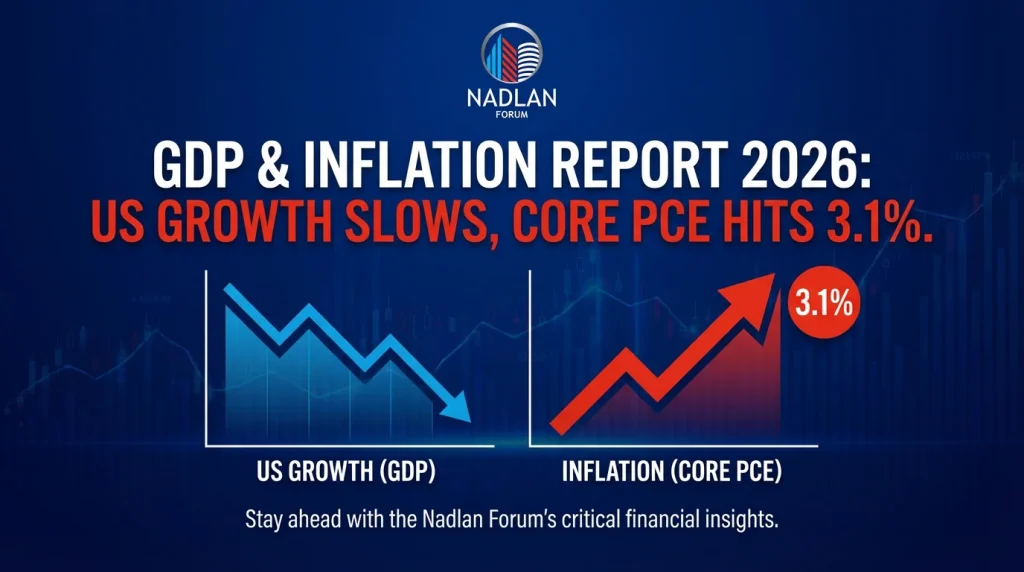
Alongside the slower growth data, the Federal Reserve’s preferred inflation measure showed that core price increases reached 3.1% on an annual basis in January, indicating that inflation remains above the central bank’s long-term target.
The combination of slower economic growth and persistent inflation is drawing attention from economists and policymakers as they assess the outlook for the U.S. economy.
GDP Growth Slowed Sharply in Late 2025
Gross domestic product measures the total value of goods and services produced in the economy and is widely used to evaluate overall economic performance.
The revised growth rate of 0.7% in the fourth quarter came in well below expectations from economists, who had projected growth closer to 1.5%.
This marked a significant slowdown from the 4.4% expansion recorded in the third quarter of 2025, highlighting a shift in economic momentum toward the end of the year.
Several factors contributed to the lower growth figure, including changes to consumer spending estimates, government expenditures, and trade activity.
Government Shutdown Impacted Economic Output
One major factor influencing the slowdown was a lengthy government shutdown that reduced federal spending during the quarter.
Government spending declined 16.7% during the fourth quarter, which had a measurable effect on overall economic output.
Since government expenditures are included in GDP calculations, large changes in public spending can significantly influence the final growth numbers.
This decline played a key role in the revised GDP figure.
Annual Economic Growth for 2025
For the entire year, the U.S. economy expanded 2.1% in 2025, slightly below earlier estimates.
This compares with 2.8% economic growth in 2024, suggesting that the pace of expansion slowed somewhat during the most recent year.
Although growth remained positive overall, the weaker fourth-quarter performance signals that economic activity was losing momentum heading into 2026.
Consumer Spending Still Supporting the Economy
Consumer spending remained one of the largest contributors to economic activity, although it also slowed compared with earlier in the year.
Household spending increased 2% during the fourth quarter, following a downward revision of 0.4 percentage points.
In comparison, consumer spending had grown 3.5% during the third quarter, indicating a clear moderation in demand toward the end of the year.
Much of the revision came from the services sector, particularly healthcare spending.
Because consumer purchases represent roughly two-thirds of U.S. economic activity, changes in spending patterns can significantly influence overall GDP growth.
Inflation Data Shows Ongoing Price Pressures
While economic growth slowed, inflation remained higher than policymakers would prefer.
The Personal Consumption Expenditures (PCE) price index, the Federal Reserve’s preferred inflation indicator, increased 0.3% in January.
On an annual basis, the overall PCE inflation rate reached 2.8%, close to economists’ expectations but still above the Fed’s long-term 2% target.
However, a closer look at the data reveals stronger underlying price pressures.
Core Inflation Reaches 3.1%
The core PCE index, which excludes food and energy prices, rose 0.4% in January and reached 3.1% compared with the previous year.
Central bank policymakers monitor core inflation closely because it provides a clearer view of long-term price trends by removing more volatile categories.
The annual core reading increased slightly from the previous month, suggesting that inflation pressures remain persistent.
Higher core inflation levels can complicate decisions about interest rate policy, as the Federal Reserve must balance the goals of controlling inflation while supporting economic growth.
Durable Goods Orders Show Weak Manufacturing Demand
Additional economic data released at the same time indicated slower activity in the manufacturing sector.
Orders for durable goods, which include long-lasting products such as vehicles, appliances, and machinery, were unchanged in January.
Economists had expected these orders to increase by around 1.3%, making the flat reading weaker than anticipated.
However, excluding transportation equipment, orders increased 0.4%, suggesting modest growth in other parts of the manufacturing sector.
Durable goods data is often used as an indicator of business investment and manufacturing demand.
Energy Prices Add New Uncertainty
Economic data released in early 2026 reflects conditions before a recent increase in global energy prices.
Oil prices have risen significantly following geopolitical tensions in the Middle East, with Brent crude oil approaching $100 per barrel.
Higher energy prices can contribute to inflation by increasing transportation and production costs across many industries.
If these price increases persist, they could create additional inflation pressure in the coming months.
Economic Concerns About Stagflation
Some analysts warn that the combination of slower growth and persistent inflation could increase the risk of stagflation.
Stagflation occurs when economic growth slows while inflation remains elevated, making it difficult for policymakers to manage both issues simultaneously.
In this environment, efforts to reduce inflation may slow economic activity further, while efforts to stimulate growth could increase price pressures.
These competing forces make economic policy decisions more challenging.
Federal Reserve Policy Outlook
The Federal Reserve is expected to review the latest economic data during its upcoming policy meeting.
Financial markets currently anticipate that the central bank will keep interest rates unchanged in the near term.
Persistent inflation above the Fed’s target means policymakers may be cautious about lowering borrowing costs too quickly.
At the same time, slower economic growth could eventually influence future policy decisions if the economy weakens further.
What the Latest Data Means for the Economy
The updated US GDP growth 2026 data highlights a complex economic environment entering the new year.
Key developments include:
- Slower economic growth at the end of 2025
- Core inflation remaining above the Federal Reserve’s target
- Moderating consumer spending
- Weak durable goods orders
- Rising energy prices adding uncertainty
Together, these trends suggest that policymakers will continue to monitor economic indicators closely as they decide the next steps for interest rate policy.
As the economy moves through 2026, inflation trends, energy prices, and consumer demand will likely remain key factors shaping the economic outlook. For direct financing consultations or mortgage options for you visit 👉 Nadlan Capital Group.

















Responses