
World Leaders Warn Trump Against Undermining Federal Reserve Independence


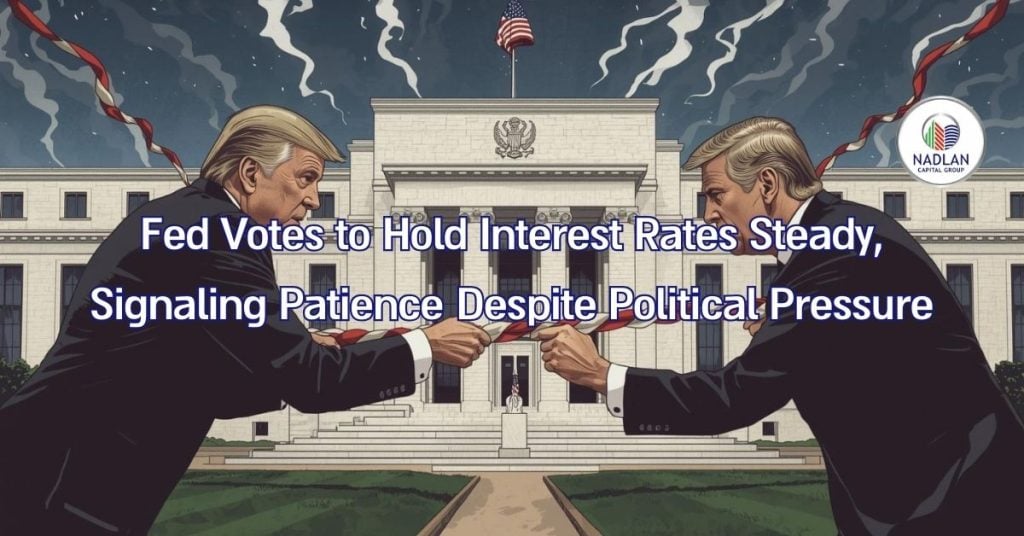
A prominent voice in global finance has issued a stern warning over President Donald Trump’s attempts to influence the U.S. Federal Reserve, emphasizing the potential risks to both the American economy and the broader world market.
European Central Bank (ECB) President Christine Lagarde cautioned Monday that efforts to remove Fed Chair Jerome Powell or Fed Governor Lisa Cook could have severe consequences. Speaking with Radio Classique, Lagarde said, “If U.S. monetary policy were no longer independent and instead subject to the directives of any individual, the repercussions for the American economy and by extension the global economy would be extremely concerning.”
The warning comes as President Trump has publicly threatened to dismiss Powell for not cutting the federal funds rate, though he has temporarily stepped back from those threats as Powell’s term is set to end in May 2026. More recently, Trump has sought to remove Governor Lisa Cook, citing allegations of mortgage fraud lodged by Federal Housing Finance Agency Director Bill Pulte, a known Trump ally. Cook has denied wrongdoing and is currently fighting the proposed removal in federal court.
Legal and Historical Uncertainty
Trump’s move marks the first known instance in U.S. history of a sitting president attempting to remove a Federal Reserve governor. Legal experts note that for most federal agencies, removal “for cause” typically requires evidence of misconduct or malfeasance. Since Cook has neither been charged nor convicted, whether the courts will allow her dismissal remains uncertain, and the case could ultimately reach the Supreme Court.
If successful, Trump could appoint a replacement sympathetic to his policy priorities, particularly on interest rate cuts a shift that could carry significant economic implications. Economists argue that the Fed’s independence is a cornerstone of both U.S. and global financial stability. Historical data shows that political interference in central banks worldwide often correlates with higher inflation, weaker currency valuations, and depressed stock markets.
Inflation and Interest Rates
The Fed has held steady on rates in all five meetings this year, citing uncertainty over whether President Trump’s tariffs represent temporary price shocks or could trigger lasting inflation. The Fed closely monitors two key inflation metrics: the consumer price index (CPI) and the personal consumption expenditures (PCE) index. Both measures have remained above the Fed’s 2% target. The latest July readings indicated headline PCE rose 2.6% year-over-year, with core PCE (excluding volatile food and energy) ticking up to 2.9%. CPI numbers showed similar trends, with headline inflation at 2.7% and core CPI at 3.1%.
Despite these inflationary pressures, a weaker-than-expected July jobs report raised concerns about the labor market. Powell signaled during the Fed’s annual Jackson Hole conference that shifting risks could open the door to an interest rate cut. Analysts now closely anticipate the August CPI release, along with the latest employment data, as central bankers prepare for the September 17 Federal Open Market Committee (FOMC) meeting.
Markets Brace for Potential Fed Rate Cut
Market expectations currently favor a modest rate reduction. The CME FedWatch tool indicates an 89.7% probability of a 25-basis-point cut at the September meeting, compared with a 10.3% chance that rates will remain unchanged at the current 4.25%–4.5% range. Such a move would reflect the Fed’s ongoing balancing act between containing inflation and supporting employment, even amid political pressure.
Lagarde’s comments underscore the broader global implications. “The U.S. is the world’s largest economy,” she noted. “Any erosion of confidence in the Fed’s independence could ripple across international markets, creating instability far beyond America’s borders.”
As the legal and political battles unfold, investors and policymakers alike are watching closely. The potential removal of a sitting Fed governor represents uncharted territory in American economic history, with far-reaching consequences for monetary policy, market stability, and the credibility of the Federal Reserve. For direct financing consultations or mortgage options for you visit 👉 Nadlan Capital Group

























Responses