
Mortgage Rates Today April 28, 2026: Rates Move in Different Directions

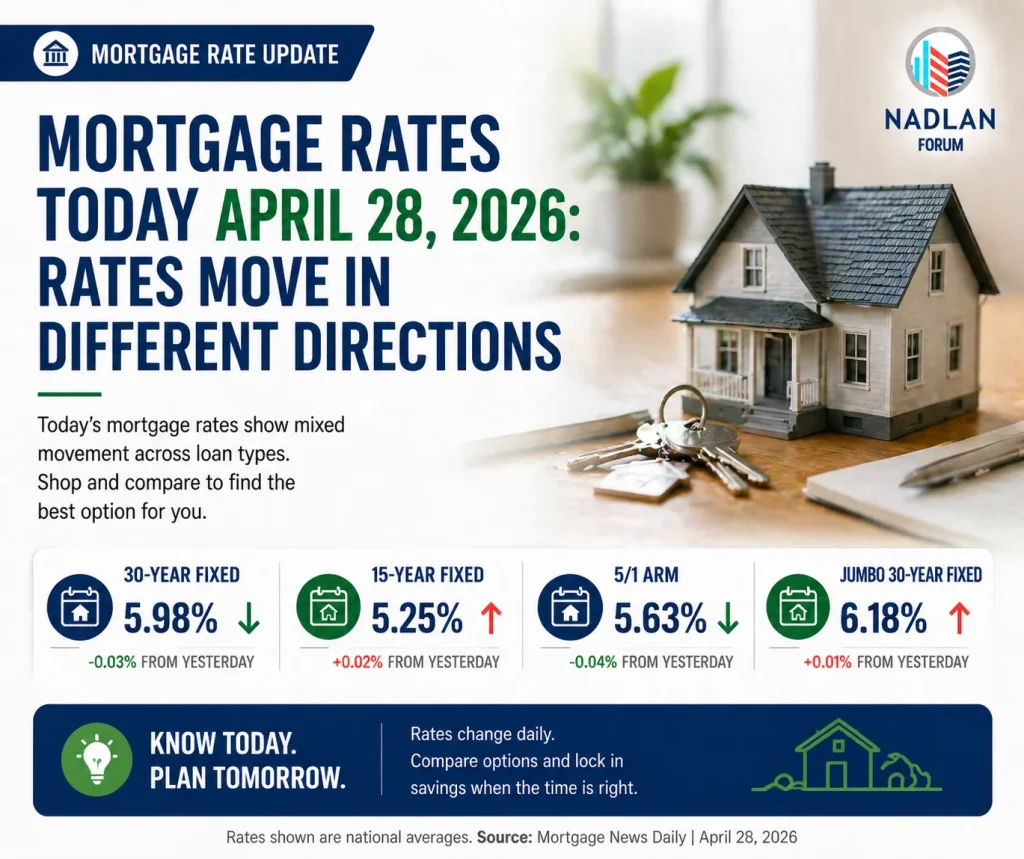
Mortgage rates in the U.S. are showing mixed movement today, with the 30-year fixed rate rising slightly while the 15-year fixed rate continues to move lower. This split trend reflects ongoing changes in market conditions and investor expectations.
According to data from Zillow, the average 30-year mortgage rate has increased to 6.13%, its highest level in about two weeks. At the same time, the 15-year rate has dropped to 5.53%, marking one of the lowest levels seen recently.
Current Mortgage Rates (April 28, 2026)
Here are the latest national average rates:
- 30-year fixed: 6.13%
- 20-year fixed: 6.02%
- 15-year fixed: 5.53%
- 5/1 adjustable-rate mortgage (ARM): 6.17%
- 7/1 ARM: 6.25%
- 30-year VA loan: 5.67%
- 15-year VA loan: 5.39%
- 5/1 VA loan: 5.41%
These are national averages and may vary depending on borrower profile and lender.
Current Refinance Rates
Refinance rates are showing a slightly different pattern:
- 30-year fixed refinance: 6.12%
- 20-year fixed refinance: 5.98%
- 15-year fixed refinance: 5.59%
- 5/1 ARM refinance: 5.91%
- 7/1 ARM refinance: 5.94%
- 30-year VA refinance: 5.71%
- 15-year VA refinance: 5.19%
- 5/1 VA refinance: 5.30%
In many cases, refinance rates are close to or slightly higher than purchase rates, though differences can vary.
Why Rates Are Moving in Different Directions
The divergence between 30-year and 15-year rates often reflects shifts in bond markets and investor demand.
- Long-term rates (like the 30-year) are influenced by inflation expectations and economic outlook
- Shorter-term rates (like the 15-year) respond more quickly to market demand and risk trends
When uncertainty rises, investors may move toward shorter-term bonds, which can push those rates lower while longer-term rates remain elevated.
30-Year vs 15-Year Mortgage: Cost Comparison
Choosing between a 30-year and 15-year mortgage depends on your financial goals and monthly budget.
30-Year Mortgage Example
- Loan amount: $400,000
- Rate: 6.13%
- Monthly payment: about $2,432
- Total interest paid: about $475,425
This option offers lower monthly payments but higher total interest over time.
15-Year Mortgage Example
- Loan amount: $400,000
- Rate: 5.53%
- Monthly payment: about $3,274
- Total interest paid: about $189,447
This option requires higher monthly payments but results in significant long-term savings.
For buyers who want flexibility, a 30-year loan with extra payments can help reduce interest costs while keeping monthly obligations manageable.
Fixed vs Adjustable Mortgage Rates
Understanding the difference between fixed and adjustable rates is important when choosing a loan.
Fixed-rate mortgage:
- Rate stays the same for the entire loan term
- Provides stable and predictable payments
Adjustable-rate mortgage (ARM):
- Starts with a fixed rate for a set period
- Adjusts periodically based on market conditions
For example, a 7/1 ARM keeps the same rate for seven years before adjusting annually. While ARMs may offer lower starting rates, they carry the risk of higher payments later.
How to Get a Better Mortgage Rate
Borrowers can improve their chances of getting a lower rate by:
- Increasing their credit score
- Reducing debt levels
- Saving for a larger down payment
- Comparing offers from multiple lenders
Shopping around remains one of the most effective ways to secure a better deal.
Outlook for Mortgage Rates in 2026 and Beyond
Forecasts suggest that mortgage rates may stay near current levels for the rest of 2026.
Industry projections indicate:
- Rates around 6.2% to 6.3% through most of the year
- Slight movement toward just above 6% by year-end
Looking ahead to 2027, expectations are for rates to remain relatively stable, with only small changes depending on economic conditions.
Common Questions About Mortgage Rates
What is today’s 30-year mortgage rate?
The average 30-year fixed rate is about 6.13% for purchases and slightly lower for refinancing.
Why are rates different across lenders?
Rates vary based on lender pricing, borrower credit profile, and market conditions.
Will mortgage rates fall below 6% soon?
It is possible in the short term, but sustained drops will depend on inflation and economic trends.
Final Outlook
Mortgage rates are currently stable but moving in different directions depending on loan type. While the 30-year rate has increased slightly, the decline in 15-year rates offers opportunities for borrowers focused on long-term savings.
For buyers and homeowners, this is a time to compare options carefully and choose a loan that fits both short-term budgets and long-term financial goals. For direct financing consultations or mortgage options for you visit 👉 Nadlan Capital Group.























Responses