
U.S. Payroll Report April 2026: Job Growth Beats Expectations but Concerns Remain

Payroll Growth Comes in Stronger Than Expected
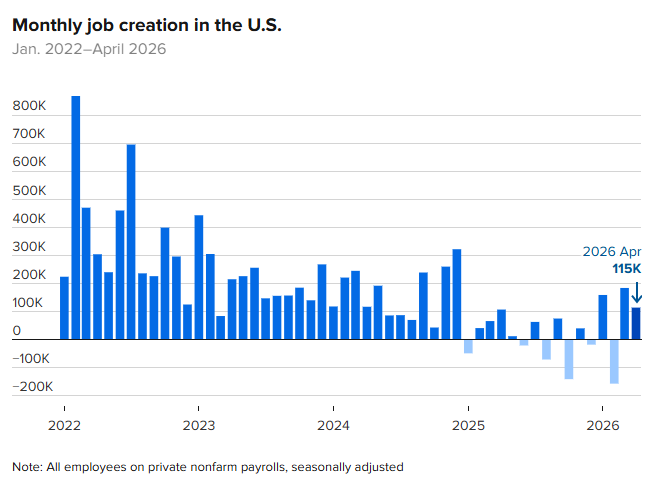
The U.S. labor market added more jobs than expected in April, showing that hiring activity is still holding up despite growing economic uncertainty.
According to data from the Bureau of Labor Statistics, nonfarm payrolls increased by 115,000 during the month. While this was lower than the revised 185,000 jobs added in March, it was still much better than forecasts that expected only around 55,000 new jobs.
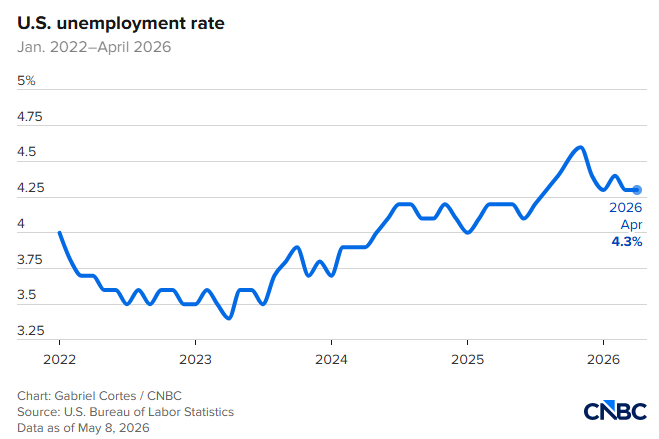
The unemployment rate remained unchanged at 4.3%, suggesting that the labor market is still relatively stable even as hiring slows compared to previous years.
Wage Growth Continues to Slow
One of the more important details in the report was weaker wage growth.
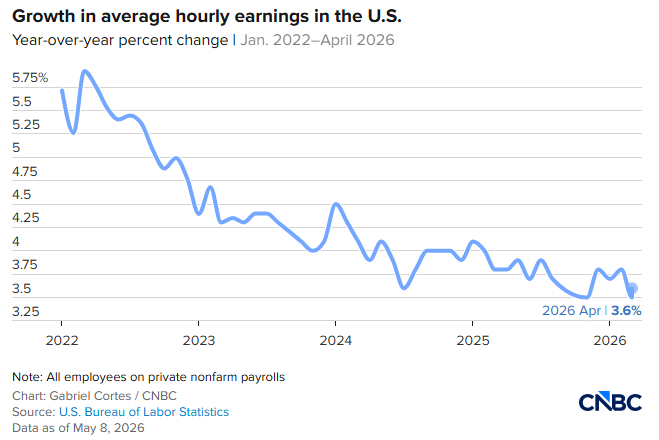
Average hourly earnings increased by just 0.2% for the month and 3.6% compared to a year earlier. Both numbers came in below expectations.
Slower wage growth may help reduce inflation pressure, but it can also signal weaker demand for workers. For households already dealing with high living costs, slower income growth may create additional financial pressure.
Signs of Cooling Beneath the Surface
Although the headline payroll number looked stronger than expected, several underlying indicators pointed to a labor market that may be losing momentum.
The labor force participation rate fell to 61.8%, its lowest level since late 2021. At the same time, the household survey showed a decline of 226,000 workers.
Another concern came from the increase in people working part-time for economic reasons. This category rose sharply by 445,000, reaching 4.9 million workers.
A broader unemployment measure that includes discouraged workers and involuntary part-time employees increased to 8.2%.
These numbers suggest that while layoffs remain low, hiring conditions are becoming more difficult in some parts of the economy.
Healthcare and Transportation Lead Hiring
Several industries continued to add jobs in April.
Healthcare once again led hiring growth with 37,000 new positions. Transportation and warehousing added 30,000 jobs, while retail and social assistance also posted gains.
These sectors have remained relatively strong because they continue to benefit from steady consumer demand and long-term labor shortages.
Technology and Information Jobs Continue to Decline
One of the weaker areas in the report was the information sector, which lost 13,000 jobs during the month.
This continues a longer trend that has seen hundreds of thousands of jobs disappear from technology-related industries since late 2022. Analysts believe the rise of automation and artificial intelligence has contributed to slower hiring and workforce reductions in some office-based roles.
The sector has now lost roughly 11% of its jobs over that period.
Federal Reserve Faces Difficult Decisions
The latest jobs report arrives at an important time for the Federal Reserve.
Fed officials remain divided over the future direction of interest rates. While some policymakers believe inflation risks still require caution, others are watching closely for signs of economic slowing.
Recent comments from several officials suggest the central bank may keep rates steady for longer while evaluating inflation, labor market conditions, and global risks.
Markets React Carefully
Financial markets reacted moderately to the report. Stocks opened slightly higher, while Treasury yields moved lower.
Investors appear to view the labor market as stable but slowing. The stronger-than-expected payroll number reduced immediate recession concerns, but weaker wage growth and lower labor participation highlighted ongoing economic pressure.
Broader Economic Uncertainty Remains
The labor market continues to operate in a mixed environment shaped by inflation, global tensions, tariffs, and cautious business hiring plans.
While layoffs remain relatively low, companies are not hiring as aggressively as they did during the strong post-pandemic recovery period.
Economists note that the labor market has stayed stable for more than a year, but stability does not necessarily mean strong growth.
What This Means Going Forward
The April jobs report suggests the economy is still adding jobs, but at a slower and more uneven pace.
For the Federal Reserve, the data likely supports a wait-and-see approach on interest rates. For workers and businesses, it signals that the labor market remains resilient, though signs of cooling are becoming more visible.
Final Thoughts
The U.S. payroll report for April 2026 delivered stronger job growth than expected, helping ease immediate fears of a sharp economic slowdown.
However, weaker wage gains, falling labor force participation, and rising part-time employment show that the labor market still faces important challenges beneath the surface. For direct financing consultations or mortgage options for you visit 👉 Nadlan Capital Group.


















Responses