
US Jobs Report February 2026: Payrolls Fall by 92,000 as Unemployment Rises to 4.4%


The February 2026 jobs report delivered an unexpected signal about the U.S. labor market, showing a decline in employment and a slight increase in unemployment. Data released by the Bureau of Labor Statistics revealed that nonfarm payrolls fell by 92,000 during the month, surprising economists who had expected modest job growth.
The unemployment rate also moved higher, rising to 4.4%, as fewer people reported being employed. The data suggests that the labor market may be losing some momentum after a period of steady growth.
Although a single monthly report does not define the direction of the economy, the latest numbers highlight potential challenges developing in several sectors.
Payrolls Decline After January Gains
Economists had predicted that the U.S. economy would add around 50,000 jobs in February, following 126,000 jobs added in January after revisions. Instead, the labor market recorded a net loss of jobs.
February marked the third month in the past five months that payrolls have declined, indicating that employment growth has become more uneven.
A previous revision also showed that employment fell by 17,000 in December, which adds to concerns that hiring momentum has slowed since late 2025.
Despite these declines, the overall labor market has not yet shown signs of widespread layoffs.
Unemployment Rate Moves Higher
The unemployment rate increased to 4.4%, reflecting a combination of fewer people working and more individuals reporting that they are seeking employment.
Another broader measure of unemployment, which includes discouraged workers and those working part-time because they cannot find full-time jobs, actually improved slightly. That measure fell to 7.9%, down from the previous month.
Even so, the increase in the headline unemployment rate suggests that job creation has not been strong enough to absorb all workers entering or returning to the labor force.
At the same time, the labor force participation rate slipped to 62%, its lowest level since late 2021. Participation measures the share of the population that is either working or actively seeking work.
A lower participation rate can reflect factors such as retirements, discouragement among job seekers, or demographic changes.
Health Care Sector Sees Unexpected Job Loss
One of the most notable developments in the report was the decline in employment within the health care sector, which has been one of the strongest sources of job growth in recent years.
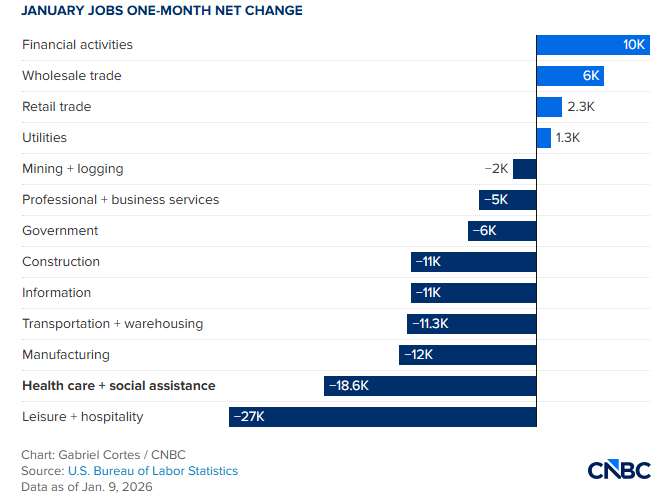
Health care employment fell by 28,000 jobs in February. Much of this decline was linked to a strike involving workers at Kaiser Permanente that temporarily sidelined more than 30,000 employees in California and Hawaii.
Because the strike occurred during the survey period used for the government’s employment data, those workers were counted as unemployed for the month.
The labor dispute has since been resolved, which means those jobs may return in future reports.
Technology and Manufacturing Also Lose Jobs
Several other sectors also recorded declines during February.
The information services sector, which includes technology-related fields, lost 11,000 jobs. Employment in this sector has been trending downward for some time, partly due to restructuring and increased use of artificial intelligence in certain roles.
Over the past year, the sector has averaged about 5,000 job losses per month.
Manufacturing employment also declined, falling by 12,000 jobs. The drop occurred despite government policies designed to bring manufacturing activity back to the United States through tariffs and trade measures.
Other sectors showing declines included:
- Transportation and warehousing: down 11,000 jobs
- Construction: down 11,000 jobs, partly due to winter weather
- Federal government: down 10,000 jobs
Federal employment has been trending lower since late 2024 as part of efforts to reduce the size of the government workforce.
Some Industries Still Added Jobs
Despite the overall decline in payrolls, some industries still posted modest job gains.
The social assistance sector added about 9,000 jobs, continuing a trend of steady hiring in services that support families, community programs, and healthcare-related assistance.
However, these gains were not enough to offset losses across other parts of the economy.
Wage Growth Remains Strong
Even though employment declined, wage growth continued to show resilience.
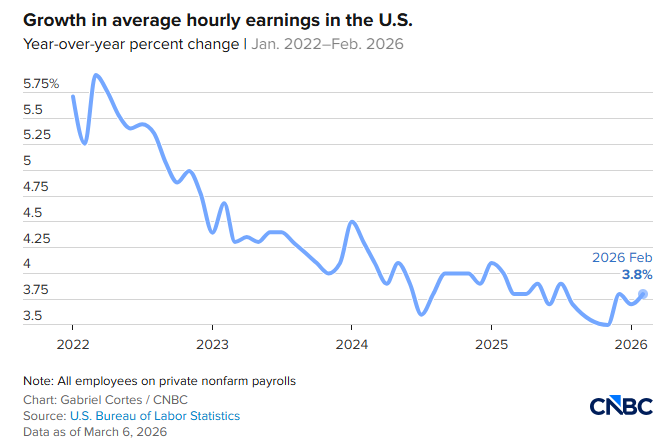
Average hourly earnings increased by 0.4% in February, slightly higher than economists had expected. On a yearly basis, wages rose 3.8% compared with the previous year.
Rising wages can help support consumer spending, which remains one of the main drivers of the U.S. economy.
However, strong wage growth can also contribute to inflation if businesses pass higher labor costs on to consumers through higher prices.
Long-Term Unemployment Is Increasing
Another concerning signal in the report was the rise in long-term unemployment, which measures the number of people who have been out of work for extended periods.
The average duration of unemployment reached 25.7 weeks, the longest since December 2021.
Longer unemployment periods can indicate that job seekers are having more difficulty finding new employment opportunities.
Economic Signals Remain Mixed
The February jobs report arrives at a time when economic indicators are sending mixed signals.
Some data suggests the economy is still expanding. Reports released earlier this week showed that both manufacturing and services activity continue to grow, indicating ongoing demand in key sectors.
Consumer spending has also remained relatively stable, although analysts note that a large portion of spending is coming from higher-income households.
At the same time, rising gasoline prices following renewed conflict in the Middle East have raised concerns about inflation returning.
What the Report Means for Interest Rates
The weak payroll report could influence future decisions by the Federal Reserve, which has been carefully monitoring labor market conditions while adjusting interest rates.
Some policymakers have suggested that weaker employment data could increase the likelihood of additional rate cuts later in the year.
Following the report’s release, financial markets adjusted expectations, with traders increasing the probability that the Federal Reserve may reduce interest rates again before the end of 2026.
Some forecasts now suggest that the first rate cut could arrive as early as July, depending on upcoming economic data.
Outlook for the Labor Market
While the February employment report showed a decline in payrolls, economists caution against drawing broad conclusions from a single month of data.
Several temporary factors including winter weather disruptions and the healthcare strike likely influenced the numbers.
Still, the report highlights that the labor market is entering a period of uncertainty. Hiring has slowed, and employment growth has become more volatile compared with previous years.
Future employment reports will provide a clearer picture of whether February’s decline was a temporary setback or an early signal of a broader slowdown in job growth. For direct financing consultations or mortgage options for you visit 👉 Nadlan Capital Group.
























Responses