
Mortgage Rates Move Lower: Is This a Real Shift or Another Temporary Drop?


After several weeks of rising borrowing costs, mortgage rates finally moved lower during the final week of May. While some headlines recently focused on rates reaching their highest levels since August 2025, the reality is that much of that increase had already occurred before the latest reports were published.
The decline in mortgage rates this week highlights how quickly financial markets can change, especially during periods of geopolitical uncertainty. For homebuyers and homeowners watching borrowing costs closely, the latest move provides some welcome relief, even though volatility remains a major factor.
Why Recent Headlines Were Already Outdated
Many mortgage rate reports released during the week referenced data from widely followed industry surveys.
While these reports remain valuable for identifying longer-term trends, they often reflect average rates from previous days rather than real-time market conditions.
As a result, some reports described mortgage rates as being at their highest levels since August 2025, even though rates had already begun falling by the time those headlines appeared.
This timing gap can create confusion for consumers trying to understand what is happening in the market on a day-to-day basis.
The broader trend shows that mortgage rates peaked during the previous week before moving lower throughout much of the current week.
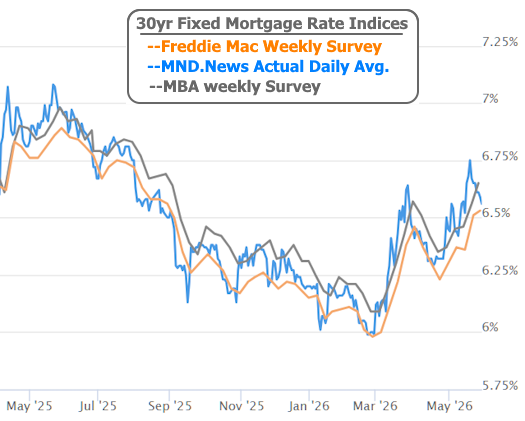
Mortgage Rates Recover After Recent Spike
The recent decline follows a period of significant volatility that pushed borrowing costs sharply higher during the spring.
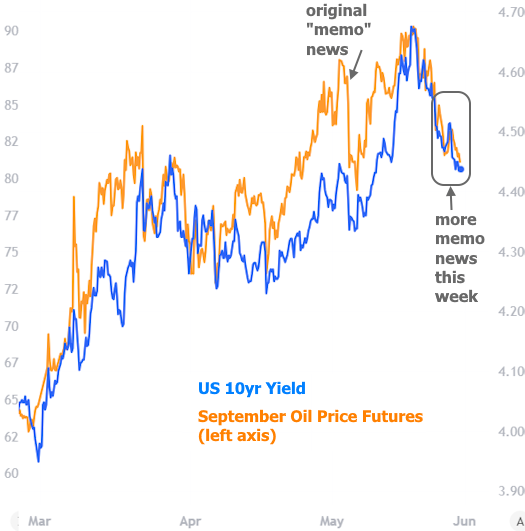
Mortgage rates climbed as investors responded to concerns surrounding inflation, government borrowing needs, and geopolitical tensions related to the ongoing conflict involving Iran.
Those concerns drove Treasury yields higher, which in turn pushed mortgage rates upward.
As financial markets began receiving more encouraging news regarding diplomatic efforts, investor sentiment improved and bond markets stabilized.
That shift helped mortgage rates move lower after reaching their recent highs.
Iran Developments Continue Driving Market Movement
Much of the recent mortgage rate volatility can be traced back to developments surrounding the Iran conflict.
Throughout the past several months, investors have closely monitored reports regarding potential negotiations aimed at ending hostilities.
Markets responded positively this week after reports suggested the United States and Iran were nearing agreement on a framework that could eventually lead to a broader peace arrangement.
While discussions have been ongoing for several weeks, investors appear increasingly optimistic that meaningful progress is being made.
Even small developments can have a significant impact on financial markets because investors continuously reassess economic risks associated with prolonged geopolitical conflicts.
Why Geopolitical Events Affect Mortgage Rates
Mortgage rates are heavily influenced by the bond market.
When investors become concerned about inflation, economic instability, or global conflict, bond yields often rise as markets demand greater compensation for risk.
Higher Treasury yields typically translate into higher mortgage rates.
Conversely, when investors become more confident about future economic conditions, bond yields often decline.
That process helps reduce borrowing costs across the economy, including mortgage rates.
The recent improvement in mortgage rates reflects growing confidence that geopolitical risks may become less severe than previously feared.
Is This a New Trend or More Market Volatility?
The key question facing homebuyers is whether the latest decline represents the beginning of a longer-term trend or simply another temporary move within a highly volatile market.
At this stage, the answer remains unclear.
Financial markets have reacted several times this year to reports regarding potential diplomatic agreements. Each announcement has generated optimism, only for uncertainty to return when negotiations stalled or additional questions emerged.
Because of that history, investors remain cautious.
The difference this time is that markets appear to be responding to signs of incremental progress rather than speculation alone.
Still, any setback in negotiations could quickly reverse recent gains and push rates higher again.
What It Means for Homebuyers
For prospective buyers, the recent drop in mortgage rates offers a small but meaningful improvement in affordability.
Even modest rate declines can reduce monthly mortgage payments and increase purchasing power.
Buyers who paused their home search during the recent spike in borrowing costs may find current conditions slightly more favorable than they were just a week ago.
However, affordability challenges remain significant.
Home prices in many markets continue to sit near record levels, and mortgage rates remain substantially higher than the ultra-low levels seen during the pandemic years.
What Homeowners Should Watch
Homeowners considering refinancing may also benefit if rates continue trending lower.
Although refinancing activity remains limited compared to previous years, any sustained decline in rates could create opportunities for borrowers who secured mortgages at higher rates during 2023, 2024, or early 2025.
Before making decisions, homeowners should continue monitoring:
Mortgage Rate Trends
Daily rate movements remain highly sensitive to economic and geopolitical news.
Inflation Data
Inflation remains one of the biggest drivers of interest rate expectations.
Federal Reserve Policy
Markets continue watching for signals regarding future interest rate decisions.
International Developments
Updates related to the Iran conflict could continue influencing bond markets and mortgage rates throughout the summer.
Outlook for the Weeks Ahead
Mortgage rates ended May on a more encouraging note than many expected just a week earlier.
The improvement was driven largely by renewed optimism surrounding potential diplomatic progress in the Middle East, which helped calm bond markets and lower yields.
While rates have moved away from their recent highs, the market remains highly sensitive to new developments. Any positive news regarding peace negotiations could support additional improvements, while setbacks could quickly reignite volatility.
For now, buyers and homeowners have received a modest break from rising borrowing costs. Whether that relief becomes a lasting trend or simply another temporary pause will depend largely on inflation data, Federal Reserve policy, and continued progress on the geopolitical front in the weeks ahead. For direct financing consultations or mortgage options for you visit 👉 Nadlan Capital Group.























Responses