
Mortgage Rates Rise as Strong Jobs Report Overshadows War Headlines

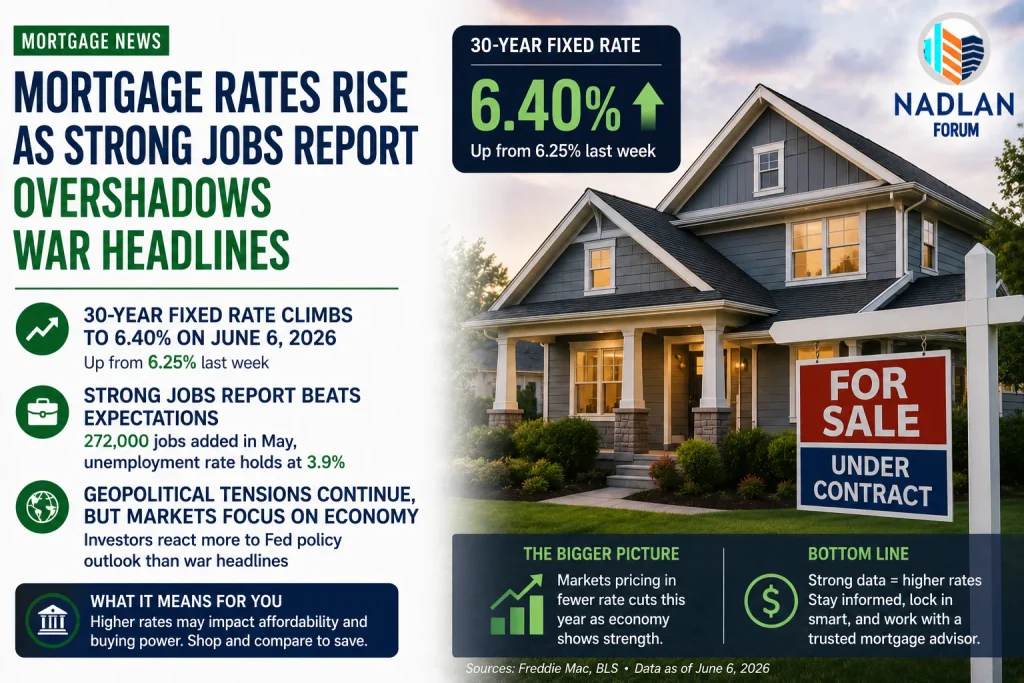
Mortgage rates moved higher at the end of the week as financial markets shifted their focus from geopolitical tensions to a surprisingly strong U.S. labor market.
For much of the past three months, mortgage rates have largely reacted to developments surrounding the Middle East conflict and its potential impact on energy prices and inflation. However, a stronger-than-expected May employment report changed the conversation and pushed borrowing costs higher.
Jobs Report Surprises the Market
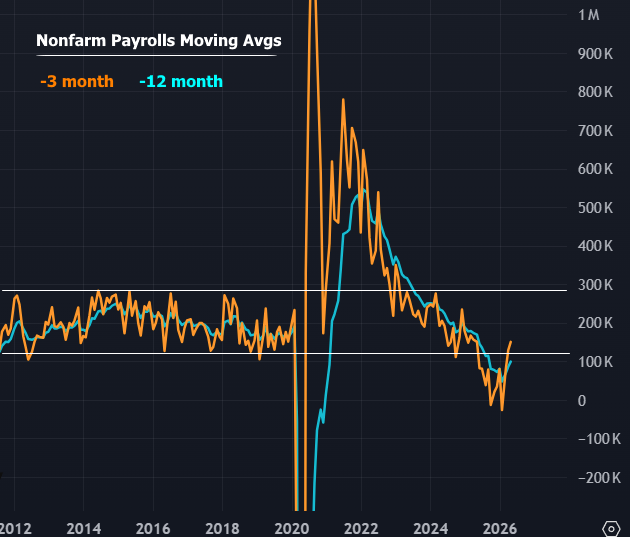
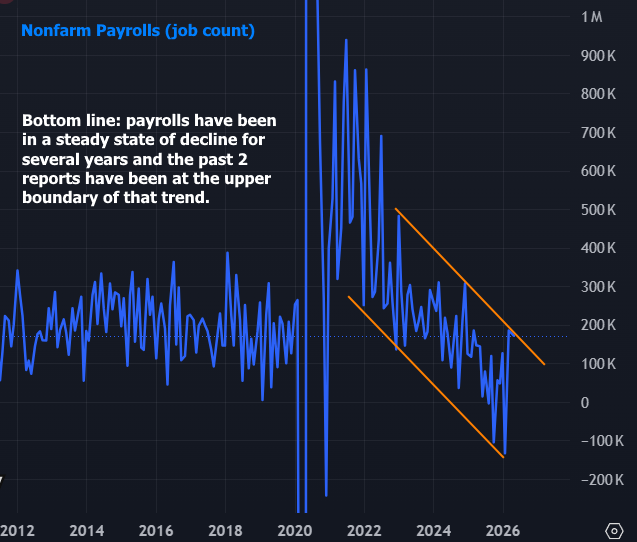
The latest employment data painted a much healthier picture of the U.S. economy than economists had anticipated.
Key highlights included:
- May job growth: 172,000.
- Market expectation: 85,000.
- Significant upward revisions to March and April payroll numbers.
March payroll growth was revised higher from 178,000 to 214,000, while April’s figure increased from 115,000 to 179,000.
Rather than showing a cooling labor market, the revisions suggested employment conditions remain resilient.
Why Mortgage Rates Reacted
Mortgage rates are heavily influenced by the bond market.
While geopolitical risks and oil prices have dominated trading recently, economic fundamentals still play a major role.
A stronger labor market can lead to:
- Higher consumer spending.
- Faster wage growth.
- Increased inflation pressures.
- Higher interest rate expectations.
When investors believe inflation may remain elevated, bond yields typically rise, and mortgage rates often follow.
Federal Reserve Expectations Shift
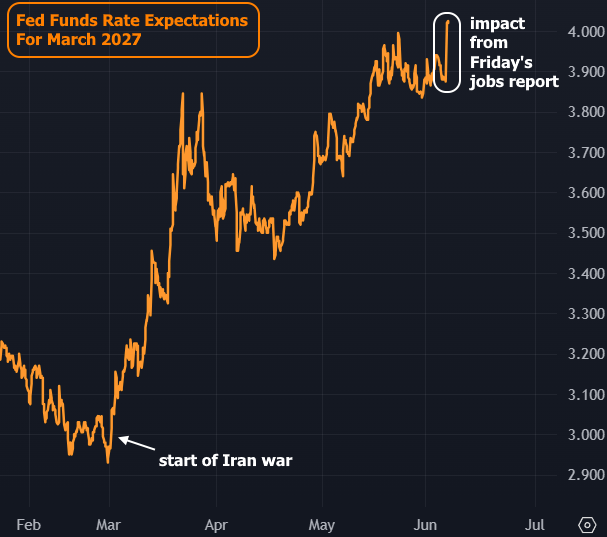
The strong employment report also affected expectations for Federal Reserve policy.
Earlier this year, many investors anticipated multiple interest rate cuts as economic growth slowed.
The latest labor market data has altered that outlook.
Instead of expecting rate reductions, markets are increasingly pricing in the possibility that:
- The Fed could keep rates unchanged for longer.
- Inflation risks remain significant.
- Additional rate hikes cannot be ruled out if economic growth remains strong.
This shift in expectations immediately affected Treasury yields and mortgage pricing.
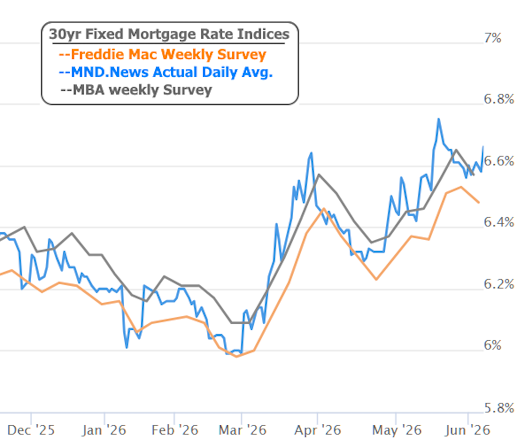
Mortgage Rates Remain Below Recent Highs
Although borrowing costs increased, mortgage rates have not returned to their highest levels seen during May.
Recent movements suggest that rates remain highly sensitive to incoming economic data and global developments.
Mortgage markets continue balancing two major forces:
Economic Strength
Strong employment and resilient consumer spending support higher rates.
Inflation Risks
Higher energy prices and geopolitical uncertainty can keep inflation elevated, also supporting higher rates.
Together, these factors have limited the potential for significant declines in mortgage rates.
Geopolitical Events Still Matter
While the jobs report dominated market attention, geopolitical developments have not disappeared.
Energy markets continue monitoring developments in the Middle East because higher oil prices can feed directly into inflation.
If energy costs stabilize or decline, inflation pressures could ease and provide some relief for interest rates.
Conversely, renewed disruptions could place upward pressure on borrowing costs.
Housing Market Impact
Higher mortgage rates create challenges for both buyers and sellers.
For buyers:
- Monthly payments increase.
- Purchasing power declines.
- Affordability becomes more difficult.
For sellers:
- Buyer demand may soften.
- Pricing strategies become increasingly important.
- Homes may take longer to sell in some markets.
However, housing inventory has improved compared with recent years, giving buyers more choices in many areas.
What Homebuyers Should Watch
Several upcoming economic indicators could influence mortgage rates over the coming months:
Inflation Data
Consumer and producer price reports will provide clues about future price pressures.
Employment Reports
Continued strong hiring could reinforce expectations for higher rates.
Federal Reserve Meetings
Any changes in policy guidance could quickly impact mortgage markets.
Global Developments
Energy prices and international events remain important factors for inflation expectations.
Should Buyers Wait?
Trying to perfectly time mortgage rates can be difficult.
Rates often react quickly to unexpected economic news, making short-term predictions challenging.
Potential buyers may benefit more from focusing on factors they can control:
- Improving credit scores.
- Reducing debt.
- Saving for larger down payments.
- Comparing multiple lenders.
- Shopping for the best loan terms.
Even small differences in mortgage rates can lead to significant long-term savings.
Outlook for Mortgage Rates
The latest employment data suggests the economy remains stronger than many expected.
That strength reduces the likelihood of rapid interest rate cuts and may keep mortgage rates elevated in the near term.
At the same time, markets remain highly sensitive to inflation trends and geopolitical developments. Future economic reports will likely determine whether rates continue moving higher or stabilize.
Bottom Line
Mortgage rates climbed after a stronger-than-expected May jobs report changed investor expectations about the economy and future Federal Reserve policy. Upward revisions to prior employment data reinforced the view that the labor market remains resilient, reducing hopes for near-term rate cuts.
Although rates remain below their recent May highs, the latest move highlights how quickly borrowing costs can react to economic news. For homebuyers and homeowners considering refinancing, staying informed and comparing loan offers remains one of the most effective ways to manage borrowing costs in a rapidly changing market. For direct financing consultations or mortgage options for you visit 👉 Nadlan Capital Group.

























Responses