
Americans Are Moving More Than Ever: The Most Popular U.S. Relocation Destinations in 2026

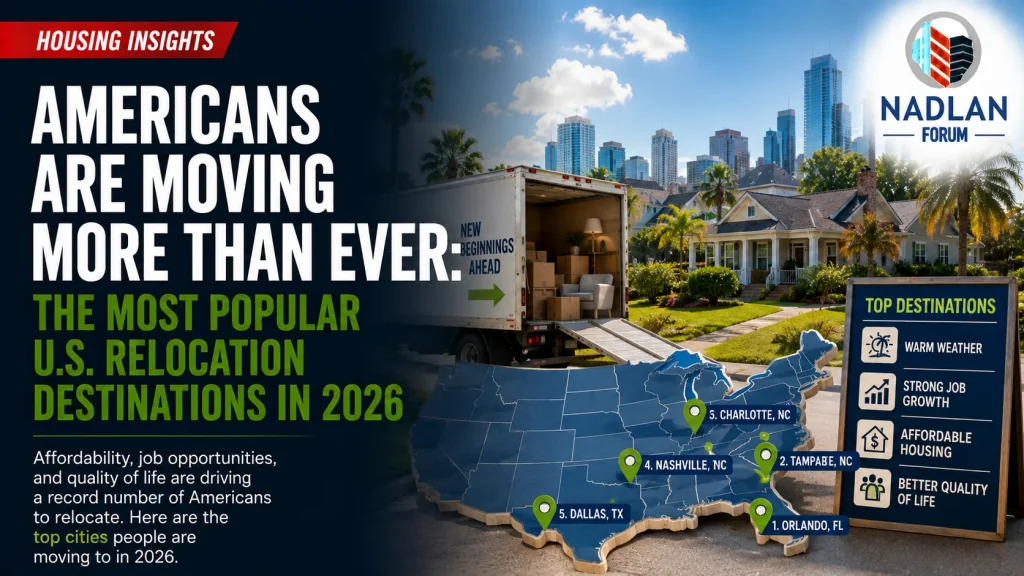
Americans continue to rethink where they want to live, and the latest housing data shows that more homebuyers are searching for homes outside their current metropolitan area than at any time in recent years. Rising home prices, elevated mortgage rates, changing work patterns, and the search for a lower cost of living are encouraging many households to relocate across the country.
Although overall home sales remain below the levels seen during the pandemic housing boom, the share of buyers considering a move to another region has reached a new record. Many are leaving expensive housing markets in favor of cities that offer more affordable homes, stronger job opportunities, and a better quality of life.
Record Share of Buyers Looking Beyond Their Current City
The latest housing migration data shows that 19.1% of U.S. homebuyers searched for homes outside their current metropolitan area during the first quarter of 2026.
That compares with 18.9% during the same period one year earlier and represents the highest relocation share recorded since tracking began in 2021.
In other words, nearly one out of every five prospective homebuyers is considering moving to a different part of the country rather than purchasing a home where they currently live.
While the increase may appear modest, it reflects a continuing long-term trend toward geographic mobility as buyers adapt to changing economic conditions.
Housing Affordability Is Driving Relocation
Affordability remains the biggest reason many Americans are considering a move.
Home prices in many large metropolitan areas remain near historic highs, while mortgage rates continue to make monthly payments significantly more expensive than they were just a few years ago.
At the same time, inflation has increased the cost of everyday necessities, including:
- Food
- Utilities
- Transportation
- Insurance
- Healthcare
- Childcare
For many households, relocating to a less expensive market offers an opportunity to reduce housing costs while improving overall financial stability.
Buyers leaving higher-priced regions are often able to purchase larger homes, lower their monthly mortgage payments, or enjoy a higher standard of living after moving.
Orlando Is the Nation’s Top Relocation Destination
Among all major metropolitan areas, Orlando, Florida, ranked as the most popular destination for relocating homebuyers during the first quarter of 2026.
Several factors continue to attract buyers to Central Florida.
Compared with many large northeastern cities, Orlando offers considerably more affordable housing.
The typical home price in Orlando is slightly above $400,000, roughly half the cost of a typical home in markets such as New York City, one of the largest sources of inbound buyers.
In addition to lower housing costs, Orlando continues to attract residents with:
- Year-round warm weather
- No state income tax
- Strong job growth
- Tourism and hospitality employment
- Expanding healthcare and technology sectors
- Family-friendly communities
These advantages have helped Orlando remain one of the country’s fastest-growing housing markets.
Florida Continues to Attract New Residents
Florida once again dominated the list of the nation’s most popular relocation destinations.
Following Orlando, the next most searched metropolitan areas included:
- North Port, Florida
- Miami, Florida
- Cape Coral, Florida
- Las Vegas, Nevada
- Tampa, Florida
The continued popularity of Florida reflects several long-term migration trends.
Retirees continue relocating from northern states in search of warmer weather, while working-age households are increasingly moving for employment opportunities, business growth, and lower taxes.
Many families are also attracted by Florida’s relatively affordable housing compared with large coastal cities, although prices have risen significantly over the past several years.
Florida’s Growing Technology and Aerospace Industry
Job growth is becoming an increasingly important factor behind migration into Florida.
The state’s Space Coast has developed into one of the nation’s fastest-growing aerospace and technology corridors.
Major private space companies, engineering firms, and advanced manufacturing employers continue expanding operations throughout the region.
These developments have attracted engineers, software developers, researchers, and other highly skilled professionals from states including California and Washington.
As higher-paying industries continue to expand, demand for housing in many Florida markets is expected to remain strong.
Some Pandemic Boom Cities Are Losing Momentum
While some metropolitan areas continue attracting new residents, others that experienced rapid population growth during the pandemic are beginning to see slower migration.
This shift reflects what many economists describe as boomerang migration, where households relocate again after moving during the pandemic.
Several markets illustrate this changing trend.
Charlotte, North Carolina
Charlotte experienced a net outflow of approximately 1,700 residents during the first quarter of 2026.
Five years earlier, the city had recorded a net inflow of roughly 3,200 people, highlighting how migration patterns have changed.
Austin, Texas
Austin also experienced a reversal.
The city recorded a net loss of approximately 300 residents during the first quarter.
By comparison, Austin gained roughly 14,000 net new residents during the same period five years earlier.
Although both cities remain attractive places to live, migration has become more balanced as housing prices increased and remote work patterns evolved.
Relocation Share Is Rising Even Though Home Sales Remain Slow
An important point is that a larger percentage of buyers are considering relocation, but the overall number of people moving is not necessarily higher than during the pandemic housing boom.
Home sales remain below the record levels seen in 2021 and 2022.
This means today’s migration trends reflect a larger share of a smaller group of active homebuyers.
In other words, relocation is becoming more common among people who are currently shopping for homes, even though fewer total buyers are participating in the housing market overall.
Why More Buyers Are Willing to Relocate
Several long-term trends continue encouraging interstate migration.
These include:
- Higher housing affordability in many southern states
- Increased availability of remote and hybrid work
- Strong population growth in Sun Belt cities
- Lower tax burdens in some states
- Better employment opportunities
- Warmer climates
- Improved quality of life
- More housing inventory than many northeastern markets
The ability to work remotely has given many households greater flexibility to choose where they live rather than remaining close to a traditional office.
This has expanded relocation opportunities for professionals across many industries.
What This Means for the Housing Market
Migration patterns continue to reshape local housing markets across the United States.
Cities gaining new residents often experience:
- Stronger housing demand
- Faster population growth
- Increased residential construction
- Expanding local economies
- Rising home values over time
Meanwhile, markets experiencing slower migration or population declines may see:
- More balanced housing inventory
- Slower home price appreciation
- Longer listing times
- Greater negotiating power for buyers
Understanding migration trends has become increasingly important for homeowners, investors, developers, and real estate professionals evaluating future housing demand.
Looking Ahead
As affordability challenges continue across much of the country, interstate migration is expected to remain an important driver of the U.S. housing market.
Many households are prioritizing affordable housing, career opportunities, lifestyle preferences, and financial flexibility when deciding where to live.
While overall home sales may remain moderate during the remainder of 2026, the growing share of buyers searching beyond their local markets suggests that migration will continue reshaping regional housing demand.
Cities that combine affordable homes, expanding job markets, and strong quality-of-life factors are likely to remain among the nation’s most attractive destinations for relocating homebuyers in the years ahead. For direct financing consultations or mortgage options for you visit 👉 Nadlan Capital Group.





















Responses