
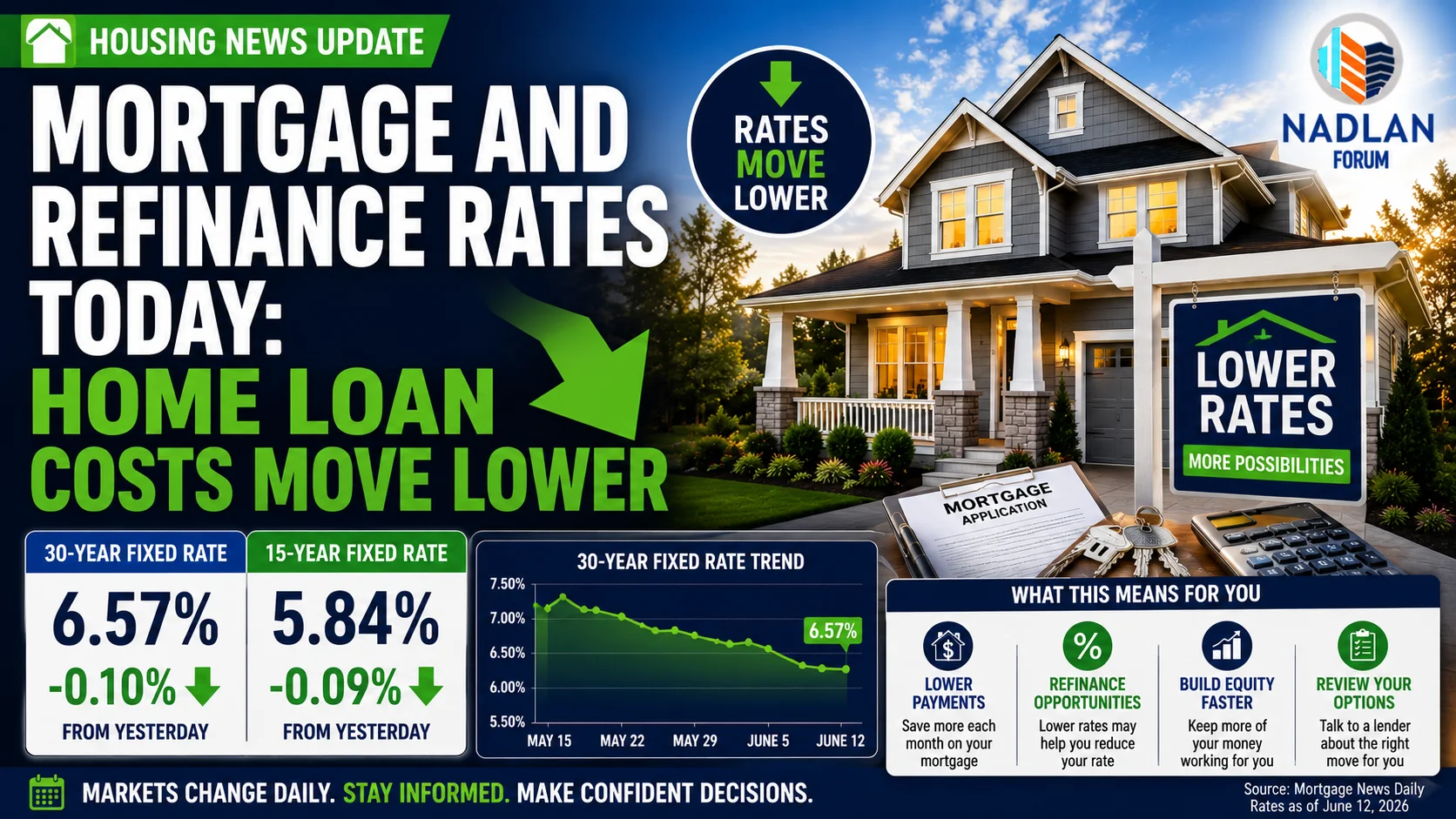
Mortgage Rates Remain Steady Despite Fluctuations in Bond Market


Mortgage rates are typically influenced by the bond market, and over time, their movements tend to align closely. However, short-term discrepancies can arise, as the timing of market fluctuations doesn’t always coincide with when mortgage lenders make their adjustments.
To understand this dynamic, consider mortgage rates as a restaurant that updates its menu prices based on the daily costs of ingredients. On some days, the price of ingredients might shift dramatically early in the morning, prompting the restaurant to adjust its prices mid-day. Other times, ingredient prices may change later in the day, or by only a small margin, so no price adjustment is necessary. This scenario closely mirrors the past couple of days in the mortgage rate market.
On Tuesday afternoon, the bond market improved, which would typically push mortgage rates lower. However, since the improvement occurred late in the day, most lenders didn’t have the opportunity to adjust their rates in time. By Wednesday morning, the bond market had weakened again, returning to the levels seen earlier in the day on Tuesday, which would normally suggest higher rates. But because mortgage rates hadn’t yet adapted to the bond market’s afternoon changes, most lenders didn’t feel the need to adjust their rates upwards in response.
This inconsistency between the bond market and mortgage rates is a result of market timing. Mortgage lenders tend to update their rates only once a day, and those adjustments usually happen after the day’s major bond market movements are reflected. Therefore, the discrepancy between the bonds’ performance and mortgage rate changes can create moments where the two don’t align perfectly, even if they eventually follow similar patterns over a longer period.
What This Means for Homebuyers
For homebuyers, this means that mortgage rates may appear to be somewhat stagnant even though the bond market is experiencing significant volatility. Although the bond market often gives an early indication of where rates are headed, the actual mortgage rate adjustment process can lag behind.
In the current environment, while mortgage rates may have remained fairly flat despite fluctuations in the bond market, this doesn’t mean the underlying market dynamics have calmed down. If the bond market continues to show volatility, mortgage lenders may soon adjust their rates accordingly, especially as they account for longer-term trends.
The Bigger Picture
Despite this day-to-day inconsistency, mortgage rates over time generally follow the bond market’s lead. If the bond market continues to see strong movements either up or down, rates will likely adjust in a similar fashion, although the timing of those changes can vary depending on when the fluctuations occur and the pace at which lenders respond.
As economic data continues to come in, including signals from the Federal Reserve or inflationary trends, mortgage rates could still experience shifts especially if the bond market starts to reflect new economic realities. For now, homebuyers and homeowners looking to refinance should stay tuned to both bond market trends and mortgage rate news to better understand the direction rates might be heading in the coming days or weeks.
The key takeaway is that while bond market volatility is ongoing, the changes to mortgage rates may not always be as immediate. For those navigating the market, patience and careful monitoring of financial conditions are crucial. For direct financing consultations or mortgage options for you visit 👉 Nadlan Capital Group.



























Responses