
Putting a Dollar Value on Climate Risk: Housing Market Faces Growing Threats

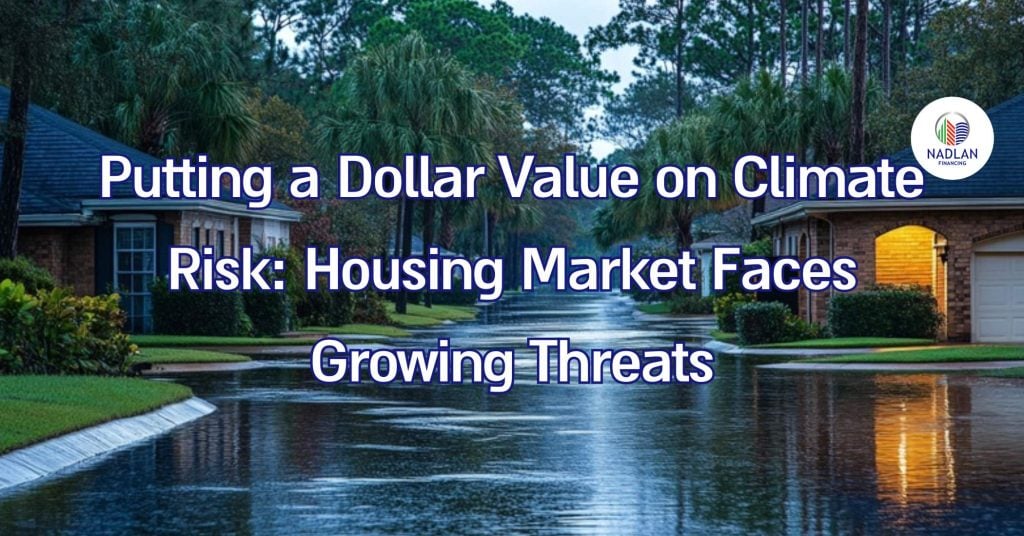
A recent report from Realtor.com reveals that climate risks are now a major factor affecting U.S. real estate, with more than one in four homes amounting to a staggering $12.7 trillion in property value exposed to severe or extreme climate threats. The risks include flooding, hurricanes, wildfires, and other environmental hazards, which are reshaping housing markets, homeowner costs, and the availability of insurance across the country.
“Climate risks are no longer a distant threat for U.S. housing they are a present reality that put a large chunk of U.S. real estate value at risk,” said Danielle Hale, Chief Economist at Realtor.com. “In many markets, the gap between perceived risk and actual risk is sizable, particularly for flooding. This has significant consequences for homeowners, buyers, and insurers, and it underscores the need for readily available data to help households make informed decisions.”
Flood Risk: An Underestimated Threat
One of the most underestimated threats to U.S. homes is flood risk. According to First Street’s Flood Factor score data, nearly 6 million homes, representing an estimated $3.4 trillion in property value, are expected to experience severe or extreme flooding within the next 30 years. This $3.4 trillion in property value is about $2 million higher than the value of homes located in the FEMA Special Flood Hazard Areas (SFHAs). This discrepancy exists because FEMA’s flood maps do not fully account for the effects of heavy rainfall and climate change, which are growing threats.
In the 100 largest U.S. metros, cities like New York, Los Angeles, and San Francisco are seeing the largest gaps in flood risk. The value of homes in FEMA-designated flood zones in these cities is significantly lower than homes facing flood risks not recognized by FEMA. Specifically, New York had a gap of $95.3 billion, Los Angeles faced a gap of $65.6 billion, and San Francisco had a gap of $54.9 billion.
The New Orleans metro is particularly vulnerable, with 66% of its housing stock facing severe or extreme flood risk that is not reflected by FEMA’s flood maps. This gap in risk identification is causing financial distress for homeowners who may be unaware of the actual flood risks they face.
Wind Damage: The Growing Threat to Coastal Homes
In addition to flooding, wind damage is a significant and growing climate risk. According to First Street’s Wind Factor score data, about 18.3% of homes in the U.S. valued at nearly $8 trillion are at severe or extreme risk of wind damage. This risk is particularly concentrated in coastal areas, where homes are exposed to hurricane-force winds. In 14 major metros across states like Louisiana, Florida, South Carolina, and Texas, every home is exposed to severe or extreme wind damage.
This compounding risk of wind and flood damage makes coastal markets particularly vulnerable. Moreover, homeowners in these areas often face high hurricane deductibles. For example, in many states, homeowners with a $400,000 policy may need to cover up to $20,000 in damage before their insurance kicks in. The financial strain is growing, and insurance costs are climbing to match.
Wildfire Risk: A Rising Threat, Especially in the West
While wildfire exposure has traditionally been concentrated in certain parts of the U.S., the risk is growing. In 2025, 5.6% of U.S. homes, with a combined property value of $3.2 trillion, face severe or extreme wildfire risk, according to First Street’s Fire Factor score data. A significant portion of this risk 40% is located in California, with cities like Los Angeles and Riverside being among the most exposed. California’s FAIR Plan, the state’s insurer of last resort, has grown to $650 billion in exposure, up 289% since 2021.
According to Cotality’s 2025 Wildfire Risk Report, more than 2.6 million homes in the Western U.S., valued at $1.3 trillion, face moderate or greater wildfire risk. Over a million of these homes are considered to be at “very high risk”. Cities like Colorado Springs and Tucson are also seeing major risks, with up to 75% of Colorado Springs’ housing stock at risk, and 60% of Tucson homes facing high wildfire danger.
Rising Insurance Costs and Market Stress
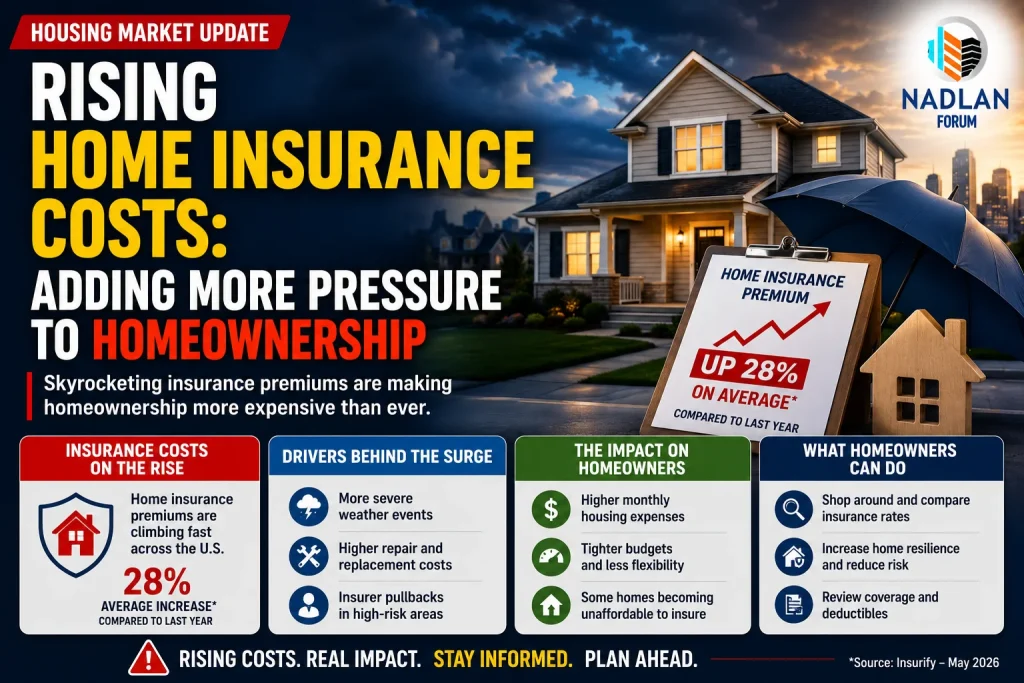
The rising risks of wildfires and other climate hazards are putting considerable pressure on the U.S. insurance market. In Miami, homeowners’ insurance premiums for a typical single-family home under an HO-3 policy now average 3.7% of the home’s market value the highest ratio among the top 100 U.S. metros. Other Florida cities like New Orleans, Cape Coral, and Tampa also rank high in insurance costs, with premiums often exceeding 2% of the home’s value.
With the growing frequency of climate-related disasters, insurance companies are increasingly reluctant to cover high-risk properties. In California, the FAIR Plan has seen significant growth, especially in areas hard-hit by wildfires. The state’s largest insurer, State Farm, recently requested a 17% rate increase, as the California insurance crisis deepens.
In 2023, catastrophic wildfires like the Eaton and Palisades fires caused an estimated $52.5 billion in losses, affecting 18,000 structures including over 11,000 homes. These fires also claimed 29 lives, making them among the costliest wildfires in U.S. history.
The National Impact of Climate Risk
While climate risks affect specific regions more dramatically, the financial consequences are national in scope. From flooding in the Northeast to wildfires in the West and hurricanes in the South, the impact of climate change on the housing market is undeniable. As Danielle Hale points out, “Climate risk and insurance are not usually a top consideration for home shoppers balancing budgets against still-high home prices and mortgage rates, but these factors already shape ongoing housing costs and affordability, and increasingly whether they can secure affordable insurance coverage.”
Homebuyers and homeowners alike need better tools to assess and manage these risks, especially as climate change intensifies and insurance markets adjust to new realities. Climate data is crucial for informed decision-making, ensuring that individuals and families are aware of the risks and costs associated with their homes in the changing landscape of real estate. For direct financing consultations or mortgage options for you visit 👉 Nadlan Capital Group.



























Responses