
Mortgage Market Slows for the Holidays Despite Key Economic Reports

Two of the most important economic reports of the month were released this week, and both delivered results that normally would have pushed mortgage rates lower. While rates did improve slightly, the overall reaction was smaller than expected as the market slipped into holiday mode.
This quieter response reflects a mix of timing, data details, and the reality that December trading often behaves differently than the rest of the year.
Jobs Report Showed Rising Unemployment—but With Caveats
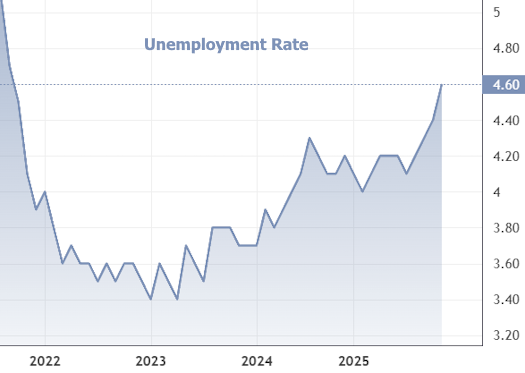
The first major report was November’s jobs report, released Tuesday. It showed an unemployment rate of 4.6%, the highest level since 2021 and well above the 4.4% forecast.
Under normal conditions, a jump like that would likely trigger a noticeable drop in bond yields and mortgage rates. This time, the bond market barely moved.
Several factors softened the impact:
- The labor force participation rate increased by 0.1%, meaning more people entered the workforce
- The unrounded unemployment rate rose only slightly from September
- Much of the increase came from temporary layoffs, not permanent job losses
Taken together, these details reduced the urgency of the headline number and made the labor market look less weak than it first appeared.
Inflation Data Was Better Than Expected—but Still Muted
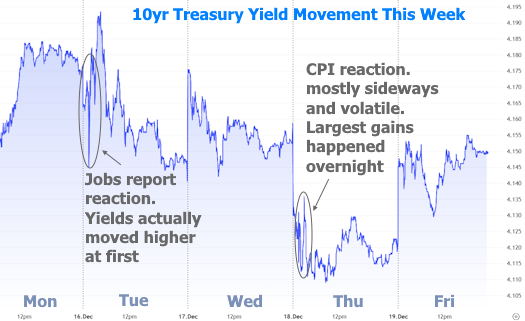
The second key report was November’s Consumer Price Index (CPI), released Thursday. Inflation came in well below economists’ expectations, which is typically good news for interest rates.
However, traders approached the report cautiously. Data collection was disrupted by the recent government shutdown, raising questions about accuracy. While bond yields and mortgage rates briefly touched their best levels of the week, most of that improvement had already happened before the CPI release.
As a result, the CPI report failed to spark a strong follow-through move.
Holiday Trading Is Limiting Market Moves
A major reason for the muted reaction is timing. The second half of December is known for thin trading and uneven participation, and this year is no exception.
With fewer traders active, markets often:
- Drift sideways without clear direction
- Overreact briefly, then reverse
- Ignore data that would normally move rates
Add uncertainty around data quality, and many traders are choosing to wait for January’s economic reports before taking stronger positions.
What to Expect Over the Next Two Weeks
Holiday schedules will further dampen activity:
- Markets closed on Christmas Day
- Early bond market close on Christmas Eve
- The following week repeats a similar pattern with half days and closures
Even on days when markets are technically open, participation will be far below normal. That means rate movement could feel random and inconsistent until trading returns to normal in January.
The Bottom Line
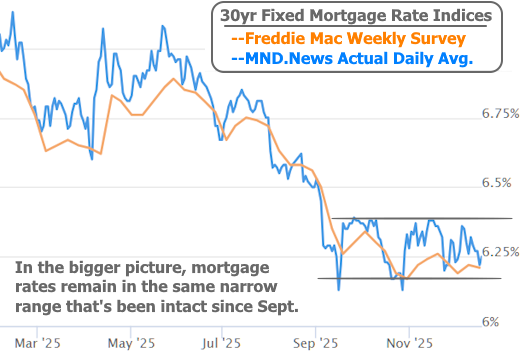
Despite jobs and inflation data that would usually support lower mortgage rates, holiday trading conditions kept reactions small. Rates may continue to drift or move unpredictably through year-end, with a clearer trend likely forming once fresh economic data arrives in January.
For now, the mortgage market is taking a seasonal pause. For direct financing consultations or mortgage options for you visit 👉 Nadlan Capital Group.





















Responses