
Green Features Gain Momentum as Homebuyers and Renters Prioritize Sustainability

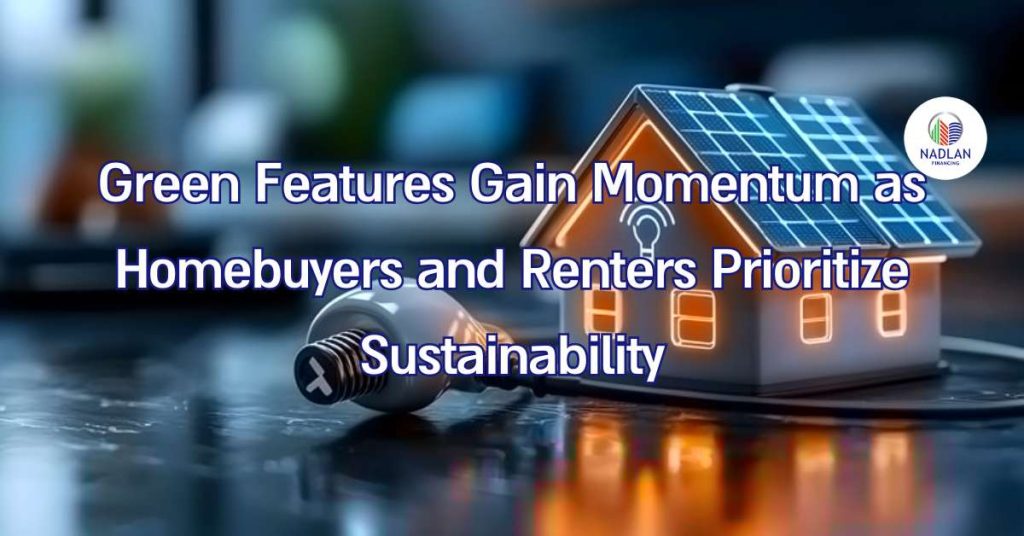
Sustainable housing is no longer a niche concern homebuyers and renters alike are increasingly factoring energy efficiency, cost savings, and environmental impact into their property decisions. The National Association of Realtors (NAR) recently released its 2025 REALTORS Residential Sustainability Report, showing that green features are becoming a key consideration in the housing market.
According to the study, over 42% of real estate agents worked with properties that included sustainable or energy-efficient features in the past year. Client interest in these features is rising sharply. The share of respondents saying clients never asked about energy upgrades dropped from 57% in 2024 to just 29% in 2025, while those reporting “rarely” increased from 7% to 42%. Approximately 21% said clients ask sometimes, and 6% said always/often.
“While housing affordability continues to challenge homebuyers, many still seek sustainable features to reduce both their environmental footprint and utility costs,” said Jessica Lautz, NAR Deputy Chief Economist and VP of Research.
Key Findings from NAR’s Survey
- Energy-efficiency matters: Windows, doors, and siding were rated as “very important” by 37% of respondents.
- Proximity and commute: Thirty percent rated closeness to frequently visited places as very important, followed by commute time (29%) and access to major roadways (26%).
- MLS gaps: While 44% of agents have access to green data fields in their MLS, 47% of those never use them.
- Appraiser uncertainty: Seventy-three percent were unsure if appraisers properly value sustainability features, and 56% doubted appraisers recognize their impact on home value.
- Education hurdles: The most common knowledge gaps involved solar panel valuation (52%) and transaction impacts (58%).
- Financial incentives drive interest: Tax credits, rebates, and other monetary incentives were cited by 47% of respondents as the top motivator for buyers to pursue green homes.
Interestingly, 58% of agents said that less than a quarter of buyers consider climate or environmental risks when making purchasing decisions. Despite this, the adoption of sustainable features continues to grow, reflecting long-term shifts in buyer priorities.
enters Are Also Driving Green Adoption
NAR’s analysis of the single-family market is mirrored in rental housing trends. A separate survey by SmartRent Inc., in partnership with Morning Consult, found that renters are increasingly prioritizing energy efficiency and cost-saving technologies.
Utility costs have risen sharply—electricity prices alone are up 34% since 2020—prompting 92% of renters to say that reducing monthly utility expenses is “very” or “somewhat important” when choosing a home. Sustainability also ranks high, with 75% of renters reporting that minimizing environmental impact is important.
“Renters now expect property managers to actively help limit utility bills through smart home solutions and energy-efficient technologies,” said Frank Martell, CEO of SmartRent.
Over 63% of renters reported a utility bill increase over the past year, with 35% seeing hikes greater than $51 per month. Additionally, 76% expressed concern about future utility increases, highlighting the economic stress driving interest in efficiency.
However, property management communication remains a challenge: only 48% of renters feel their managers effectively discuss energy usage, and just 44% believe managers help them reduce utility costs.
- 32% of renters would pay higher rent if lower utility costs kept overall monthly expenses the same.
- 33% would pay more if energy-efficient features delivered consistent savings.
Regional Green Priorities: What Matters Most
Green housing priorities vary widely across U.S. regions, according to a combination of NAR and SmartRent surveys:
- West Coast: Solar panels, energy-efficient windows, and smart thermostats dominate buyer and renter preferences. Cities like Los Angeles, San Francisco, and Portland report strong demand for rooftop solar integration.
- Northeast: Homebuyers focus on insulation, double-pane windows, and heat-efficient boilers due to higher heating costs in colder climates. Boston, New York, and Philadelphia show growing interest in energy-efficient appliances.
- Midwest: Cost-saving features such as smart thermostats, programmable heating/cooling, and LED lighting are the top priorities, especially in Chicago, Minneapolis, and Detroit.
- South: Air conditioning efficiency is critical, along with water-saving devices and energy-efficient appliances. In Miami, Dallas, and Atlanta, buyers and renters value reducing high summer utility costs.
- Southeast Coastal Areas: Storm-resistant, energy-efficient windows and solar panels are rising in importance due to hurricane-prone regions, particularly in Florida and the Carolinas.
“Regional climate, energy costs, and weather risks heavily shape which sustainable features buyers and renters value most,” Lautz said. “Tailoring offerings to local priorities can significantly influence marketability and property retention.”
Looking Ahead
The combined trends among homeowners and renters indicate that sustainability is becoming a standard expectation, not just an optional add-on. As utility costs rise, climate concerns grow, and older housing stock requires modernization, energy-efficient features and green certifications are increasingly tied to both resale value and renter/tenant retention.
“In the coming years, energy-efficient and sustainable features won’t just be desirable—they’ll be expected,” Lautz added. “Homes that combine affordability with sustainability will outperform those that do not, both in resale value and tenant or buyer appeal.”
Sustainability is shaping a new era in U.S. housing, making eco-conscious design and energy savings a central factor in purchase decisions, leasing strategies, and investment planning.For direct financing consultations or mortgage options for you visit 👉 Nadlan Capital Group.






















Responses