
Mortgage Rates Hit Lowest Levels Since September Fed Meeting Following Trade Tariff News


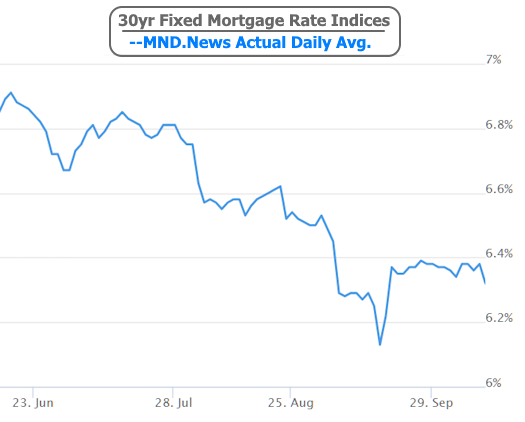
Mortgage rates experienced their most notable movement in weeks on Friday, breaking out of the extremely narrow trading range that had dominated the market since September 19. For nearly three weeks, the average lender’s rates fluctuated within a minuscule 0.05% range, illustrating remarkable stability. By comparison, September 18, the day after the Fed’s last policy announcement, saw a sharp 0.15% spike in rates.
While Friday’s shift was modest expanding the prior range by only 0.02% it was significant for several reasons.
Why Friday’s Movement Stands Out
1. Breaking the Range: Unlike other recent days, rates not only moved beyond the narrow bounds of the past three weeks they traversed the range entirely, moving from near the previous highs to reach new lows within a single trading session.
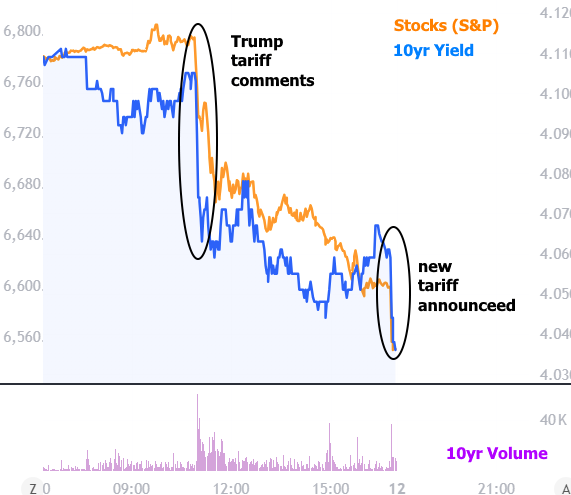
2. A Clear Catalyst: Friday’s rate movement was directly tied to an external, identifiable event. The President announced that there was no need to meet with China’s President Xi in the near term and that the administration was preparing a substantial increase in Chinese tariffs.
This announcement triggered the largest stock market sell-off since April, while simultaneously sparking a rally in bonds. Mortgage rates, which are closely linked to the yield on mortgage-backed securities (MBS), responded immediately. As bonds rallied, long-term interest rates including mortgage rates fell, producing a sharp, albeit brief, drop in average lending rates.
Tariffs: A Double-Edged Sword
Trade tensions can affect mortgage rates in contradictory ways. On one hand, tariffs may signal slower economic growth, prompting investors to buy safe-haven bonds, which pushes rates lower. On the other hand, tariffs can stoke inflation, potentially pressuring the Fed to keep rates elevated.
Friday’s drop likely reflected the spillover from stock market losses into bond demand, rather than inflation expectations. In other words, investors sought refuge in Treasury securities and MBS, creating downward pressure on rates.
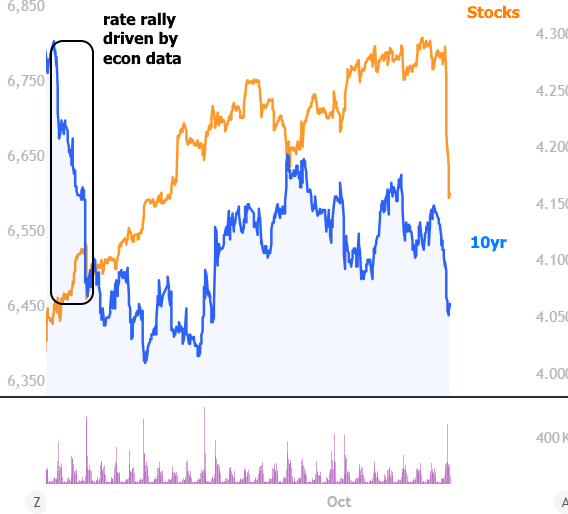
Looking at historical reactions, such as the early September jobs report, demonstrates how sensitive rates are to both economic news and financial market sentiment. Small shifts in confidence or liquidity can lead to pronounced swings in mortgage rates, even without a change in Fed policy.
What This Means for Borrowers
Borrowers may see slightly more favorable mortgage pricing in the immediate term, but caution is warranted. Analysts note that there is no guarantee this momentum will continue next week. True, sustained movement in mortgage rates typically requires large-scale economic signals, such as employment reports or inflation data both of which remain delayed due to the ongoing government shutdown.
Until the shutdown ends and key reports like the September jobs report are released, mortgage rates are likely to remain rangebound, with short-term volatility driven primarily by headlines and market sentiment rather than fundamental shifts in the economy.
Bottom Line
Friday’s rate drop is the lowest since the September 17 Fed meeting, but the market remains in a holding pattern, awaiting clearer economic indicators. While homeowners and prospective buyers may benefit from this temporary dip, any strategic decisions should consider the ongoing uncertainty around tariffs, government data, and Fed policy. For direct financing consultations or mortgage options for you visit 👉 Nadlan Capital Group.

























Responses