
Pending Home Sales February 2026: Modest Growth Led by Midwest South and West


Pending Home Sales February 2026: Modest Growth Led by Midwest South and West
The U.S. housing market showed a modest increase in activity in early 2026, as pending home sales moved slightly higher in February.
According to the National Association of Realtors, pending home sales rose by 1.8 percent compared with January, signaling a small improvement in buyer activity. However, on a yearly basis, contract signings were still down 0.8 percent, indicating that the housing market has not fully recovered.
Pending home sales are an important early indicator because they track signed contracts before transactions are finalized, offering a preview of future home sales.
The recent increase appears to be driven in part by improved affordability conditions. Earlier declines in mortgage rates and some price stabilization made it easier for buyers to enter the market.
However, this improvement may be temporary. Rising oil prices and inflation concerns could push mortgage rates higher again, potentially reducing affordability in the coming months.
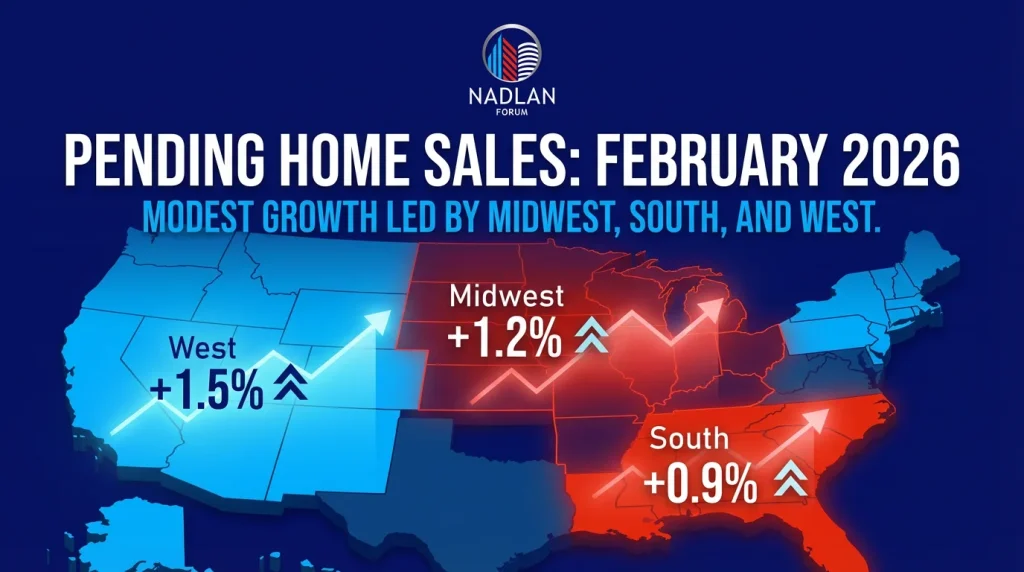
Looking at regional trends, the housing market showed mixed performance across the country.
The Midwest posted the strongest monthly growth, with sales rising 4.6 percent, supported by relatively lower home prices. The South also showed steady demand, increasing 2.7 percent month over month and 1.2 percent year over year, driven by population growth and more available housing.
The West recorded a smaller gain of 0.9 percent, but still showed a 3.2 percent increase compared with last year. Meanwhile, the Northeast remained the weakest region, with sales declining both monthly and annually due to higher home prices and limited inventory.
At the metro level, several cities reported strong growth, including San Diego, Jacksonville, San Jose, Denver, Miami, and Phoenix, where rising demand continues to support housing activity.
Even with these gains, challenges remain. Limited housing supply continues to restrict market growth, particularly in higher-priced regions. At the same time, rising mortgage rates and inflation could slow buyer demand if borrowing costs increase further.
Still, there is clear evidence of underlying demand. Many potential buyers—especially first-time buyers—are waiting for better conditions, such as lower rates or improved affordability, before entering the market.
Looking ahead, the direction of the housing market will depend on several key factors, including mortgage rate trends, housing supply, job growth, and overall economic conditions.
In summary, the February data suggests that the housing market is showing signs of stabilization, but challenges remain.
Sales activity is improving slightly, demand is still present, but affordability and supply constraints continue to shape the market’s path forward.
Our specialty is assisting you in easily obtaining the finest loan available, offering professional advice to help you reach your real estate investing objectives stress-free. Contact today for a tailored consultation, where our expert advice turns potential into profitable reality.
Continue reading on our site:
Pending Home Sales February 2026: Modest Growth Led by Midwest South and West
#HousingMarket #RealEstate #HomeSales #MortgageRates #USHousing













Responses