
Trump Extends Iran Ceasefire: Markets Turn Attention to Economic Outlook

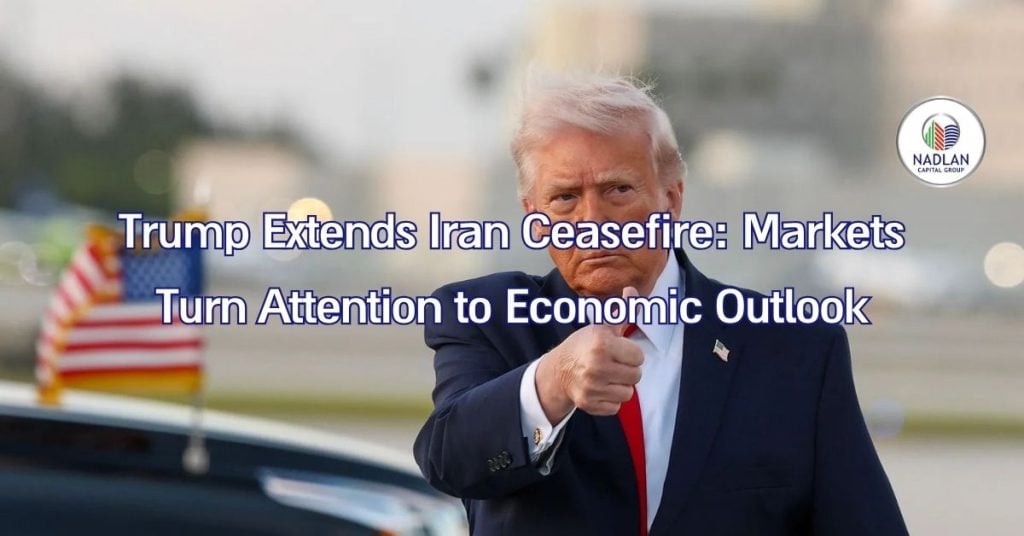
U.S. President Donald Trump has decided to extend the ongoing ceasefire with Iran, keeping tensions from rising further. The decision came just hours before the previous two-week pause was set to end.
While the move helped reduce immediate concerns about renewed military action, financial markets showed only a limited reaction. Investors appear to be looking beyond the conflict and focusing more on broader economic trends.
Market Reaction Remains Calm
Following the announcement, global markets showed mixed but stable performance:
- Asian stocks moved in different directions
- European markets saw small gains
- U.S. stock futures pointed slightly higher
Oil prices experienced short-term volatility but remained elevated. Brent crude traded near $100 per barrel, while U.S. West Texas Intermediate hovered in the low $90 range.
Despite the ceasefire, supply concerns continue because restrictions remain in place around the Strait of Hormuz, a key route for global oil shipments.
Investors Look Beyond Geopolitical Risk
Market experts suggest that investors believe the most serious risks from the conflict have already passed. Instead of reacting strongly to each update, they are shifting attention back to economic fundamentals.
Analysts note that markets are now pricing out worst-case scenarios, such as a major disruption that could push oil prices to extreme levels. This change in sentiment is helping stabilize global equities.
The MSCI World Index has already recovered losses seen after the conflict began and is now trading above pre-conflict levels.
Oil Supply Concerns Still Present
Even with reduced tensions, the situation is not fully resolved. The continued closure of the Strait of Hormuz is limiting oil supply, which keeps pressure on global energy prices.
Higher oil prices can lead to:
- Increased inflation
- Higher costs for businesses
- Slower economic growth
Experts warn that if supply disruptions continue for a longer period, global inventories could decline further, making the situation more challenging.
Shift Back to Earnings and Valuations
With geopolitical concerns easing, investors are once again focusing on company earnings and market valuations.
As earnings season approaches, many see an opportunity in stocks, especially since valuation levels have become more attractive in recent months. This combination of improving earnings expectations and reasonable pricing is helping support the market.
Financial institutions like J.P. Morgan highlight that markets often recover quickly from geopolitical events and tend to refocus on underlying economic factors.
Emerging Markets Show Continued Strength
In emerging markets, optimism remains steady. Before the conflict began, earnings expectations were already improving, and that trend appears to continue.
Strategists believe that, despite short-term uncertainty, the long-term outlook for these markets remains positive, supported by growth in corporate earnings.
Uncertainty Around Future Talks
Although the ceasefire has been extended, future negotiations remain unclear. Planned diplomatic talks have faced delays, raising questions about how quickly a long-term resolution can be reached.
Still, the extension of the ceasefire suggests that both sides are avoiding escalation for now, which helps maintain stability in global markets.
Long-Term Impact on Oil Prices
Analysts expect oil prices to remain higher than earlier forecasts due to ongoing supply disruptions. Some projections suggest that Brent crude could stay elevated through the year, even if conditions gradually improve.
This situation creates challenges for policymakers, as they have limited control over how long supply constraints will last.
Key Takeaways
- The U.S. has extended the ceasefire with Iran, reducing immediate conflict risks
- Markets showed limited reaction and remained stable
- Investors are shifting focus back to economic fundamentals and earnings
- Oil prices remain high due to supply restrictions
- Long-term uncertainty still exists, especially around global energy supply
Final Outlook
The extension of the ceasefire has helped calm short-term fears, but markets are no longer driven mainly by geopolitical headlines. Instead, attention is returning to economic performance, corporate earnings, and inflation trends.
While risks remain, the current market behavior suggests growing confidence that the situation will gradually stabilize without major disruption. For direct financing consultations or mortgage options for you visit 👉 Nadlan Capital Group.



























Responses