
U.S. Foreclosure Activity Rises in Q1 2026: Market Shows Signs of Adjustment

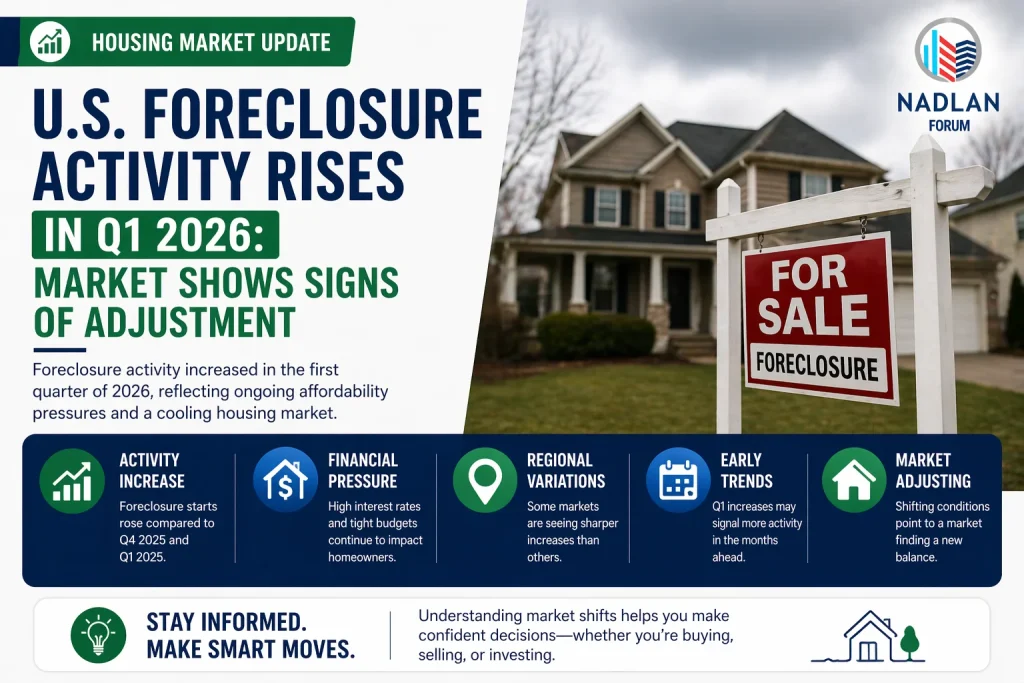
Foreclosure activity across the United States moved higher in the first quarter of 2026, pointing to a gradual shift in housing market conditions. While levels are still lower than past peaks, the increase suggests that some homeowners are starting to feel financial pressure.
According to ATTOM’s latest report, around 118,700 properties had a foreclosure filing during Q1 2026. This represents a 6% increase from the previous quarter and a 26% rise compared to the same period last year.
In March alone, about 45,900 properties were affected, marking an 18% jump from February and a 28% increase year-over-year.
Foreclosure Starts Continue to Climb
A key indicator of future activity is the number of homes entering the foreclosure process. In Q1 2026, approximately 82,600 properties began foreclosure proceedings.
This figure is:
- Up 7% from the previous quarter
- Up 20% from one year ago
The steady rise in foreclosure starts suggests that more households are struggling to keep up with mortgage payments, possibly due to higher living costs and interest rates.
National Foreclosure Rates and Monthly Trends
Looking at March data, one in every 3,131 housing units nationwide had a foreclosure filing.
States with the highest foreclosure rates included:
- South Carolina
- Indiana
- Florida
- Illinois
- New Jersey
During the same month:
- Over 30,300 properties started the foreclosure process
- More than 5,200 homes were repossessed by lenders
Both figures showed strong increases compared to last year, indicating growing activity across different stages of foreclosure.
States with the Highest Foreclosure Activity
Some states reported the largest number of foreclosure starts in Q1 2026:
- Texas: 10,617 starts
- Florida: 10,099 starts
- California: 7,985 starts
- Georgia: 4,356 starts
- New York: 3,886 starts
In terms of overall rates, the highest foreclosure activity was seen in:
- Indiana
- South Carolina
- Florida
- Delaware
- Illinois
Nationwide, about one in every 1,211 housing units had a foreclosure filing during the quarter.
Increase in Bank Repossessions (REOs)
Lenders also repossessed more properties during the quarter. About 14,020 homes became real estate owned (REO) properties in Q1 2026.
This is:
- Up 2% from the previous quarter
- Up 45% from one year ago
Some states saw especially large increases in repossessions, including:
- Colorado
- Alabama
- Washington
- Oregon
- Florida
This rise suggests that more foreclosure cases are reaching completion rather than being resolved earlier in the process.
Foreclosure Timelines Are Getting Shorter
Another notable trend is the reduction in how long properties stay in foreclosure. On average, homes completed the foreclosure process in about 577 days during Q1 2026.
This marks:
- A 3% drop from the previous quarter
- A 14% decline from last year
Some states still have much longer timelines, including:
- Louisiana
- Hawaii
- New York
- Connecticut
- Nevada
Meanwhile, states like Texas, West Virginia, and Alaska are completing foreclosures much faster.
What This Means for the Housing Market
The rise in foreclosure activity does not necessarily signal a crisis but rather a return toward more typical market conditions. During the pandemic, foreclosure activity was unusually low due to government support programs and temporary protections.
Now, as those measures have ended and economic pressures increase, foreclosure numbers are gradually moving upward.
At the same time, overall levels remain below historical highs, which suggests the market is adjusting rather than declining sharply.
Key Takeaways
- Foreclosure filings increased both quarterly and yearly in Q1 2026
- More homes are entering and completing the foreclosure process
- Repossessions by lenders are rising significantly
- Foreclosure timelines are becoming shorter
- The market is shifting toward more normal activity levels
Final Outlook
The steady increase in foreclosure activity reflects changing financial conditions for many homeowners. While the trend shows some stress in the system, it also signals that the housing market is moving away from the unusually low foreclosure levels seen in recent years.
Going forward, factors such as interest rates, job stability, and income growth will play a major role in determining whether this trend continues or stabilizes. For direct financing consultations or mortgage options for you visit 👉 Nadlan Capital Group.





















Responses