
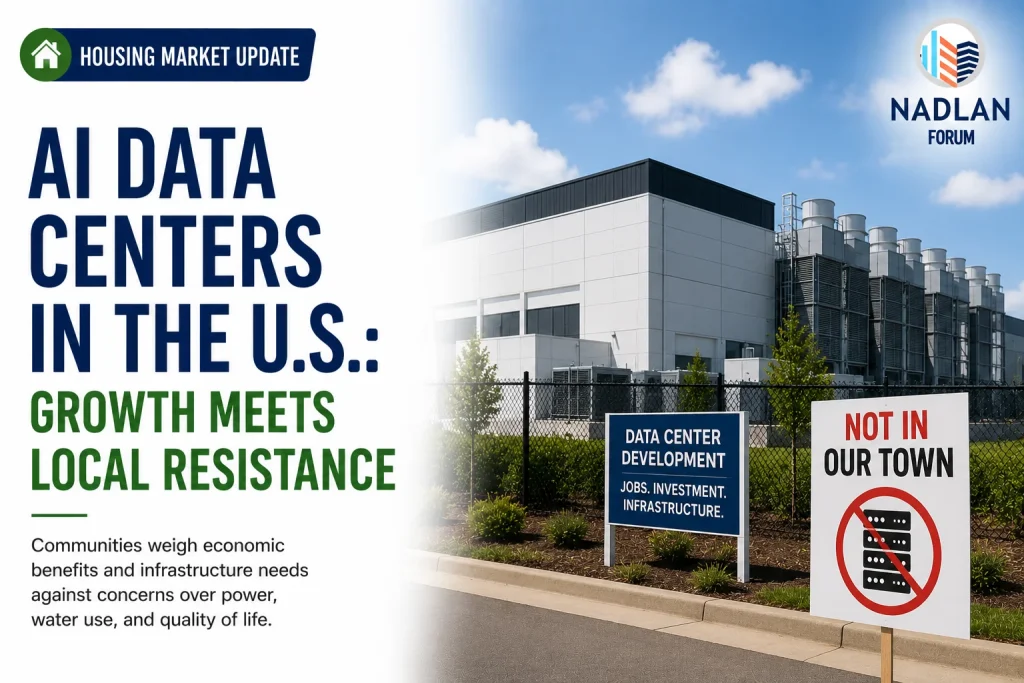
AI Data Centers in the U.S.: Growth Meets Local Resistance

Rapid Expansion of AI Infrastructure
The rise of artificial intelligence is driving a major increase in data center construction across the United States. These facilities power AI systems, cloud storage, and digital services, and their numbers continue to grow quickly. There are already more than 3,000 data centers operating nationwide, with many more planned in the coming years.
As demand for AI tools increases, companies are investing heavily in new infrastructure. While this growth supports technology development, it is also creating new challenges for local communities.
Public Opinion Shows Clear Divide
A recent survey conducted by Ipsos and commissioned by Redfin highlights mixed public opinion on this issue.
According to the findings, about 47% of U.S. residents oppose building an AI data center near their homes, while 38% support such projects. The remaining group is either unsure or neutral.
This makes data centers one of the more controversial types of development in residential areas. Opposition levels are similar to other debated housing changes, such as converting single-family homes into multi-unit properties.
Why Many Residents Are Concerned
The concerns around AI data centers are mostly tied to their impact on local resources and quality of life.
These facilities require large amounts of electricity to run servers and cooling systems. This can put pressure on local power grids and may lead to higher energy costs for residents. Water usage is another issue, as cooling systems often need significant water supply.
In addition, some communities worry about noise from constant operations and the appearance of large industrial buildings in residential areas. These concerns can make data centers feel out of place in neighborhoods that were not designed for heavy infrastructure.
There are also broader concerns about artificial intelligence itself. Many people believe that AI could reduce job opportunities in the future, which adds to the hesitation around supporting these projects.
Economic Benefits Still Attract Support
Despite the concerns, AI data centers also bring clear economic advantages.
They create jobs in construction, security, and technical fields. Once operational, they can support local economies through long-term employment and increased business activity. These projects may also lead to upgrades in energy and water systems, which can benefit the wider community.
For some regions, especially those facing slow economic growth, data centers can be seen as an opportunity to attract investment and improve infrastructure.
Younger Generations Show More Support
Support for data centers varies by age group. Younger Americans tend to be more open to having these facilities nearby.
About half of millennials and members of Gen Z support local data center development. In comparison, support drops among older groups, with Gen X and baby boomers showing lower approval rates.
This difference may reflect how younger people are more familiar with technology and its benefits, while older generations may focus more on potential risks and disruptions.
Political Views Also Influence Opinions
The survey also shows differences based on political views. Around 49% of Republicans support building AI data centers in their communities, compared to 36% of Democrats.
These differences suggest that opinions on data centers are shaped not only by local concerns but also by broader views on economic growth, regulation, and technology.
Compared to Other Housing Developments
When compared to other types of construction, data centers face similar or even higher levels of opposition.
Nearly half of respondents also oppose changes aimed at increasing housing supply, such as turning single-family homes into multi-unit buildings. Meanwhile, fewer people oppose new apartment complexes or mixed-use developments, though resistance still exists.
This shows a wider trend where communities are cautious about any major changes to their neighborhoods.
What This Means for the Future
The growth of AI data centers in the U.S. is expected to continue as demand for digital services increases. However, local resistance could slow down some projects or lead to stricter regulations.
Developers may need to address community concerns more carefully by improving design, reducing environmental impact, and offering clear benefits to residents.
In the long term, balancing technology growth with community needs will be key. Data centers are an important part of modern infrastructure, but their success will depend on how well they fit into the areas where they are built.
Final Thoughts
AI data centers are becoming a major part of the U.S. economy, but not everyone is ready to accept them nearby. While they bring jobs and investment, they also raise concerns about resources, costs, and daily life.
As more projects move forward, the conversation between developers, governments, and local communities will play an important role in shaping how and where these facilities are built. For direct financing consultations or mortgage options for you visit 👉 Nadlan Capital Group.





















Responses