
Multifamily Rent Growth Showed Positive Gains in May: Apartment Market Continues Gradual Recovery

The U.S. multifamily housing market continued its slow but steady recovery in May 2026, with national rent prices showing another month of growth. According to the latest Multifamily Rent Growth Report from Apartments.com, average apartment rents increased slightly, marking the sixth consecutive month of positive performance.
While growth remains modest compared to previous years, the data suggests that the rental market is stabilizing after a period of uneven performance in late 2025.
National Rent Levels Move Higher
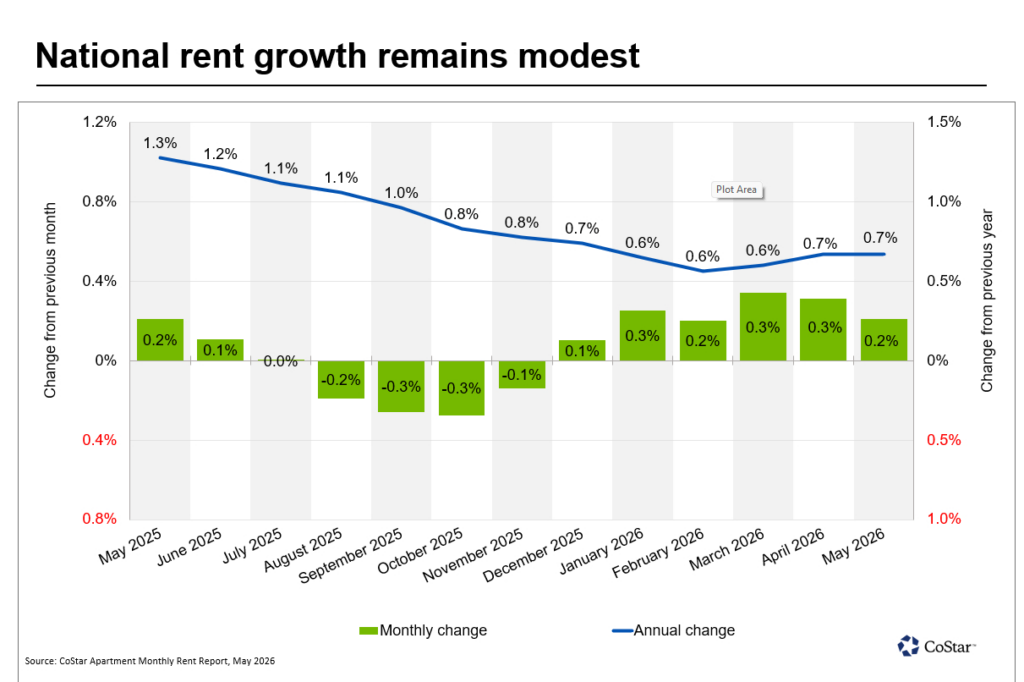
In May, the average rent for apartments across the United States rose to $1,737, up from a revised $1,733 in April. This represents a 0.2% monthly increase, continuing a trend of small but consistent gains.
On an annual basis, rent growth remained unchanged at 0.7%, which is lower than the 1.3% growth recorded a year earlier. This indicates that while rents are still rising, the pace of growth has slowed compared to 2025.
Monthly increases over the past spring leasing season were also relatively mild:
- March: +0.2%
- April: +0.3%
- May: +0.2%
This pattern suggests that seasonal demand is present but not as strong as in typical peak leasing cycles.
Regional Rent Performance Shows Mixed Trends
Rent growth in May was positive across all five major U.S. regions on a monthly basis, showing broad but modest momentum.
Monthly changes by region
- Northeast: +0.3%
- Pacific: +0.3%
- Midwest: +0.2%
- South: +0.1%
- Mountain: +0.1%
Although all regions posted gains, the differences in annual performance were more pronounced.
Year-over-year changes by region
- Midwest: +2.0%
- Northeast: +1.3%
- Pacific: +1.2%
- South: -0.8%
- Mountain: -1.7%
The Midwest led the nation in annual rent growth, while the Mountain and Southern regions continued to experience slight declines, largely due to higher supply levels in several metro areas.
Supply Conditions Continue to Shape the Market
A key factor influencing rent trends is the ongoing imbalance between supply and demand in many housing markets.
In several Western and Sun Belt metros, increased apartment construction over the past few years has added significant inventory. This has placed downward pressure on rents in some areas, even as demand remains steady.
In contrast, markets with limited new construction continue to see stronger pricing power, particularly in parts of the Northeast and select coastal cities.
Metro-Level Rent Trends
At the city level, rent growth remained widespread in May, with 43 of the top 50 U.S. metros reporting monthly increases, slightly fewer than the 45 markets recorded in April.
Top monthly gainers
- San Jose, CA: +1.2%
- Tucson, AZ: +0.9%
- San Francisco, CA: +0.8%
Only a small number of major metros experienced monthly declines, including:
- Fort Lauderdale, FL
- Phoenix, AZ
- Los Angeles, CA
- Louisville, KY
- Las Vegas, NV (all -0.1%)
- Richmond, VA (-0.2%)
- San Antonio, TX (slight decline)
Annual Rent Growth Leaders and Decliners
On a year-over-year basis, performance varied significantly across major markets.
Strongest annual growth
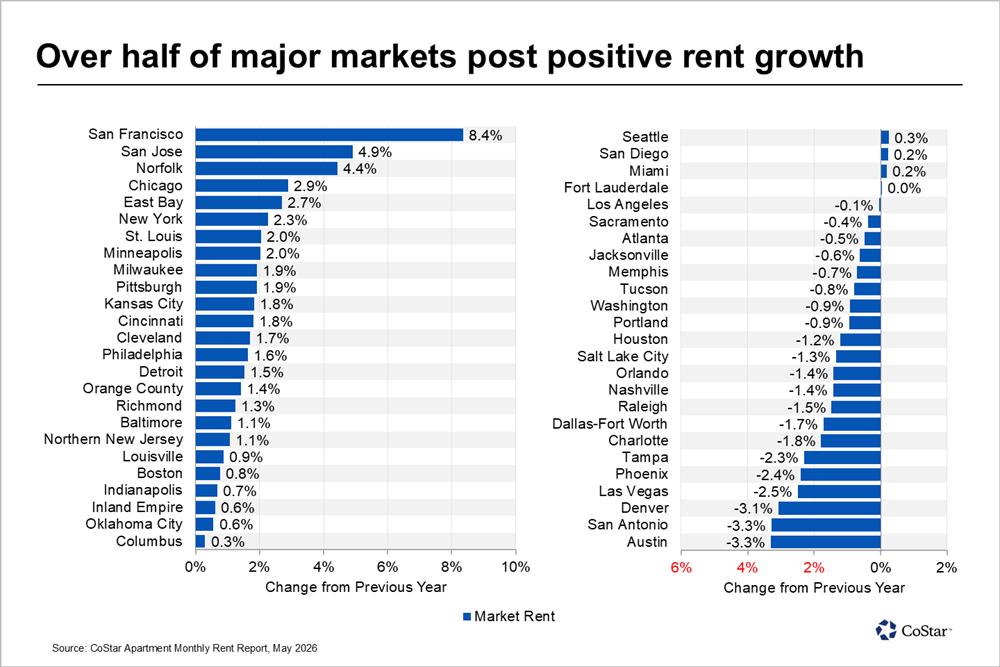
- San Francisco, CA: +8.4%
- San Jose, CA: +4.9%
- Norfolk, VA: +4.4%
- Chicago, IL: +2.9%
San Francisco continues to stand out as the strongest-performing major rental market, supported by tight supply conditions and persistent demand.
Markets with declining rents
Several metro areas with heavy new construction saw annual rent declines:
- Austin, TX: -3.3%
- San Antonio, TX: -3.3%
- Denver, CO: -3.1%
- Las Vegas, NV: -2.5%
These declines reflect how increased supply is still outpacing demand in parts of the Sun Belt and Mountain West regions.
Market Outlook
Overall, the U.S. multifamily market is showing signs of stabilization rather than rapid growth. Monthly rent increases have become more consistent, but annual gains remain modest.
The spring leasing season in 2026 has produced steady demand, yet the impact of past construction cycles continues to limit upward pressure on rents in many markets.
As new apartment deliveries gradually slow in some regions, market conditions may tighten later in the year. However, current trends suggest that rent growth will remain moderate rather than sharply rising.
For investors and renters alike, the key driver of future performance will continue to be local supply levels and regional economic conditions. For direct financing consultations or mortgage options for you visit 👉 Nadlan Capital Group.























Responses