
Mortgage Rate Dip: Pending Home Sales Reach Highest Level Since May


A short decline in mortgage rates gave the U.S. housing market a welcome boost during the first week of July. Buyers who had been waiting for lower borrowing costs returned to the market, pushing pending home sales to their strongest level in nearly two months.
Although mortgage rates have already started climbing again, the temporary decline encouraged more buyers to sign contracts. At the same time, home prices remained close to record highs, and the number of newly listed homes fell, showing that inventory is still limited in many parts of the country.
The latest housing data suggests that while affordability challenges continue, many buyers are still ready to move when financing becomes even slightly more affordable.
Pending Home Sales Reach a Two-Month High
During the four-week period ending July 5, seasonally adjusted pending home sales increased 1.3% from the previous week, reaching their highest level since early May.
Pending sales measure homes that have gone under contract but have not yet closed, making them one of the earliest indicators of future housing activity.
The improvement came after mortgage rates briefly eased, encouraging buyers who had delayed their purchases to return to the market before rates increased again.
While one week of stronger demand does not guarantee a long-term trend, it shows that buyers remain very sensitive to changes in borrowing costs.
Lower Mortgage Rates Encouraged More Buyers
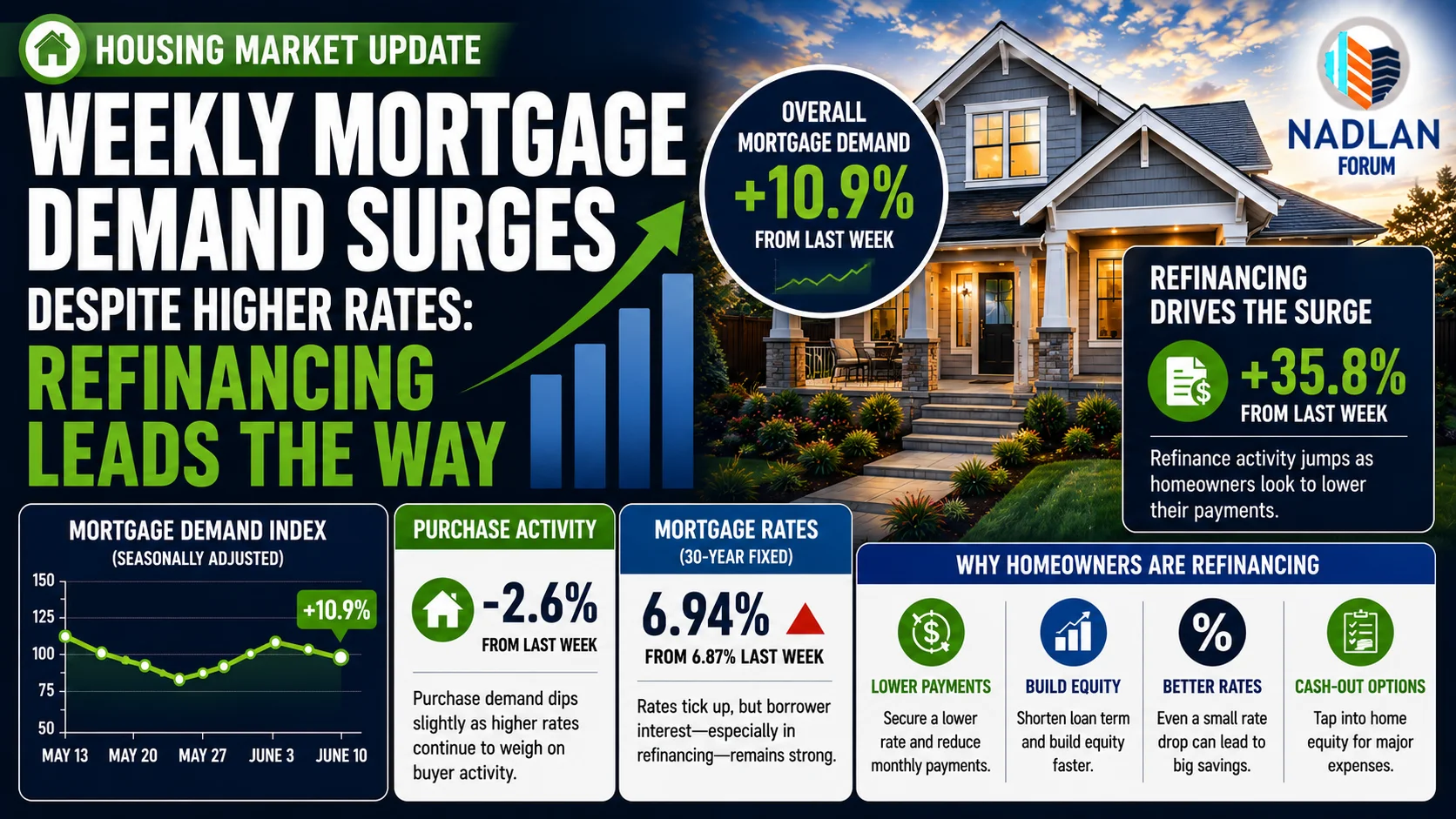
One of the biggest reasons for the increase in buyer activity was a temporary drop in mortgage rates.
The average weekly 30-year mortgage rate fell to 6.43% on July 2, the lowest level in about six weeks. The decline followed easing financial market concerns as geopolitical tensions between the United States and Iran temporarily cooled.
Lower mortgage rates reduced monthly borrowing costs, helping improve affordability for many households.
As a result, the estimated median monthly housing payment dropped to $2,598, its lowest level in six weeks.
However, the improvement was short-lived. By July 8, the average daily mortgage rate had climbed back to 6.68%, showing that interest rates remain volatile and continue to influence buyer decisions.
Home Prices Stay Close to Record Highs
Even with higher financing costs, home prices continued to rise across much of the country.
The national median sale price reached $408,808, representing a 2.2% increase from one year earlier. That figure sits only about $500 below the all-time record, highlighting how limited inventory continues to support home values.
The median asking price also increased to $401,029, up 2.5% compared with last year, suggesting that sellers remain confident despite slower overall market conditions.
For many buyers, lower mortgage rates provided temporary relief, but elevated home prices continue to be one of the biggest affordability challenges.
New Listings Continue to Lag
While buyer demand improved, sellers were slower to respond.
New listings declined 2.5% from the previous week, falling to their lowest level since January.
Many homeowners continue to hesitate before listing their properties because they already have mortgages with much lower interest rates than today’s borrowing costs. Others may simply be waiting for stronger market conditions or further price appreciation.
This shortage of fresh inventory limits buyer choices and keeps competition relatively strong in many local markets.
If buyer demand remains steady, more homeowners could decide to sell later this summer to take advantage of high prices.
Housing Inventory Shows Mixed Signals
Although new listings declined, the overall number of homes available for sale remained relatively stable.
Active listings reached approximately 1.49 million homes, up 0.7% from a year ago but down 0.7% compared with the previous week.
This indicates that inventory has improved modestly over the past year but is still not growing quickly enough to fully meet buyer demand in many areas.
A balanced housing market generally requires both healthy buyer activity and a consistent flow of new listings. Current conditions suggest that supply remains one of the market’s biggest challenges.
Housing Market Shows Signs of Stability
Housing economists believe the market is entering the summer selling season with cautious momentum.
Lower mortgage rates helped bring buyers back, but affordability remains a major concern because both mortgage costs and home prices are still historically high.
Even so, the latest data suggests there are enough active buyers to support steady contract activity despite ongoing challenges.
If mortgage rates stabilize later this year, buyer confidence could improve further, encouraging additional transactions across many markets.
Metro Areas With the Largest Home Price Increases
Several metropolitan areas posted strong annual gains in home prices during July.
The five strongest year-over-year increases were:
- Pittsburgh: 9.2%
- San Francisco: 8.2%
- West Palm Beach, Florida: 7.6%
- Philadelphia: 7.6%
- Chicago: 6.1%
At the same time, only eight major metro areas recorded annual price declines.
The largest decreases were:
- San Jose, California: -6.0%
- Seattle: -4.5%
- Miami: -2.1%
- Dallas: -1.5%
- Riverside, California: -0.4%
These differences show that local market conditions continue to vary widely across the country.
Markets Seeing the Biggest Growth in Pending Sales
Some metropolitan areas experienced particularly strong buyer demand.
The largest year-over-year increases in pending sales included:
- Austin, Texas: 17.0%
- West Palm Beach, Florida: 16.6%
- Boston: 13.4%
- Providence, Rhode Island: 12.8%
- Sacramento, California: 12.7%
Meanwhile, several markets continued to experience slower contract activity.
The largest declines were:
- Houston: -12.2%
- Seattle: -10.0%
- Virginia Beach, Virginia: -1.3%
- Denver: -0.8%
- San Jose, California: -0.8%
These numbers highlight how local affordability, inventory levels, and employment conditions continue to shape housing demand.
New Listing Activity Varied Across Metro Areas
Seller activity also differed significantly from one city to another.
The largest increases in new listings were recorded in:
- Anaheim, California: 17.4%
- St. Louis: 16.0%
- Philadelphia: 14.8%
- Boston: 12.6%
- Austin, Texas: 11.3%
Markets with the largest declines in new listings included:
- Dallas: -13.2%
- Fort Worth, Texas: -12.4%
- Atlanta: -6.8%
- Jacksonville, Florida: -6.3%
- Miami: -4.2%
Growing inventory in some cities may help improve buyer choices, while declining listings elsewhere could keep prices supported throughout the remainder of the summer.
What Buyers and Sellers Should Watch Next
The housing market remains highly dependent on mortgage rates.
The recent increase in pending home sales shows that buyers quickly respond when financing becomes slightly more affordable. However, if mortgage rates continue moving higher, demand could slow again.
At the same time, limited inventory and home prices near record highs continue to create affordability challenges for many households.
Over the coming months, buyers will likely watch interest rates closely, while sellers will monitor whether stronger demand encourages more homeowners to put their properties on the market. If additional inventory arrives while mortgage rates remain relatively stable, the housing market could see a healthier balance between buyers and sellers during the second half of 2026. For direct financing consultations or mortgage options for you visit 👉 Nadlan Capital Group.
























Responses