
Fed Chair Powell Highlights Labor Market Weakness Amid Government Shutdown


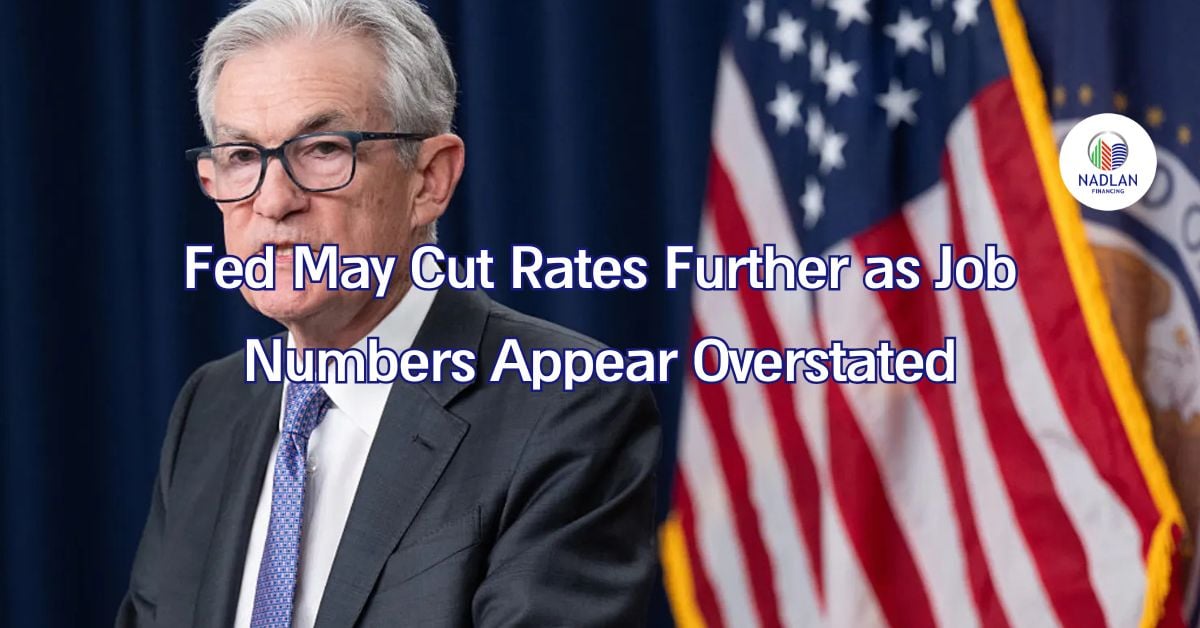
Federal Reserve Chair Jerome Powell emphasized on Tuesday that the U.S. labor market continues to soften, even as the ongoing federal government shutdown delays the release of critical economic data, including the September jobs report and updated inflation figures.
Speaking at the National Association of Business Economists (NABE) while receiving the Adam Smith Award, Powell noted that existing evidence indicates that payroll gains have slowed sharply. He attributed part of the slowdown to a decline in labor force growth caused by lower immigration and reduced labor force participation.
“While the unemployment rate remained low through August, payroll growth has decelerated, likely in part due to weaker labor force dynamics,” Powell said. “In this less dynamic labor market, downside risks to employment appear to have risen.”
He further explained that even though official September employment data are not yet available, auxiliary indicators point to muted hiring and layoffs, alongside declining perceptions of job availability among households and heightened difficulty for firms in filling positions.
Labor Market Dynamics and Inflation Concerns
Powell described the labor market as exhibiting simultaneous supply and demand softening, which is unusual given the low unemployment rate. The slight uptick in unemployment suggests that demand for labor is declining faster than supply, a trend that has caught the Fed’s attention.
In parallel, inflation remains above the Fed’s 2% target, hovering closer to 3%, largely influenced by tariffs. Powell clarified that much of the price increase in goods reflects trade-related costs rather than broad inflation pressures.
“Goods price increases are primarily due to tariffs rather than underlying inflation,” Powell said. “Near-term inflation expectations have risen this year, while most longer-term expectations remain aligned with our 2% goal.”
He warned that the persistent inflationary pressures, combined with weakening payroll growth, present a difficult balancing act for the Fed.
The Policy Dilemma: Rates vs. Jobs
Powell highlighted the Fed’s challenge: tightening monetary policy to curb inflation could exacerbate the labor market slowdown, while cutting rates to support employment risks letting inflation persist.
“There is no risk-free path forward. Raising rates too quickly could leave inflation unchecked later, whereas moving too slowly may result in unnecessary job losses,” Powell explained.
The Fed already cut its benchmark rate in September, the first reduction of the year, despite inflation remaining above target. Powell indicated that future policy moves would need to carefully balance these competing pressures to achieve the Fed’s dual mandate of maximum employment and price stability.
Outlook
Powell noted that data revisions from May through July show that the labor market has softened considerably, suggesting that both inflation and employment risks are now closer to equilibrium. The Fed continues to monitor real-time indicators, including hiring trends, wage growth, and consumer expectations, while the government shutdown delays official reporting.
“For the past few months, we maintained a restrictive stance because the labor market was still relatively strong,” Powell said. “Updated data indicates the labor market has softened, putting employment and inflation risks into closer balance.”
Analysts suggest that the Fed may continue its cautious approach, potentially implementing additional rate cuts in the coming months if labor market softness persists, while remaining alert to inflationary pressures amplified by tariffs and other economic uncertainties. For direct financing consultations or mortgage options for you visit 👉 Nadlan Capital Group.





















Responses