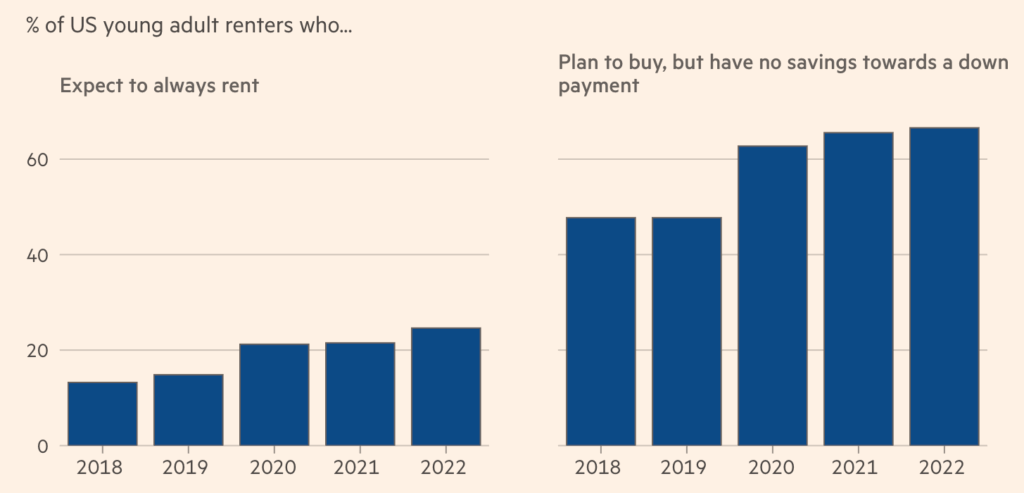
New research suggests a growing share of young adults are no longer confident they will ever own a home marking one of the sharpest generational shifts in financial outlook in decades.
A study by Seung Hyeong Lee, Ph.D. Candidate at Northwestern University, and Younggeun Yoo, Ph.D. Student at the University of Chicago, titled “‘Giving Up’: The Impact of Decreasing Housing Affordability on Consumption, Work Effort, and Investment,” examines how younger generations are responding to the severe drop in affordability. Their findings show that many feel homeownership is out of reach, and this belief is reshaping how they spend, work, and plan for the future.
According to their research, adults born in the 1990s are projected to have a homeownership rate nearly 10 percentage points lower than their parents’ generation by the time they reach retirement age. This decline marks one of the largest generational gaps observed in modern U.S. housing history.
A Growing Divide Between “Givers-Up” and Homeowners
The authors found that renters with modest savings especially those who believe buying a home is no longer realistic behave differently than peers who still see a path to ownership. Over time, these differences compound, leading to deep disparities in long-term wealth.
Those who believe homeownership is impossible are more likely to:
Reduce work effort
Spend more on leisure
Invest in riskier assets such as crypto or high-volatility stocks
Meanwhile, young adults who still think they can buy a home someday tend to work harder, take fewer financial risks, and save more consistently.
Financial Times Chief Data Reporter John Burn-Murdoch reviewed the study and offered additional insights into the mindset of today’s young adults.
Gen Z’s “Financial Nihilism” Has Economic Roots
Burn-Murdoch notes that older generations often label Gen Z as lazy or uninterested in traditional work. But he argues this reputation is not based on poor work ethic it is rooted in economic reality.
Two major differences separate Gen Z from previous generations of young adults:
Gen Z is not pushing back against these stereotypes they’re embracing them. Concepts like “quiet quitting,” which simply means doing the job as described instead of going above and beyond, have become normalized.
Their behaviors are economically rational. Because homeownership feels unattainable, many conclude that putting in extra effort at work offers little reward.
For decades, working harder was seen as the path to financial security and ultimately homeownership. But when the reward disappears, motivation does too.
Homeownership Feels Out of Reach—And It’s Changing Everything
The research points to one clear trend: when the possibility of buying a home fades, young adults start making different life choices.
These changes include:
Reduced commitment to jobs
More spending on immediate enjoyment rather than long-term savings
A shift toward high-risk financial decisions
Lower participation in traditional career pathways
Economist Demetri Kofinas refers to this trend as “financial nihilism,” the belief that traditional paths to financial security no longer work.
In a market where high prices and high mortgage rates dominate, many young adults feel they cannot catch up no matter how hard they work.
Burn-Murdoch summarized the mindset clearly:
“It’s not that previous generations were more passionate about their jobs. It’s that working hard used to lead to something meaningful like owning a home. When that reward moves out of reach, the entire effort feels pointless.”
Why This Shift Matters for the Economy
The generational discouragement around homeownership has major consequences:
1. Long-term wealth inequality will increase.
Homeownership remains the primary way Americans build wealth. If millions never buy, they miss decades of appreciation and equity growth.
2. The workforce may become less productive.
If young adults see no benefit to working harder, employers may struggle to motivate or retain talent.
3. Spending habits will change in lasting ways.
More money may flow into short-term enjoyment or speculative investments instead of savings.
4. A generation of lifelong renters may emerge.
If the trend continues, Gen Z could become the first U.S. generation in a century where most members never own a home.
Financial Education Matters More Than Ever
If homeownership is no longer a near-term goal for many young adults, the study suggests greater financial education is needed. This includes:
How to build wealth without owning a home
How to manage risk in a world full of volatile investments
How to create long-term stability even without property ownership
Burn-Murdoch concludes that older generations should not criticize young adults for acting differently:
“Young people are simply playing the hand they were dealt. The economic decisions we see today are not a rejection of responsibility they are a response to a changing economic landscape.” For direct financing consultations or mortgage options for you visit 👉 Nadlan Capital Group.
Property Details Price: $100,700 Property Type: Single Family Home Bedrooms: 2 Bathrooms: 1 Total size: 832 SQ FT Lot Size: 0.25 Acres Year Built: 1955 Estimated ARV: $185,000 Condition: Finish the Basement to reach top ARV(there is a door to the outside). Brick ranch with solid bones. Cosmetic update. Windows vinyl. COMPS: 1. 3935 Ebenezer Rd, […]
Property Details Property Type: Single Family Home Bedrooms: 5 Bathrooms: 2 Total Size: 1,600 SQ FT ARV: $170k +/- Repairs Level: Moderate Market Rent: $1,700/month Flood Zone: No Roof: 20 years old AC: Central Unit Heat Source: Electric Water Well and Septic Tank Fix or Hold in Phenix City, AL. Wood Frame Home. Needs Upgrades […]
Property Details Property Type: Single Family Home Bedrooms: 3 Bathrooms: 1 Total Size: 1,300 SQ FT Lot Size: 7,448 SQ FT Built-In: 1942 A great investment opportunity in Ferguson. A classic single-family house with a full basement and a driveway. The HVAC, Plumbing, Electrical Panel, and Water Heater are in good condition. Hardwood floors throughout. A […]
Property Details Property Type: Single Family Home Bedrooms: 3 Bathrooms: 1.5 Total Size: 1,920 SQ FT Lot Size: 6,800 SQ FT Estimated Market Rent: $2,050 ARV Estimate: $250K-280K Parking: 2 Detached Garage Cooling: Central Heating: Forced Air Built-In: 1955 How to Contact Us about this property and keep being informed of our future deals? For additional […]
Get clear on apartment mortgage rates, what affects them, and how to secure the best terms for your next investment property as a new or experienced investor.
Property Details Price: $445,094 Property Type: Single Family Home Bedrooms: 4 Bathrooms: 2.5 Total Size: 2,862 SQ FT Lot Size: 9,104 SQ FT Year Built: 1933 ARV: $610,000-$620,000 A great investment opportunity in University City. A classic 2-story single-family house, with a partial basement, hardwood floors, fireplace, and a 2-car detached garage. The HVAC, Plumbing, […]
Get clear, actionable advice on apartment building financing. Learn loan types, requirements, and tips to secure funding for your next multifamily investment.
Property Details Price: $74,094 Property Type: Single Family Home Bedrooms: 4 Bathrooms: 2 Total Size: 1,303 SQ FT Lot Size: 6,011 SQ FT Year Built: 1912 A great investment opportunity in University City. A classic single-family house, with a full basement, hardwood floors and a driveway. The HVAC, Plumbing, Electrical Panel and Water heater are […]
Young Adults Are Losing Faith in Homeownership as Affordability Breaks Down
Report
There was a problem reporting this post.
Block Member?
Please confirm you want to block this member.
You will no longer be able to:
See blocked member's posts
Mention this member in posts
Invite this member to groups
Message this member
Add this member as a connection
Please note:
This action will also remove this member from your connections and send a report to the site admin.
Please allow a few minutes for this process to complete.

























Responses