
US Interest Rate Policy Debate: President Urges Fed to Lower Rates Immediately

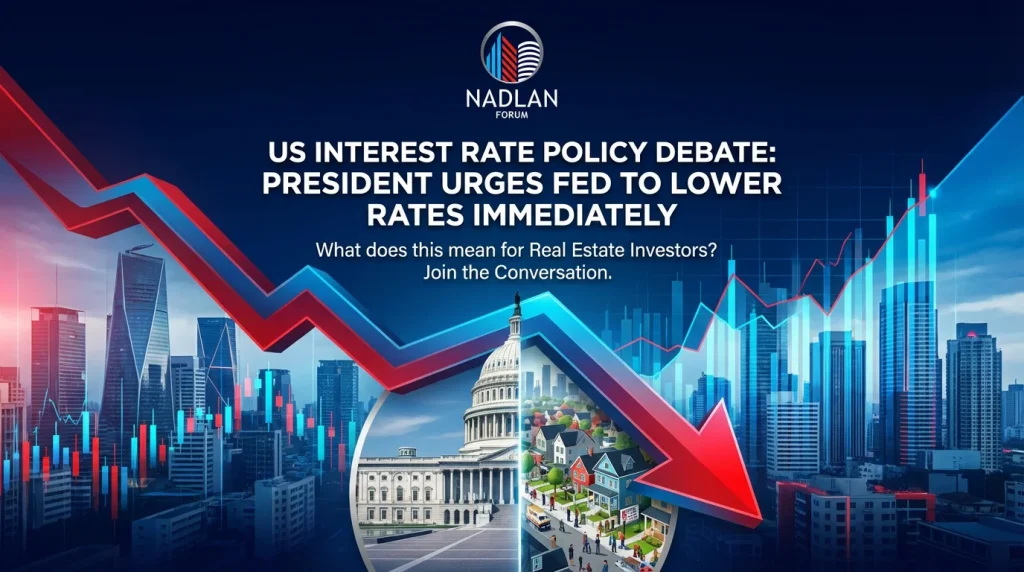
President Donald Trump has renewed his call for lower borrowing costs, urging the Federal Reserve to cut interest rates immediately instead of waiting for its next scheduled policy meeting.
The comments come as the central bank prepares to hold a meeting of the Federal Open Market Committee (FOMC), where officials will evaluate economic conditions and decide whether to adjust interest rates.
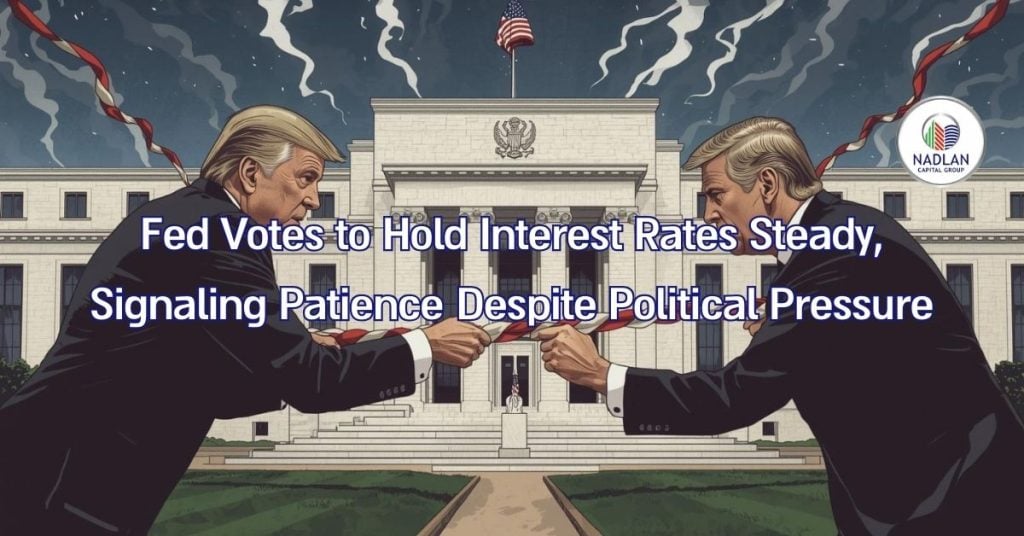
Trump’s remarks highlight ongoing tensions between the White House and the Federal Reserve, an institution designed to operate independently from political influence.
President Urges Fed to Act Before Scheduled Meeting
In a social media message, the president questioned why Federal Reserve Chair Jerome Powell had not already moved to reduce rates.
Trump argued that the central bank should act quickly to lower borrowing costs in order to support economic growth and reduce financial pressure on households and businesses.
The statement was released just days before the Fed’s policy meeting, where the central bank’s rate-setting committee will review inflation data, employment trends, and economic growth indicators.
Interest rate decisions made by the Federal Reserve influence many parts of the economy, including:
- Mortgage rates
- Credit card interest rates
- Auto loan costs
- Business borrowing expenses
Federal Reserve Policy and Current Interest Rates
The Federal Reserve uses its benchmark interest rate to influence financial conditions across the economy.
Following several adjustments in recent months, the Fed’s target interest rate range currently stands between 3.50% and 3.75%.
Lower interest rates generally encourage borrowing and investment, which can help stimulate economic activity.
However, reducing rates too quickly could also risk increasing inflation if demand rises faster than supply.
Because of this balance, the Federal Reserve typically bases its decisions on economic data rather than political requests.
Inflation Remains Above the Fed’s Target
The president’s demand for an interest rate cut in 2026 comes at a time when inflation remains slightly above the Federal Reserve’s target.
Recent data shows that the Consumer Price Index (CPI) increased 2.4% over the past year, which is modestly higher than the Fed’s 2% inflation goal.
While inflation has slowed compared with earlier peaks, policymakers remain cautious about lowering interest rates too quickly.
Higher energy prices and global economic uncertainty have also added complexity to the inflation outlook.
Oil Prices Add Pressure to Inflation
Energy prices have risen sharply in recent weeks due to geopolitical tensions affecting global oil supplies.
Crude oil prices recently moved above $100 per barrel, marking the highest level in several years.
When oil prices rise, the cost of gasoline, transportation, and production often increases as well. These changes can lead to higher prices for goods and services across the economy.
Because of this relationship, the Federal Reserve closely monitors energy markets when evaluating inflation trends.
How the Federal Reserve Normally Changes Rates
In most cases, the Federal Reserve adjusts interest rates during scheduled meetings of the Federal Open Market Committee.
The committee typically meets eight times per year to review economic conditions and vote on policy decisions.
Emergency rate cuts outside scheduled meetings are rare and usually occur during major economic disruptions.
For example, the Federal Reserve lowered rates between meetings in 2020 when the global economy faced severe disruption during the COVID-19 pandemic.
Under normal conditions, however, policymakers prefer to follow the established meeting schedule when making interest rate changes.
Long-Running Tensions Between the White House and the Fed
The relationship between the president and the Federal Reserve has been strained at times.
During his first term, Trump frequently criticized the central bank for maintaining higher interest rates.
He has also argued that lower rates would strengthen economic growth and make it easier for businesses and consumers to borrow money.
Federal Reserve officials, however, have consistently emphasized that monetary policy decisions are based on economic data and not political pressure.
The central bank’s independence is considered an important feature of the U.S. financial system.
Investigations and Political Pressure
The debate over interest rates has also been accompanied by other developments involving the Federal Reserve.
Earlier this year, federal prosecutors opened an investigation related to previous testimony from Chair Jerome Powell concerning renovation costs at the Federal Reserve’s headquarters.
Powell has described the investigation as unusual and suggested that it reflects growing political pressure on the central bank.
These developments have intensified scrutiny of the Federal Reserve during a period when economic policy decisions are particularly important.
Leadership Changes at the Federal Reserve
Another factor shaping the current debate is the approaching end of Powell’s term as chair of the Federal Reserve.
His term is scheduled to conclude in mid-May, and the administration has nominated former Federal Reserve governor Kevin Warsh to succeed him.
Leadership transitions at the central bank can attract significant attention from financial markets because they may influence future policy direction.
Investors often monitor these developments closely to understand how monetary policy might change in the coming years.
What Comes Next for Interest Rates
The upcoming Federal Reserve meeting will provide more clarity about the central bank’s next steps.
Policymakers will evaluate several key indicators before making a decision, including:
- Inflation data
- Employment trends
- Economic growth figures
- Global market developments
Financial markets currently expect the Federal Reserve to leave interest rates unchanged in the near term, though future adjustments could occur depending on economic conditions.
For now, the discussion surrounding an interest rate cut in 2026 highlights the ongoing debate over how quickly the central bank should respond to economic changes while balancing the goals of stable prices and sustainable economic growth. For direct financing consultations or mortgage options for you visit 👉 Nadlan Capital Group.


















Responses