
Homeownership Costs Increase: Property Taxes Continue to Climb Nationwide

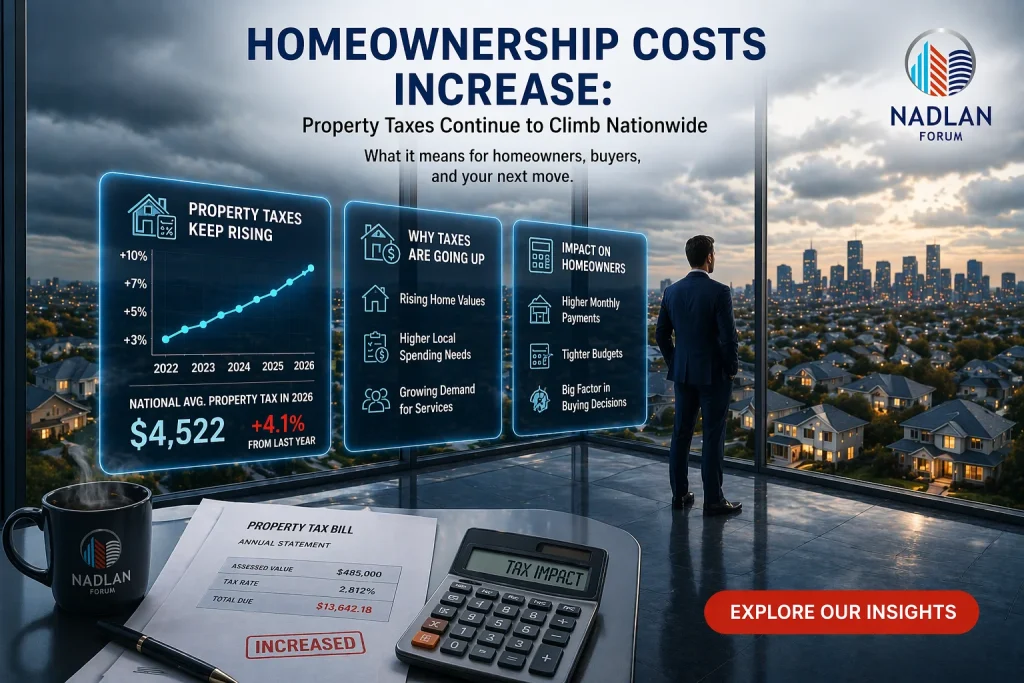
Rising Property Taxes Across the U.S.
Property taxes continue to rise across the United States, placing additional financial pressure on homeowners already dealing with higher housing costs. According to new data from ATTOM, nearly 89.6 million single-family homes paid a combined $396.8 billion in property taxes in 2025. That marks a 3.7% increase compared to the previous year.
The average homeowner paid about $4,427 in property taxes, up roughly 3% year over year. Even as home values showed slight declines, tax bills continued to rise, creating a growing burden for many households.
Tax Rates Increase Despite Slight Drop in Home Values
One of the key trends in 2025 is the increase in the effective property tax rate. The national average effective tax rate rose to 0.9%, up from 0.86% in 2024. This is the highest level seen since 2020.
At the same time, the average estimated value of a single-family home dropped slightly to $494,231, a decline of 1.7% from the previous year. Despite this decrease, home values remain near historic highs, which continues to influence tax assessments.
This combination of slightly lower home values and higher tax bills highlights an important point: property taxes are not driven by home prices alone. Local government budgets, tax policies, and spending needs also play a major role.
Regional Differences in Property Tax Burden
Property taxes vary widely depending on location, and regional differences remain significant. Homeowners in the Northeast and Midwest continue to face the highest tax burdens in the country.
States with the highest effective property tax rates in 2025 include:
- Illinois (1.84%)
- New Jersey (1.58%)
- Vermont (1.40%)
- Connecticut (1.36%)
- Ohio (1.32%)
Other states with relatively high rates include New Hampshire, Iowa, Pennsylvania, Nebraska, and New York.
In contrast, some states offer much lower property tax rates, providing relief for homeowners:
- Hawaii (0.33%)
- Idaho (0.39%)
- Wyoming (0.40%)
- Arizona (0.43%)
- Alabama (0.43%)
States like Utah, Delaware, Tennessee, and Nevada also fall into the lower-tax category.
Where Property Tax Bills Are Highest and Lowest
When looking at actual tax bills, the gap between regions becomes even more noticeable.
States with the highest average property tax bills include:
- New Jersey: $10,499
- Connecticut: $8,901
- New Hampshire: $8,174
- Massachusetts: $7,904
- New York: $7,732
Meanwhile, some states have much lower average tax bills:
- West Virginia: $1,081
- Alabama: $1,284
- Arkansas: $1,387
- Mississippi: $1,563
- Louisiana: $1,639
This difference shows how location can significantly affect the overall cost of owning a home.
Metro-Level Trends Show Similar Patterns
At the metro level, the highest effective property tax rates are also concentrated in the Northeast and Midwest. Cities such as Binghamton, New York; Champaign, Illinois; and Trenton, New Jersey are among the highest.
On the other hand, areas like Knoxville, Tennessee; Honolulu, Hawaii; and Lake Havasu City, Arizona report some of the lowest tax rates.
These variations can influence where people choose to live, especially as affordability becomes a bigger concern.
Why Property Taxes Are Increasing
Several factors are driving the rise in property taxes:
- Increased local government spending
- Higher costs for public services like schools and infrastructure
- Adjustments in tax policies at the state and local levels
- Continued high home valuations in many regions
Even when home prices slow down or decline slightly, these factors can still push tax bills higher.
What This Means for Homeowners
Higher property taxes add to the overall cost of homeownership, alongside mortgage payments, insurance, and maintenance. For many households, this can reduce affordability and limit financial flexibility.
Buyers entering the market need to consider property taxes as part of their long-term budget, not just the purchase price or mortgage rate.
For current homeowners, rising taxes may lead to:
- Higher monthly housing costs
- Increased pressure on fixed incomes
- Decisions to relocate to lower-cost areas
Outlook for Property Taxes
Looking ahead, property taxes are expected to remain an important factor in housing affordability. As local governments continue to balance budgets and fund services, tax rates may stay elevated or increase further in some areas.
At the same time, regional differences will likely continue, with some states offering lower tax environments that attract buyers and retirees.
Final Thoughts
Property taxes are becoming a larger part of the housing cost equation in the U.S. Even with slight changes in home values, tax bills continue to rise, adding pressure for homeowners.
Understanding how property taxes vary by location and how they impact long-term costs can help buyers and homeowners make more informed decisions in today’s housing market. For direct financing consultations or mortgage options for you visit 👉 Nadlan Capital Group.


























Responses