
Home Improvement Spending Slows: Remodeling Growth May Reach Just 0.5% by 2027

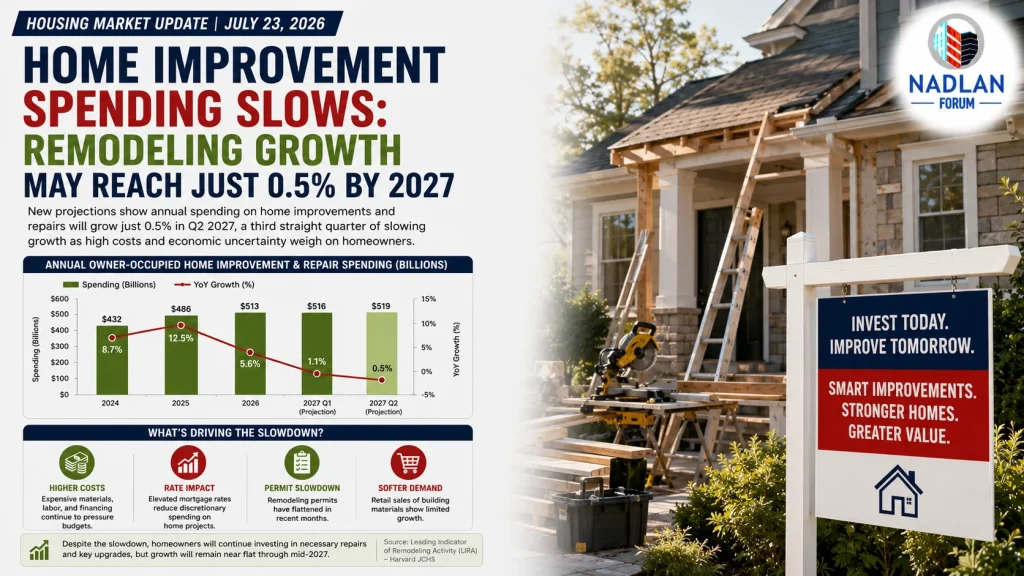
Growth in U.S. home improvement and repair spending is expected to continue slowing through the middle of 2027 as homeowners become more cautious about renovation projects.
The latest Leading Indicator of Remodeling Activity projects that annual spending on improvements and maintenance for owner-occupied homes will reach approximately $519 billion by the second quarter of 2027.
However, year-over-year spending growth is expected to slow to only 0.5%, marking a third consecutive quarter of weaker annual growth. The forecast indicates that homeowners will continue spending on repairs and improvements, but at a much slower pace than in recent years.
Remodeling Activity Is Losing Momentum
Several indicators suggest that the home renovation market is cooling.
Growth in remodeling permits has recently flattened, while retail spending on building products has also shown limited movement. These trends often indicate that fewer homeowners are beginning large renovation projects or purchasing materials for do-it-yourself improvements.
The slowdown does not mean that home improvement activity will stop. Older homes will still require repairs, and many homeowners will continue upgrading kitchens, bathrooms, roofing, heating systems, and other parts of their properties.
The forecast instead suggests that spending growth will become almost flat after several years of high construction costs and strong renovation demand.
Why Homeowners Are Reducing Renovation Plans
Economic uncertainty is making some households less willing to take on expensive projects.
Major renovations often require homeowners to use savings, personal loans, home equity, or cash-out refinancing. High borrowing costs can make each of these options more expensive.
A homeowner may still complete an urgent roof repair or replace a failed air-conditioning system. However, optional projects such as a full kitchen renovation, room addition, finished basement, or luxury outdoor space may be delayed.
Households are also managing higher costs for:
- Property taxes
- Homeowners insurance
- Utilities
- Food and transportation
- Construction labor
- Building materials
- Home equity borrowing
When monthly household expenses rise, homeowners may focus on necessary maintenance rather than large design upgrades.
Low Home Sales Affect Remodeling Spending
Weak existing-home sales are another reason renovation spending is expected to remain slow.
Home purchases often create additional remodeling activity. New owners may repaint rooms, replace flooring, update kitchens, repair roofs, or change a property before moving in.
Sellers may also complete repairs and improvements before listing a home.
When fewer properties change ownership, there are fewer of these sale-related remodeling projects.
The forecast indicates that improvement spending is likely to remain close to its current pace until home sales begin to recover more clearly.
Fewer Housing Starts Also Limit Growth
A decline in housing starts can affect the broader renovation and construction industry.
New-home construction and remodeling use many of the same materials, contractors, and skilled workers. Slower residential construction can reflect weaker housing demand and reduced confidence across the market.
Lower construction activity may eventually reduce some pressure on material and labor costs. However, it can also signal that households and builders are becoming more cautious because of high rates and economic uncertainty.
These conditions make stronger remodeling growth less likely in the near term.
Spending Remains High Despite Slower Growth
The projected $519 billion annual spending level shows that home improvement remains a large part of the U.S. housing economy.
Even when growth is weak, homeowners must continue maintaining aging properties.
Common necessary projects include:
- Roof replacement
- Plumbing repairs
- Electrical upgrades
- Heating and cooling replacement
- Water damage repair
- Window and door replacement
- Exterior maintenance
- Accessibility improvements
The country’s aging housing supply may help prevent a major decline in remodeling activity. Many homes require ongoing repairs regardless of mortgage rates or economic conditions.
However, the mix of spending may shift away from optional upgrades and toward essential repairs.
Homeowners May Choose Smaller Projects
Rather than canceling improvements completely, some homeowners may reduce the size or cost of their projects.
For example, a homeowner might repaint kitchen cabinets instead of replacing them, upgrade one bathroom instead of two, or repair an existing deck rather than build a new outdoor area.
Other cost-saving strategies may include:
- Completing projects in stages
- Using standard materials instead of premium finishes
- Keeping the existing layout
- Comparing several contractor estimates
- Completing simple work without a contractor
- Prioritizing improvements that lower energy costs
This approach allows households to maintain their properties while avoiding large debts or major withdrawals from savings.
Financing Costs Remain an Obstacle
Home equity loans and home equity lines of credit are common ways to finance remodeling projects.
However, these products generally have higher rates than the low first-mortgage rates many homeowners secured several years ago.
Cash-out refinancing may also be unattractive for owners who would need to replace an older mortgage with a new loan carrying a much higher rate.
This creates a financing problem.
Many homeowners have substantial equity, but accessing that equity can result in costly monthly payments. As a result, they may wait, use cash, or complete smaller projects.
Lower interest rates could support remodeling activity by making home equity borrowing and renovation loans more affordable.
Contractors Could Face More Competition
A slower improvement market may lead to greater competition among remodeling companies.
During periods of strong demand, homeowners may experience long wait times and limited contractor availability. When activity cools, contractors may have more open schedules and become more competitive on pricing.
Homeowners may gain more opportunities to:
- Request multiple bids
- Negotiate project timing
- Compare material options
- Check references carefully
- Review contracts before deciding
However, skilled labor shortages remain a challenge in many markets. Specialized contractors, electricians, plumbers, and HVAC workers may still be difficult to schedule even if overall remodeling demand slows.
Maintenance Should Not Be Delayed
Homeowners may postpone cosmetic improvements, but delaying necessary repairs can create larger costs later.
A small roof leak can lead to damaged insulation, mold, drywall problems, and structural repairs. Minor plumbing leaks can damage flooring and cabinets. Delayed heating-system maintenance can result in a full system failure.
Homeowners should prioritize projects involving:
- Water intrusion
- Electrical safety
- Roofing
- Structural damage
- Heating and cooling
- Mold
- Plumbing
- Fire protection
A slower renovation market may provide a better opportunity to complete essential work before demand rises again.
Energy Improvements May Remain Popular
Some projects may continue attracting homeowners because they can reduce long-term operating costs.
These include:
- Insulation
- Energy-efficient windows
- Heat pumps
- Smart thermostats
- Air sealing
- Efficient water heaters
- Solar systems
- Updated appliances
The financial benefit depends on the home, local climate, installation price, energy rates, and available incentives.
Homeowners should calculate the expected savings and payback period before making a large energy investment.
What the Remodeling Indicator Measures
The Leading Indicator of Remodeling Activity provides a short-term outlook for national spending on improvements and maintenance in owner-occupied homes.
It estimates changes in both professionally completed projects and do-it-yourself work. The measure is presented as a four-quarter moving rate of change and is designed to identify possible turning points in the remodeling market.
The forecast covers national activity, so individual markets may perform differently.
Areas with strong population growth, older housing, storm damage, or high home equity may record stronger remodeling demand. Markets with weak home sales or greater economic uncertainty may experience a larger slowdown.
The next scheduled update is expected on October 22, 2026.
Bottom Line
U.S. home improvement spending is expected to continue growing, but the pace of growth is projected to weaken significantly.
Annual renovation and repair spending may reach approximately $519 billion by the second quarter of 2027, while year-over-year growth is expected to slow to only 0.5%.
Flat remodeling permits, weaker building-material sales, fewer housing starts, low home sales, and broader economic uncertainty are limiting stronger gains.
Homeowners are likely to continue spending on maintenance and essential repairs, but many may delay large or optional renovation projects until borrowing costs fall and the housing market becomes more active. For direct financing consultations or mortgage options for you visit 👉 Nadlan Capital Group.























Responses