
Pending Home Sales Fall: High Mortgage Rates Slow Buyer Activity Across the U.S.

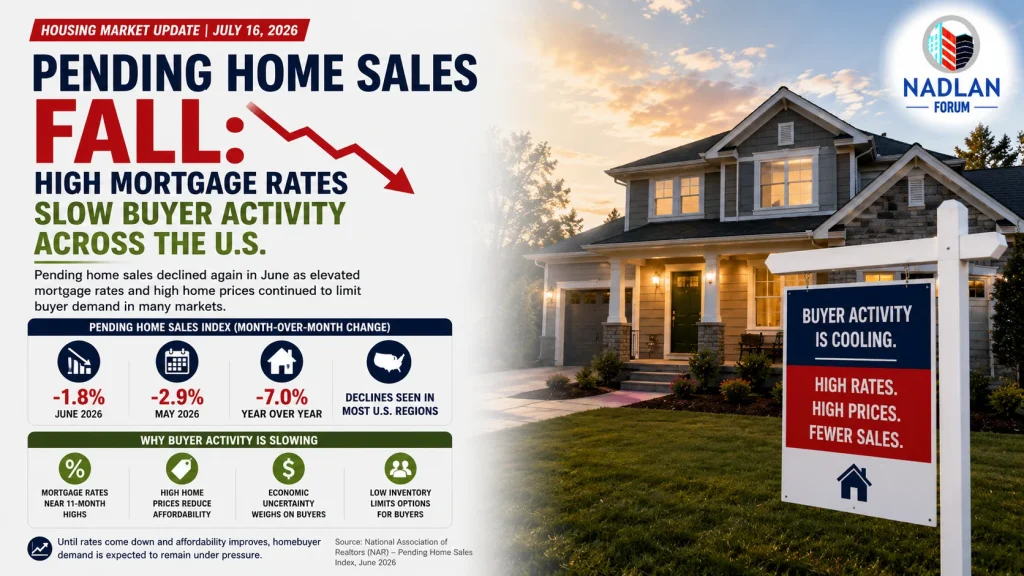
Pending home sales across the United States declined to their lowest level in three months as elevated mortgage rates and high home prices continued to limit buyer demand.
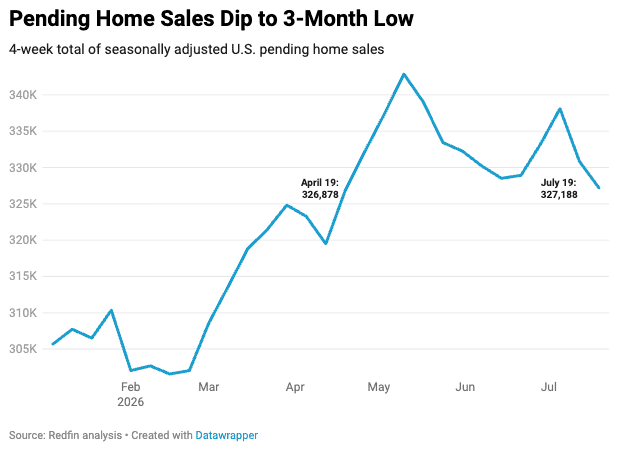
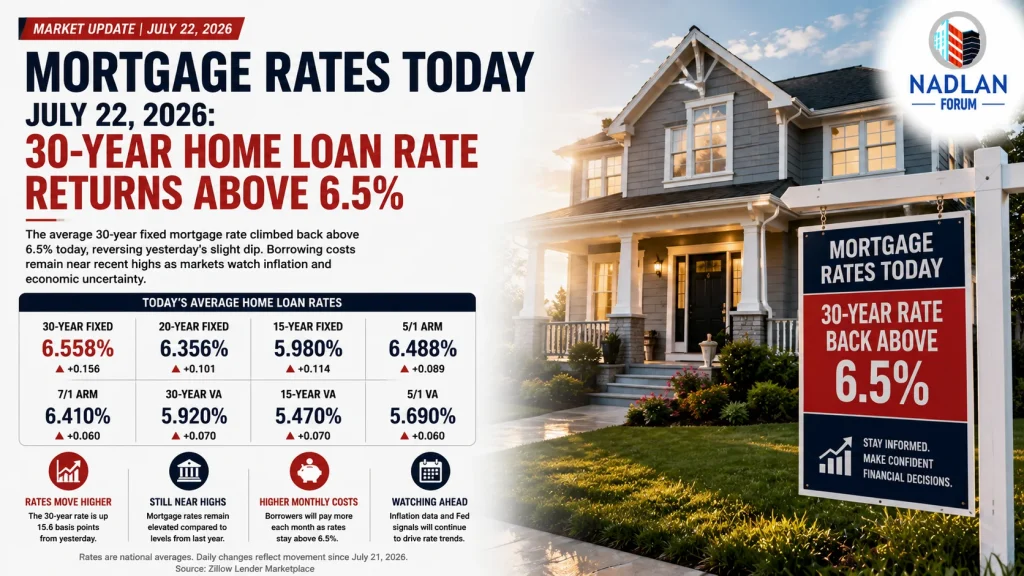
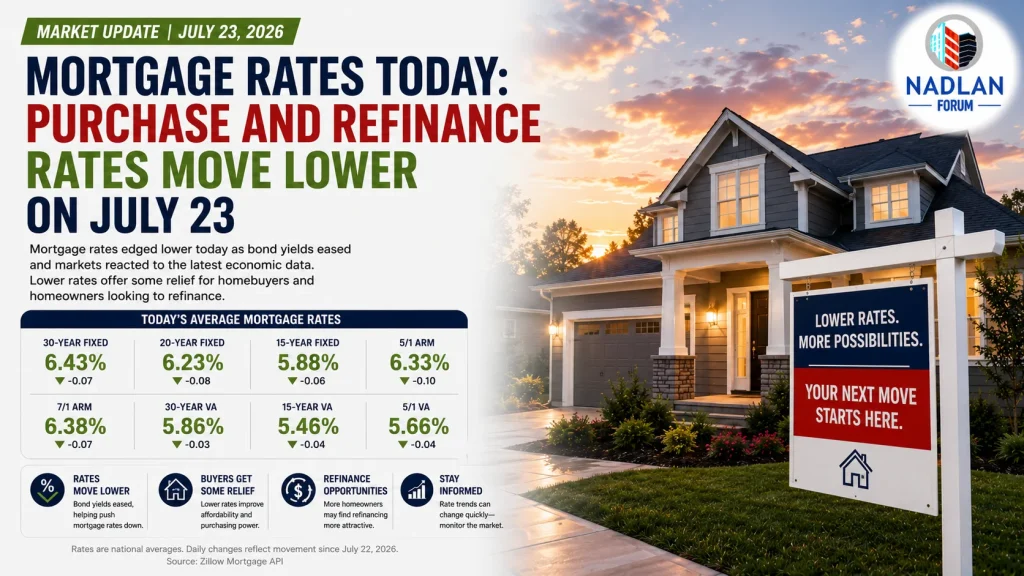
For the four-week period ending July 19, 2026, pending home sales fell 1.3% from the previous four-week period, while remaining 3.1% higher than a year earlier. The slowdown came as the average weekly 30-year mortgage rate climbed to 6.55%, the highest level in nearly eleven months, increasing borrowing costs for prospective buyers. The combination of expensive financing, elevated home prices, and broader economic uncertainty has caused many households to delay purchasing decisions.
Mortgage Rates Continue to Pressure Affordability
Higher mortgage rates remain one of the biggest challenges facing today’s homebuyers.
Although rates have fluctuated throughout the year, borrowing costs remain well above the historically low levels seen during 2020 and 2021. Even a modest increase in mortgage rates can significantly raise monthly payments, reducing purchasing power for many buyers.
During the reporting period, the typical monthly mortgage payment reached approximately $2,618, reflecting both higher financing costs and elevated home prices.
Many households who qualified for a larger loan a few years ago now find that higher rates reduce the price range they can comfortably afford.
Home Prices Remain Near Record Highs
Despite softer buyer activity, home prices have remained remarkably resilient.
The national median sale price reached $408,795, up 2.5% from one year earlier.
Meanwhile, the median asking price stood at $400,257, an annual increase of 2.3%.
Although prices are no longer rising as rapidly as they did during the pandemic housing boom, limited inventory in many markets continues to support home values.
The median sale price remains only about $900 below its all-time high, demonstrating that affordability challenges continue even as sales activity slows.
Inventory Continues to Improve
One of the more encouraging developments for buyers is the gradual improvement in housing inventory.
Active listings reached approximately 1.49 million homes, while months of supply increased to 3.4 months.
Although inventory remains below the level typically associated with a balanced market, buyers generally have more choices than they did over the past several years.
New listings also increased 0.4% from the previous four-week period, suggesting that more homeowners are beginning to list their properties even though overall demand remains moderate.
However, many potential sellers continue waiting for lower mortgage rates before deciding to move.
Buyers Have More Negotiating Power
A slower housing market is giving buyers more leverage during negotiations.
Homes are spending more time on the market, with the median listing remaining available for 41 days, one day longer than a year ago.
This extended marketing period allows buyers more time to compare properties, negotiate prices, and request seller concessions.
While well-maintained, move-in-ready homes continue to attract strong interest in many markets, properties needing repairs or updates often provide better opportunities for price negotiations.
Some sellers are offering concessions such as closing-cost assistance, mortgage-rate buydowns, or repair credits to attract buyers.
Price Reductions Remain Common
Price reductions continue to be part of today’s housing market, although their frequency has eased slightly.
Approximately 20.2% of active listings experienced a price reduction during the reporting period, compared with 21% one year earlier.
This suggests that while many sellers still adjust pricing when homes fail to attract buyers, the pace of price cuts has stabilized.
At the same time, the average sale-to-list price ratio remained 99.1%, indicating that many homes continue selling close to their asking price.
Competition Varies by Property
The current housing market remains highly selective.
Move-in-ready homes in desirable neighborhoods continue receiving strong interest and can still generate multiple offers.
In contrast, homes requiring significant repairs, updates, or renovations often remain on the market much longer and may sell below their original asking price.
Because renovation costs remain elevated, many buyers prefer properties requiring little immediate work.
This has created larger pricing differences between updated homes and fixer-uppers than in previous years.
Regional Markets Show Very Different Trends
Housing conditions continue to vary significantly across metropolitan areas.
Among the strongest year-over-year gains in pending home sales were:
- West Palm Beach, Florida: 13.2%
- Austin, Texas: 10.8%
- New York: 9.8%
- Boston: 9.5%
- Nassau County, New York: 8.2%
These markets benefited from relatively stronger buyer demand despite higher borrowing costs.
Meanwhile, several large metros experienced notable declines in pending sales:
- Seattle: -14.5%
- Houston: -13.6%
- Phoenix: -8.3%
- Denver: -6.5%
- Miami: -2.8%
These differences demonstrate that local economic conditions, housing supply, affordability, and migration patterns continue to shape individual housing markets.
New Listings Differ Across Metro Areas
Seller activity also varied widely around the country.
The largest year-over-year increases in new listings included:
- St. Louis: 13.2%
- Anaheim, California: 10.7%
- Pittsburgh: 9.3%
- Boston: 9.3%
- Warren, Michigan: 8.8%
Meanwhile, the largest declines occurred in:
- Fort Worth, Texas: -11.9%
- Dallas: -10.7%
- Miami: -8.9%
- Atlanta: -8.1%
- San Antonio: -6.8%
These trends indicate that homeowners’ willingness to sell remains uneven across different regions.
Home Prices Continue to Vary by Market
Although national prices remain near record highs, local price trends differ considerably.
The strongest annual increases in median sale prices occurred in:
- West Palm Beach, Florida: 11.0%
- Pittsburgh: 7.2%
- Virginia Beach, Virginia: 6.9%
- Detroit: 6.7%
- Philadelphia: 6.5%
At the same time, several major markets experienced annual price declines:
- San Jose, California: -3.3%
- Seattle: -3.2%
- Nashville, Tennessee: -0.9%
- Los Angeles: -0.8%
- Boston: -0.8%
Overall, median sale prices declined in only eight major metropolitan areas, highlighting the continued resilience of home values nationally.
Economic Uncertainty Adds Caution
In addition to high mortgage rates, broader economic conditions are influencing buyer confidence.
Financial market volatility, higher energy prices, and renewed geopolitical tensions have increased uncertainty for many households.
When consumers become less certain about future employment, inflation, or interest rates, they often postpone major financial decisions such as purchasing a home.
While these concerns have not stopped buyers entirely, they have contributed to slower market activity during the summer.
A More Balanced Housing Market Is Emerging
Today’s housing market differs significantly from the highly competitive environment seen during the pandemic.
Buyers generally have:
- More inventory to choose from.
- Longer decision-making periods.
- Greater negotiating power.
- More opportunities to request seller concessions.
- Less pressure to waive inspections or financing contingencies.
However, affordability remains a major challenge because mortgage rates and home prices both remain elevated.
For many households, qualifying for a mortgage continues to require higher incomes and larger monthly housing budgets than just a few years ago.
What Buyers Should Consider
Although the market has slowed, buyers should continue focusing on long-term affordability rather than attempting to perfectly time interest rates.
Comparing multiple lenders, improving credit scores, increasing down payments, and negotiating seller concessions may produce greater savings than waiting for small changes in mortgage rates.
Well-prepared buyers also benefit from today’s increased inventory and reduced competition compared with previous years.
Outlook for the Housing Market
Future housing activity will depend largely on mortgage rates and overall economic conditions.
If borrowing costs begin to decline later this year, buyer demand could strengthen as more households re-enter the market.
Additional inventory would also improve affordability by providing buyers with more options.
Until then, many economists expect home sales to remain relatively modest while prices stay supported by limited housing supply in many markets.
Bottom Line
Pending home sales declined 1.3% during the four weeks ending July 19, 2026, reaching their lowest level in three months as mortgage rates climbed to 6.55% and home prices remained near record highs.
Although affordability challenges continue to slow buyer activity, improving inventory and longer marketing times are creating a more balanced market. Buyers now have greater negotiating power than in recent years, while sellers face increased competition in many local markets. For direct financing consultations or mortgage options for you visit 👉 Nadlan Capital Group.




















Responses