
14.5 Million Vacant Homes in America: Why Housing Still Feels Unaffordable

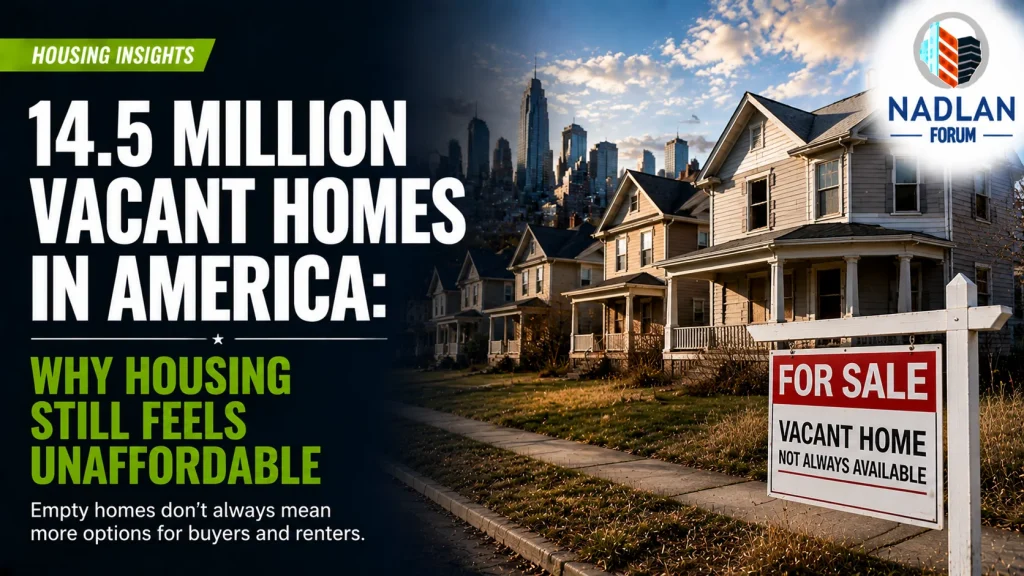
The United States has millions of empty homes, but that does not necessarily mean homebuyers and renters have more options.
According to recent housing data, approximately 14.5 million U.S. homes are vacant, representing about 1 in every 10 homes nationwide. However, only a small portion of these properties are actually available for people looking to buy or rent.
The numbers reveal an important difference between vacant housing and available housing supply.
Many empty homes are seasonal properties, vacation homes, rental units between tenants, or homes temporarily unavailable. Fewer than 800,000 vacant homes are currently listed for sale, meaning most empty properties are not helping solve today’s inventory shortage.
Not All Vacant Homes Are Available
A vacant home can mean several different things.
Among the nation’s 14.5 million vacant homes:
- 4.7 million homes (32.6%) are seasonal or recreational properties
- 2.6 million homes (18.2%) are available for rent
- Less than 800,000 homes (5.5%) are listed for sale
The remaining vacant properties include homes that have already been sold but are not occupied yet, housing reserved for workers, and properties temporarily removed from the market.
This explains why many buyers still experience limited choices despite millions of homes sitting empty.
Why Housing Still Feels Scarce
A common misconception is that vacant homes should automatically create more affordability.
However, location and availability matter.
A vacation home sitting empty in a seasonal market does not provide housing for local families searching for year-round homes.
Similarly, properties held temporarily off the market do not increase available inventory for buyers.
Housing economists often focus on the type of vacancy rather than just the vacancy rate.
A market with many seasonal homes can have a high vacancy rate while still experiencing housing shortages.
States With the Highest Vacancy Rates
Some states have significantly higher vacancy rates because of seasonal and recreational properties.
The highest vacancy rates include:
- Maine: 20.6%
- Vermont: 19.4%
- Alaska: 17.6%
These states have large numbers of vacation properties that remain empty during parts of the year.
In Vermont, approximately 75.8% of vacant homes are seasonal or recreational properties, meaning many homes are unavailable to year-round residents.
States With the Lowest Vacancy Rates
Markets with lower vacancy rates often have tighter housing supply.
The lowest vacancy rates include:
- Connecticut: 7.0%
- Washington: 7.3%
- California: 7.5%
- New Jersey: 7.5%
- Oregon: 7.5%
Lower vacancy rates often indicate that available housing is being absorbed quickly by buyers and renters.
This can contribute to:
- Higher home prices
- Stronger competition
- Fewer choices for buyers
- Rising rental costs
Florida Shows Why Vacancy Rates Can Be Misleading
Florida provides an interesting example of how vacancy data can be misunderstood.
The state has one of the highest vacancy rates in the country at approximately 14.7%, with around 1.5 million vacant homes.
However, many of these properties are seasonal homes used by retirees, vacation homeowners, or part-time residents.
Florida continues to have strong housing demand because many people are attracted to:
- Warm weather
- Retirement communities
- Lifestyle opportunities
- Job growth
- No state income tax
A high vacancy rate does not always mean weak demand.
Vacancy Rates and Home Prices
There is a strong relationship between housing availability and prices.
States with the lowest vacancy rates generally have higher home values.
The average median home value in the lowest-vacancy states is approximately:
$435,118
That is significantly higher than the average median value in the highest-vacancy states:
$267,440
When fewer homes are available, buyers often compete more aggressively, supporting higher prices.
However, vacancy is only one factor affecting housing costs.
Other important factors include:
- Local job markets
- Population growth
- Construction activity
- Interest rates
- Income levels
National Vacancy Rates Are Declining
The share of vacant homes nationwide has been gradually decreasing.
Between 2023 and 2024:
- Vacancy rates declined from 10.4% to 10.1%
- Approximately 302,000 fewer vacant homes were recorded
Over the past decade, vacancy rates have fallen from around:
12.5% in 2014 → 10.1% in 2024
The decline reflects ongoing housing supply challenges as demand continues to exceed available inventory in many markets.
Why Lower Vacancy Can Increase Competition
When fewer homes sit empty, available properties are often absorbed faster.
This can create:
- More competition among buyers
- Fewer negotiation opportunities
- Higher prices
- Faster-moving markets
For renters, lower vacancy can mean:
- Fewer available apartments
- Higher rental competition
- Less flexibility
However, a balanced vacancy rate can actually benefit consumers by providing enough available housing without creating oversupply.
New Construction and Housing Supply
The vacancy data highlights a larger issue facing the U.S. housing market: the shortage of available housing.
Although millions of homes exist, many are not accessible to people searching for housing.
The challenge is not simply the number of homes but:
- Where homes are located
- Whether they are affordable
- Whether they are available year-round
- Whether new supply matches demand
What This Means for Homebuyers
For buyers, the existence of millions of vacant homes does not necessarily create immediate opportunities.
Most buyers are still competing for a limited number of available properties.
Important factors to watch include:
- Local inventory levels
- New construction
- Mortgage rates
- Population movement
- Regional affordability
Markets with increasing inventory may offer buyers more negotiating power, while low-vacancy markets may remain competitive.
What This Means for Investors
Real estate investors can use vacancy trends to identify market opportunities.
High vacancy markets may indicate:
- Tourism demand
- Rental opportunities
- Seasonal investment potential
Low vacancy markets may indicate:
- Strong rental demand
- Limited housing supply
- Potential long-term appreciation
However, investors must understand why homes are vacant before making decisions.
A high vacancy rate caused by vacation properties is very different from a market with abandoned or unwanted housing.
The Bigger Housing Market Picture
The 14.5 million vacant homes across America reveal a complicated housing landscape.
The issue is not simply that homes are empty.
The bigger question is:
Are those homes available to the people who need them?
While millions of properties are technically vacant, only a fraction are actually available for purchase.
As affordability challenges continue, understanding the difference between vacant housing and usable housing supply will remain critical for buyers, renters, investors, and policymakers. For direct financing consultations or mortgage options for you visit 👉 Nadlan Capital Group.






















Responses