
Flip Investors Guide: Strategies for Success in 2026

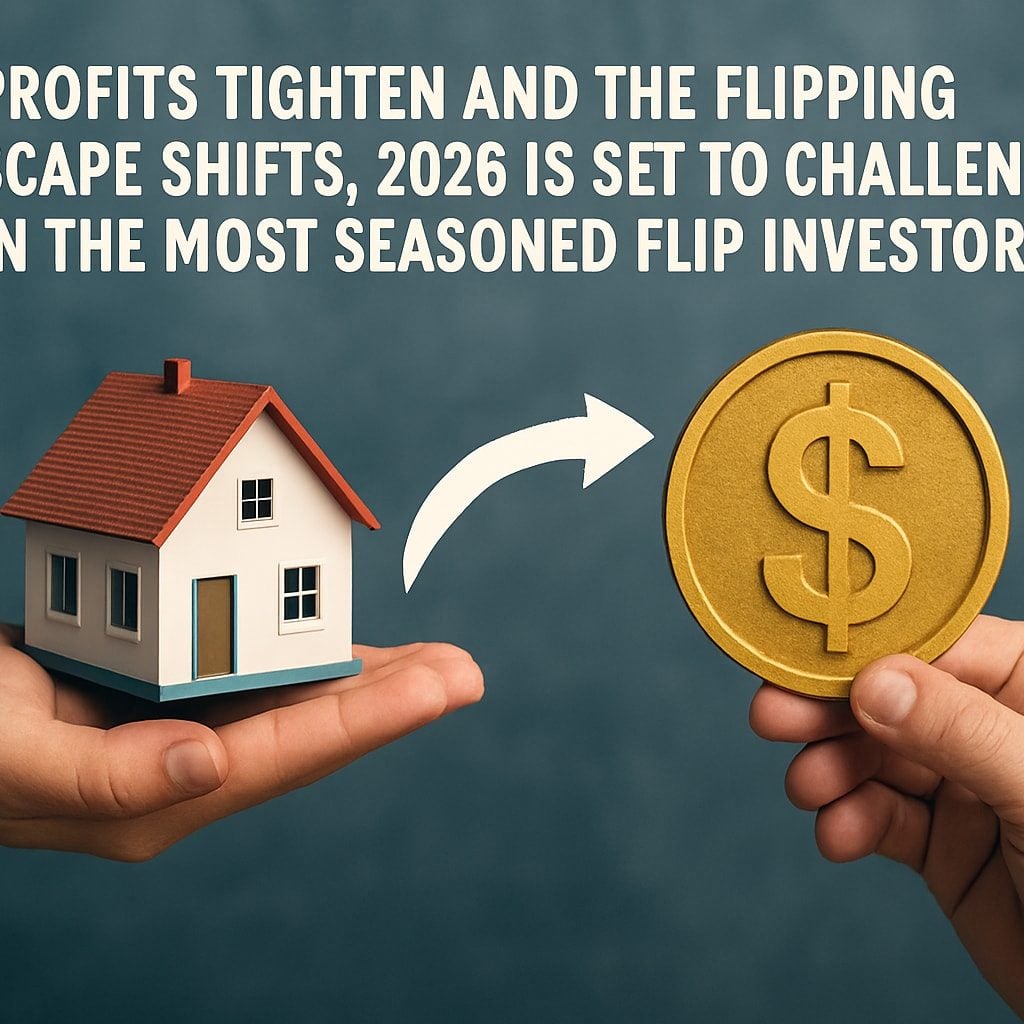
As profits tighten and the flipping landscape shifts, flip investors face a market unlike any in recent years. The dramatic drop in flip ROI to 2008 levels, combined with the triple squeeze of rising costs, higher acquisition prices, and tougher resale conditions, demands a new approach.
This guide delivers actionable strategies for flip investors to adapt, thrive, and maximize returns in the evolving 2026 real estate market. Inside, you will find expert insights on market outlook, deal sourcing, financial strategies, risk management, technology integration, and alternative exit options.
Ready to navigate these challenges? Dive in for a comprehensive roadmap to flipping success in 2026.
The 2026 Flip Market Landscape: Trends and Challenges
The landscape for flip investors in 2026 presents a complex mix of shrinking margins, shifting market dynamics, and intensifying competition. Understanding these trends is critical for anyone looking to adapt their strategies and maximize returns in the coming year.

Shifting Profit Margins and ROI
In 2025, ROI for flip investors dropped to 23.1 percent, the lowest since 2008. Just a few years back, pre-pandemic flips often yielded 40 to 60 percent returns, but the market has shifted. Causes include rising acquisition costs, softening resale prices, and higher input and holding expenses. For example, median gross profit on a flip fell from $73,000 in 2024 to $60,000 in Q3 2025. Flipped homes now represent just 6.8 percent of all home sales, down from 7.3 percent the previous quarter. According to recent data, profit margins have reached a 17-year low, forcing flip investors to recalibrate expectations and adopt new strategies for 2026.
Key Market Forces Impacting Flippers
Several market forces are shaping the environment for flip investors. Post-pandemic price recalibration and shifting inventory levels have made it harder to find deals with healthy spreads. Elevated mortgage rates and ongoing financing challenges add pressure, especially as buyers grow more cautious. Regional disparities are pronounced, with the South and West facing sharper price drops than the Northeast or Midwest. Policy-driven cost increases, including tariffs and labor regulations, have pushed up renovation expenses. In fact, one-third of surveyed flip investors say policy changes have directly raised their project costs. As buyers take longer to commit, holding periods extend and profit margins narrow further.
Inventory Dynamics and Acquisition Pricing
Acquisition pricing remains a core concern for flip investors. Double-digit price gains in previous years have raised thresholds, making it harder to find affordable properties with strong upside. However, an expected expansion in inventory during 2026 could put downward pressure on acquisition prices, improving the outlook for new deals. The so-called "thawing of inventory" is crucial for restoring healthier profit spreads. Data shows that properties purchased under $50,000 typically produced negative ROI of minus 14 percent, while those in the $100,000 to $200,000 range achieved 31 percent ROI. This highlights the importance for flip investors to target the right price band when sourcing acquisitions.
The Rise of Investor Competition
Investor activity now accounts for 30 percent of total home sales in early 2025, intensifying competition for profitable deals. Flip investors face increased rivalry not only from fellow flippers but also from rental-focused investors and large institutional buyers. Success in this environment requires hyperlocal market knowledge and a keen understanding of competitors' strategies. Staying ahead involves constant analysis and adaptability, as market conditions and investor behavior continue to evolve rapidly.
Sourcing Profitable Deals in a Competitive Environment
In 2026, sourcing profitable deals demands precision and agility. Flip investors must go beyond surface-level searches and embrace data-driven, hyperlocal strategies. As competition intensifies, those who adapt their sourcing playbook will consistently uncover the most lucrative opportunities.

Hyperlocal Market Analysis and Deal Identification
Success for flip investors starts with mastering local market intelligence. Public records and advanced data tools empower investors to pinpoint neighborhoods where flips are still yielding strong returns. For example, a Sacramento County analysis using PropertyRadar revealed pockets with active flip volumes despite wider market declines.
Reverse engineering competitor deals helps validate ROI assumptions and avoid overpaying. Identifying “flip deserts” versus hot zones is crucial, as is reviewing seller activity to spot repeat flippers who may be competitors or potential partners. For granular, state-by-state insights, the U.S. Home Flipping Trends by State – Q2 2025 report offers invaluable data for targeting the right regions.
Advanced Deal Sourcing Techniques
To stay ahead, flip investors must diversify their sourcing channels. This includes leveraging MLS databases, property auctions, off-market listings, and distressed seller data. Building strong relationships with wholesalers, real estate agents, and local contractors creates a steady stream of leads.
Direct mail campaigns and targeted digital outreach can connect investors with motivated sellers before properties hit the open market. Utilizing automated lists and alert systems for new flips or acquisitions ensures timely responses. In this competitive environment, speed and thorough due diligence are paramount to securing the best deals.
Evaluating Deal Potential and Profitability
Every potential flip deal should be rigorously analyzed. Flip investors rely on key metrics such as purchase price, repair costs, holding and sales expenses, and projected resale value. Scenario modeling tools allow for realistic profit projections and stress-testing against market shifts.
Assumptions must be adjusted for longer hold times and rising costs. For instance, a $200,000 acquisition with $25,000 in repairs and a $309,000 resale price could net over $60,000 before expenses, but only if all variables align. Conservative estimates and worst-case planning protect against unforeseen losses.
Building a Winning Acquisition Pipeline
A systematic acquisition pipeline is essential for ongoing success. Flip investors should maintain dynamic lists of target properties and active investors. Setting up alerts for new listings and regional market shifts ensures no opportunity is missed.
Continuous monitoring and strategic refinement keep the pipeline healthy. By leveraging technology and regular market analysis, investors can adapt quickly, stay ahead of competitors, and maximize their deal flow.
Financing and Budgeting: Navigating Higher Costs
Navigating the financial landscape in 2026 is a critical challenge for flip investors. With borrowing costs elevated and margins under pressure, strategic financing and disciplined budgeting are more important than ever. Understanding available options, anticipating costs, and building in flexibility can mean the difference between profit and loss.

Understanding 2026 Financing Options
For flip investors, the financing landscape in 2026 is shaped by higher interest rates and shifting lender preferences. Options include short-term residential transition loans (RTLs), hard money lenders, and private capital. Traditional bank loans remain tough to secure due to stricter underwriting, pushing many toward alternative sources.
Below is a quick comparison:
| Financing Type | Typical Rate | Common Use | Pros | Cons |
|---|---|---|---|---|
| RTLs | 9–12% | Fast flips | Speed, flexibility | Higher rates |
| Hard Money | 10–14% | Fix-and-flip, rehab | Quick approval | Expensive, shorter terms |
| Private Lenders | 8–12% | Custom deals | Negotiable terms | Relationship dependent |
| DSCR Loans | 7–9% | Rentals, exit pivots | Suits hold strategies | Larger down payments |
Many flip investors are also exploring DSCR (Debt-Service Coverage Ratio) loans to enable rental exits if resale conditions deteriorate. For more on securing the right financial tools, see this detailed overview of banking solutions for investors.
Budgeting for Rising Input and Holding Costs
Rising costs are eroding profits for flip investors. Labor and materials remain expensive, with tariffs and supply chain disruptions still impacting project budgets. At the same time, holding costs like property taxes, insurance, utilities, and loan interest have become a major drain.
To tackle these headwinds, flip investors should:
- Use conservative estimates for repairs and renovations
- Build in a contingency fund of at least 10% for unforeseen expenses
- Factor in longer holding periods due to slower sales cycles
A disciplined approach to budgeting, including regular cost reviews and vendor negotiations, helps maintain profitability. Monitoring local price trends and leveraging bulk purchasing can also reduce expenses over time.
Structuring Deals for Flexibility and Profit
Given the unpredictable market, flip investors must structure deals with built-in flexibility. This might include negotiating for purchase price reductions, adding inspection contingencies, or arranging for seller concessions.
Many are incorporating “exit optionality” by designing deals that can pivot from flip to hold if resale conditions shift. For example, choosing properties that work as both flips and rentals can provide a safety net.
Further, working with lenders on flexible draw schedules and timeline adjustments can help manage cash flow and reduce risk. A proactive approach to deal structuring ensures flip investors are prepared for multiple scenarios.
Risk Management in Financing
Risk management is a non-negotiable for flip investors in 2026. Always vet lenders for reliability and transparency. Understand all loan terms, especially prepayment penalties and rate adjustment clauses.
Maintain adequate cash reserves to cover unexpected costs or delays. Staying prepared for market shifts helps flip investors protect their investments and secure better outcomes.
Risk Management and Due Diligence: Protecting Your Investment
Navigating the 2026 market requires flip investors to treat risk management and due diligence as non-negotiable pillars of every project. With tighter margins and shifting regulations, a disciplined approach is essential to safeguard investments and maximize returns.

Comprehensive Market and Property Due Diligence
For flip investors, success starts with understanding hyperlocal market trends, buyer demand, and neighborhood comps. Analyzing regions with expanding inventory versus areas with stable pricing helps investors prioritize opportunities. Reviewing property history, checking for liens, and verifying clear title are fundamental steps before any purchase.
Data-driven tools streamline this process, offering insights into competitor activity and validating projected ROI. For a deeper look at common pitfalls and due diligence strategies, see these house flipping mistakes to avoid in 2026 — and also advice that works. Careful research gives flip investors a critical edge in a crowded field.
Mitigating Renovation and Resale Risks
Renovation projects are fraught with potential setbacks, from underestimated repair costs to unreliable contractors. Flip investors should build detailed budgets, include contingency funds, and secure bids from vetted professionals. Managing relationships with contractors, monitoring progress, and scheduling regular site visits help control costs and prevent delays.
Permits, inspections, and compliance with local codes must be handled early to avoid costly surprises. Planning for extended hold times and slower sales cycles ensures flip investors remain resilient even when market conditions shift unexpectedly.
Legal, Regulatory, and Policy Considerations
Staying current on local zoning laws, rent control measures, and flipping regulations is crucial for flip investors. Shifts in federal or local policy can directly influence labor and material costs. For example, changes in tariffs or immigration rules may drive up renovation expenses.
Investors must ensure all activities comply with legal requirements to avoid delays or penalties. Regularly consulting with real estate attorneys and local officials helps flip investors anticipate and adapt to policy changes, reducing exposure to unforeseen risks.
Insurance and Asset Protection Strategies
Protecting assets means more than just buying insurance. Flip investors should secure property, liability, and builder’s risk policies tailored to each project. Structuring ownership through LLCs or trusts adds another layer of protection. Creating contingency funds ensures investors can weather unexpected events and keep projects on track.
Technology and Tools for Flip Investors in 2026
In 2026, technology is the backbone of competitive advantage for flip investors. As the market grows more complex, data-driven tools, automation, and streamlined project management separate successful investors from the rest. Let us explore the essential tech strategies that will keep flip investors ahead of the curve.
Data-Driven Decision Making
Flip investors in 2026 rely heavily on data platforms to gain a real-time edge. Platforms like PropertyRadar and MLS provide comprehensive property analytics, while investment analysis tools offer detailed profit projections and scenario modeling.
By setting up real-time alerts and monitoring competitor activity through map and grid views, flip investors can quickly identify new opportunities and stay ahead of market shifts. For instance, tracking active flips in a neighborhood can reveal emerging trends or potential oversaturation.
Using scenario planning tools helps flip investors stress-test deals before committing. For additional insights on adapting to shifting market conditions, review the 2026 housing market trends.
Automating Lead Generation and Deal Tracking
Efficient lead generation is critical for flip investors operating in a competitive environment. Automation tools streamline the process by setting up targeted lists, alerts, and notifications for properties that match specific investment criteria.
Integrating a CRM system enables seamless tracking of leads, communications, and deal progress. Automated direct mail and email campaigns reach motivated sellers faster, while digital monitoring of active flippers uncovers new opportunities for collaboration or competition.
These automated systems allow flip investors to respond quickly to market changes and reduce manual workload, positioning them to capitalize on deals before others.
Enhancing Project Management and Efficiency
Managing multiple renovation projects demands rigorous oversight. Digital project management platforms help flip investors coordinate contractor schedules, monitor budgets, and track timelines from any device.
Mobile apps enable real-time updates from the field, ensuring transparency and minimizing costly delays. Budgeting tools track expenses against projections, highlighting areas that need attention.
By consistently evaluating the return on investment for each technology tool, flip investors can maximize efficiency and profitability, even as the 2026 market evolves. The right tech stack is not just an advantage, it is a necessity for sustained success.
Alternative Exit Strategies and Adapting for 2026
As the 2026 market evolves, flip investors must stay agile and open to alternative exit strategies. Shifting conditions, tighter margins, and market unpredictability demand a broader toolkit. Adapting your approach can mean the difference between a stalled project and a profitable outcome.
Pivoting from Flip to Hold: Rental Strategies
In 2026, more flip investors are transitioning from quick sales to rental properties. This pivot is driven by higher holding costs and unpredictable resale prices. By converting flips into rentals, investors can tap into strong rental demand and create steady cash flow.
DSCR (Debt-Service Coverage Ratio) loans are becoming a popular financing option for these strategies. These loans focus on a property's income potential rather than the investor's personal income, making them attractive for those seeking flexibility. The ability to refinance into a DSCR loan allows flip investors to hold properties longer if the selling climate weakens.
Key advantages of this approach include:
- Diversification of income streams
- Flexibility to sell when market conditions improve
- Potential for property appreciation
However, managing rentals brings new challenges, such as tenant oversight and ongoing maintenance. For a deeper dive into upcoming market trends, see Emerging trends in real estate to watch in 2026: PwC.
Exploring New Construction and Development
Another alternative gaining traction among flip investors is new construction. Instead of updating existing properties, some are choosing to build from the ground up. This strategy can offer higher margins, especially as buyers seek modern, energy-efficient homes.
Assessing feasibility is crucial. Investors must analyze costs, local demand, and permitting requirements. Partnering with reliable contractors and understanding local regulations can streamline the process.
Consider these steps for a successful new build:
- Research neighborhood demand for new homes
- Secure permits and approvals early
- Budget for unexpected delays or expenses
Some flip investors are bypassing traditional flips entirely, focusing instead on new development projects that may offer better returns in select markets.
Creative Exit Options and Risk Mitigation
For flip investors facing a tougher resale market, creative exit strategies can help protect investments. Lease-to-own arrangements, seller financing, and joint ventures provide alternative paths to profitability.
Diversifying your portfolio with multiple exit options reduces risk. Scenario planning is essential: always have a backup plan if your first strategy stalls. Structuring deals to allow for flexibility can make a significant difference.
Common creative exits include:
- Lease-to-own agreements for buyers who need time to secure financing
- Seller financing to expand your pool of potential buyers
- Joint ventures with other investors to share risk and resources
For additional ideas and guidance, explore Investment strategies and insights. By staying adaptable, flip investors can not only weather the challenges of 2026 but also uncover new opportunities for growth.
As you navigate the challenges and opportunities outlined in this guide—from tighter profit margins to innovative financing and flexible exit strategies—it's clear that staying ahead in the 2026 flip market means making smart, well-timed decisions. Whether you're refining your acquisition pipeline or pivoting to rental strategies, having reliable financing is essential to capitalize on the best deals. If you're ready to take your next step in US real estate investment, you can Get a mortgage in the US today and equip yourself with the resources to turn market challenges into profitable outcomes.



























Responses