
Luxury Home Prices Rise, But Buyers Are Still Holding Back

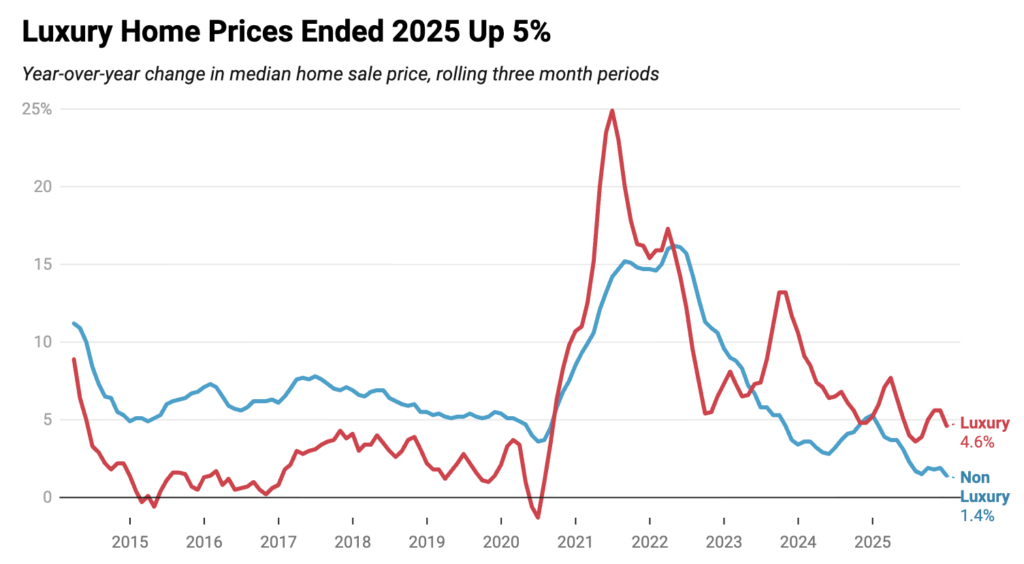
Luxury home prices in the U.S. moved higher at the end of 2025, but that price growth is not being driven by strong buyer demand. Instead, it reflects tight supply at the top end of the market, according to a new report from Redfin, the real estate brokerage backed by Rocket Companies.
Redfin data shows the median sale price for luxury homes rose 4.6% year over year in December to $1.31 million. Meanwhile, non-luxury home prices increased just 1.4% to $375,000, marking their slowest pace of growth since Redfin began tracking the data in 2013.
Despite the national increase, luxury home prices declined in only two major metros: Fort Worth, Texas, and Portland, Oregon.
Luxury Market Activity Varies Widely by Metro
While prices continue to rise in many areas, demand remains uneven across the country.
Luxury Price Changes
Luxury prices posted the largest annual gains in:
- Milwaukee (+20.6%)
- Orlando, FL (+16.8%)
- Nashville (+13.6%)
Prices dipped slightly in:
- Fort Worth, TX (-1.9%)
- Portland, OR (-0.7%)
Luxury Pending Sales
Pending luxury sales rose most in:
- West Palm Beach, FL (+28.6%)
- San Francisco (+16.1%)
- Tampa, FL (+12%)
The biggest declines were seen in:
- San Jose, CA (-35%)
- Philadelphia (-20.5%)
- New Brunswick, NJ (-19.1%)
Inventory Is Growing, But Not Fast Enough
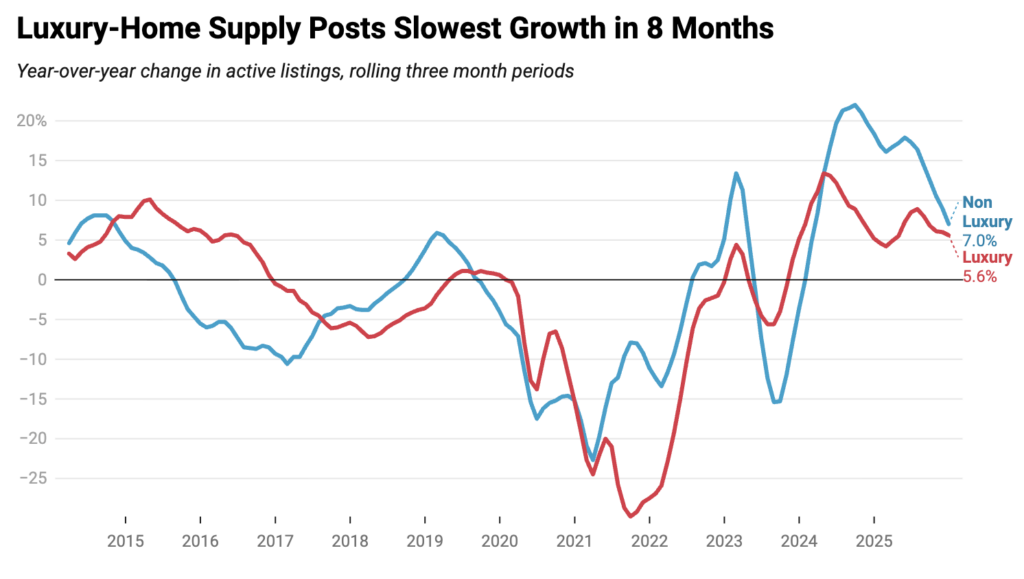
Luxury home inventory continues to increase, though the pace is slowing.
Active luxury listings were up 5.6% year over year in December, the slowest growth rate since April. Non-luxury listings rose 7%, also marking their slowest increase since early 2024.
New luxury listings climbed 2.9%, while new non-luxury listings fell 2.4%, suggesting some sellers are pulling back as buyer demand remains cautious.
The largest jumps in luxury active listings were reported in:
- Tampa (+40.6%)
- Detroit (+19.2%)
- Nashville (+17.7%)
The steepest drops occurred in:
- San Jose (-27.4%)
- Philadelphia (-16.1%)
- Milwaukee (-14.9%)
Homes Sell Fast Only When They Check Every Box
Luxury homes continue to sell quickly in select markets but sit much longer in others.
The fastest-moving luxury markets were:
- San Jose (13 days)
- Oakland (16 days)
- St. Louis (23 days)
The slowest were:
- Miami (142 days)
- Fort Lauderdale, FL (133 days)
- West Palm Beach, FL (112 days)
According to Alin Glogovicean, a Redfin Premier agent in Los Angeles, price gains are coming from competition over a small pool of standout homes—not from broad buyer enthusiasm.
Buyers, including wealthy ones, are being careful. High prices and elevated mortgage rates mean they want homes that need little work and are in strong locations. When those homes hit the market, competition can push prices well above asking, often with cash offers and waived contingencies. But listings that miss the mark tend to sit.
Demand Still Soft Despite Higher Prices
Luxury home demand continues to lag behind price growth.
Pending luxury sales fell 1.1% year over year in December, the biggest drop in six months. Non-luxury pending sales declined 0.6%, the sharpest pullback in eight months.
Closed luxury home sales rose a modest 0.4%, while non-luxury closed sales fell 0.7%, showing that activity remains mixed even as prices edge higher.
What This Means Going Forward
Luxury home prices are rising because high-end buyers are fighting over a limited number of top-quality homes. But overall demand remains soft, and growing inventory suggests sellers may need to adjust expectations if rates stay elevated.
Unless mortgage costs fall meaningfully or inventory improves, price gains at the top of the market are likely to stay uneven and limited to homes that truly stand out. For direct financing consultations or mortgage options for you visit 👉 Nadlan Capital Group.














Responses